











I doubt I ever flew higher than 4500 feet while earning my private pilot certificate. I remember 9000 feet as “high-altitude flying” when working on my instrument rating. Perhaps it was a function of the training environment, or a result of piloting low-powered airplanes. I think more likely it is expediency and the “little-plane” mindset that causes most training to be done at lower altitudes. Which begs the question: Are there any advantages to flying higher up, and if so, how should pilots plan for higher-altitude flight? 288
Getting Higher
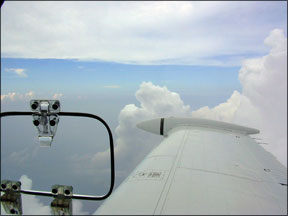
I doubt I ever flew higher than 4500 feet while earning my private pilot certificate. I remember 9000 feet as "high-altitude flying" when working on my instrument rating. Perhaps it was a function of the training environment, or a result of piloting low-powered airplanes. I think more likely it is expediency and the "little-plane" mindset that causes most training to be done at lower altitudes. Which begs the question: Are there any advantages to flying higher up, and if so, how should pilots plan for higher-altitude flight? Many pilots have found theres a "sweet spot" for cross-country flying, above the general crowd but below the realm of turbine airplanes, where traffic is scarce but the advantages are many. This is flight in the mid-teens (of altitude), which Ill define as anything from about 12,000 feet to 17,500 feet MSL. Here youll avoid much of weathers worst, enjoy almost-certain direct-to routing and overfly the majority of "ATC required" airspace. What are the advantages of flying between 12,000 and 18,000 feet? Probably the biggest one is youll usually find clear air. I find the mid-teens to be especially advantageous when flying in areas of forecast thunderstorms-usually youll be above the general haziness and murk abounding on the muggy days that promote thunderstorm development, allowing you to see and maneuver around the big build-ups from dozens of miles away. Mid-teen flying often puts you in less turbulent air than the skies down below, and the airs much cooler, improving pilot and passenger comfort. Its much less stressful to cruise in VMC, so mid-teen flying can reduce fatigue and workload. Be careful, however, to avoid overflying weather thats outside the certified capability of your airplane, or that youre not equipped or experienced enough to handle if an engine or instrument malfunction forces you to descend from your planned cruising altitude (see the sidebar, "Unplanned Descent," on page 14).

Key Takeaways:
- Flying in the "mid-teens" (12,000-17,500 feet MSL) offers advantages like clearer, less turbulent air above most weather and controlled airspace, reduced traffic, and increased glide range in case of engine failure.
- At these altitudes, aircraft can achieve faster true airspeeds and potentially better fuel efficiency, though pilots must factor in the time and distance required for ascent and descent.
- Pilots and passengers should be aware of aeromedical risks at higher altitudes, including discomfort or incapacitation from trapped gases (e.g., dental issues, sinus blockages) and evolved gases (e.g., from recent diving).
Key takeaways sponsored by Aviator Pro | Start Your Training ->
See a mistake? Contact us.

