Aviation Safety

May 16, 2009, Norwood, Mass., Diamond Aircraft DA 40

The airplane experienced a collapse of the right main landing gear at about 1548 Eastern time while landing. Visual conditions prevailed. The airplane was substantially damaged and the solo student pilot was not injured. Earlier, a flight instructor signed him off for solo flight, and exited the airplane.

Read More »

May 18, 2009, Long Beach, Calif., Cessna 310P/Cessna 172N

A witness flying in the immediate area reported noticing the 172N at his 10-to-11 oclock position. The airplane appeared to be performing maneuvers and making turns in a counterclockwise direction, followed by a turn in a clockwise direction. The witness altered his course slightly to the right and monitored the Cessnas location. As he looked to his right while turning, he noticed another airplane enter the area from the west, traveling at a high rate of speed on an easterly heading. Due to the sun being almost on the horizon, he was unable to identify the aircraft type, seeing only a “black object.” Shortly afterward, the witness observed the airplanes collide. The witness reported the collision to ATC and circled the area until first responders arrived.

Read More »

May 22, 2009, Fallon, Nev., Cessna 320D Skyknight

Witnesses reported the airplane approached from the southwest, and crossed at midfield to enter the downwind leg for landing on Runway 21. The airplane made a right 270-degree turn, followed by a sharp left turn, and descended out of sight. Witnesses then reported seeing a fireball erupt in the area of the accident. Weather in the area was reported to be high winds out of the southwest at 25 mph, with gusts up to 38 mph.

Read More »

May 25, 2009, Daytona Beach, Fla., Aero Commander 500S

The airplane was substantially damaged following a partial loss of engine power and collision with terrain at 0846 Eastern time during a forced landing shortly after takeoff. The private pilot was seriously injured, and the pilot-rated passenger was killed. Visual conditions prevailed. About one minute after takeoff, the pilot reported “an engine failure” and announced his intention to return for landing. Witnesses reported the engine noise from the accident airplane as “surging;” one witness described a “radical” turn back to the airport. Two witnesses stated only one engine was running. They added that the engine was “revving,” and would then “conk out” before revving up again. As the engine surged, the airplane would “shuffle left and right.”

Read More »

Green Light At Bitburg

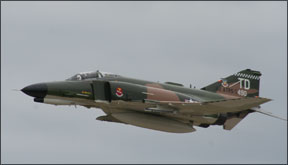
A thick, black fog silenced every sound. It was the right weather for night air defense alert duty at then-West Germanys Bitburg Air Base in the 1970s. The weather was so bad I guessed the nearest alternate was somewhere in Africa. So, it was time to settle down for a night of popcorn and movies. After all, who in the Ramstein command post would be crazy enough to approve a scramble into this kind of weather? I dont remember the scramble until I woke up to a 25-degree deck angle as my F-4E Phantom passed through 20,000 feet. Who was the idiot who did this to us? My focus was on the instruments and the intercept, but my thoughts were on fuel, alternates and getting home that night. There was just enough fuel for an approach at Bitburg and weather divert to Solingen. Bitburg was variable, reporting mile or less in the thickest, blackest fog I can remember. The GCA controller was steady, calm and professional-and it helped. We all were going to earn our beer money that night.


Read More »

Chronic Door Separation?

The rear seat (p/n 7-1500; revision B) failed at the left hinge point. The AN3 series bolt pulled through the hinge lugs, which are welded to the seat frame bottom. The right hinge holes show elongation, but remained intact. This aircraft was doing spin training at the time of the incident. Modifying the seat frame to current standards is recommended.

Read More »

May 1, 2009, Puyallup, Wash., Cessna 182Q Skylane

At about 1500 Pacific time, the airplane collided with terrain during an off-airport, forced landing following a loss of engine power. The airline transport pilot and one passenger sustained minor injuries; the airplane was substantially damaged. Visual conditions prevailed.

Read More »

May 6, 2009, Lantana, Fla., Beech K35 Bonanza

At about 1130 Eastern time, the airplane was substantially damaged during a forced landing after a loss of engine power during initial climb. The commercial pilot and the passenger/owner of the airplane were killed. Visual conditions prevailed. The airplane reached an altitude of 75 to 100 feet above the ground, when the engine “sputtered” or “coughed,” and then “quit.” The airplane struck two parked, unoccupied airplanes before impacting the ground and colliding with a tractor-trailer container.

Read More »
Pilot in aircraft
Sign-up for newsletters & special offers!

Get the latest stories & special offers delivered directly to your inbox.

SUBSCRIBE