Aviation Safety

Blinding Ice

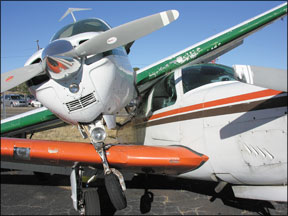
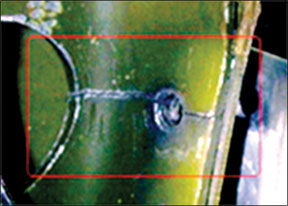
It was late March, and an early spring blizzard was lashing the Rockies before heading toward the upper Midwest to wreak further havoc. Warm moist air to the west of the mountains was being pushed upgrade by the prevailing winds; as the air expanded, it cooled, resulting in a major dump of powder on the appreciative ski areas, but rather nasty weather for travelers. Splat! The windshield in front of me went from dry to a solid block of ice in less than a second-and I couldnt see a thing. One moment I was cruising along, admiring the Rockies just west of the Eagle County (Colo.) Airport, and the next I was totally blind. I had been monitoring the ceiling-progressively lowering as I climbed along the west side of the mountains, and the OAT, which had been dropping and now read 28 deg. F. A sudden gout of water had hit the windshield, and the already super-cooled liquid had frozen into an opaquely solid mass as soon as it hit. Indeed, the change from liquid to solid was so instantaneous the ripples caused by the impact were preserved. As a relatively new pilot, I fly for fun, in VFR weather and remain in awe of those who would stray into the path of ice-known or even just possible.
Read More »

Clueless In Paris

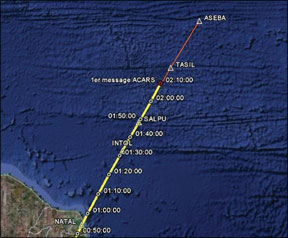
Frances equivalent to the NTSB-the Bureau dEnqutes et dAnalyses, or BEA-on July 2 released its interim report on the loss of Air France Flight 447, an Airbus A330 that crashed into the equatorial Atlantic Ocean early on the morning of June 1. To geeks like me who pore over these things, the interim report is extremely valuable in assembling and organizing in one place many-but not all-of the known facts about this tragedy. It is not, however, a final report and does not state a probable cause for the accident. Its initial findings and some of its details, however, are important. Just as important? The interim report highlights how clueless officials are in understanding what went wrong and how it might be prevented in the future.

Read More »

Twin And Turbine Troubles

The nose landing gear would not deploy on approach to landing. After nosegear removal, actuator drive shaft (p/n 50-820218) internal spline was discovered worn and sheared. Lubrication maintenance should be consistent to help reduce wear.

Read More »

Patterns Of Conflict

Well guys, if theres an aviation subject, other than lean-of-peak EGT, guaranteed to generate a multitude of conflicting opinions, traffic patterns and entries at non-towered airports certainly qualify (Unicom, July). You are to be commended for your bravery in taking it on! Unfortunately, and like so many other aspects of aviation, there is seldom a “one size fits all” situation. As Im sure you are well aware, there is that faction who believe straight-in-approaches are blatantly illegal at non-towered airports. Then there is another group who will blunder straight in regardless of how many aircraft are in the pattern. As always, good judgment must prevail and, unfortunately, there seem to be those few who are totally immune to learning or exercising same! One advantage to the 45 is that it allows you to break off the entry safely if there doesnt seem to be an adequate interval within which to fit, make a 360 away from the airport and try again.

Read More »

May 9, 2009, Muskogee, Okla., Pitts Aerobatics S-2B

The CFI and his private pilot student were initiating the stalls about 3000 feet agl and recovering by 1500 feet. During the third stall, the student pilot initiated recovery, and the airplane was descending straight ahead at about 1500 feet agl. The CFI took control of the airplane between 800 and 1000 feet, and determined the airplane was in a straight-ahead stall.

Read More »

May 9, 2009, Montgomery, N.Y., Diamond Aircraft DA 40

A flight instructor with four total hours as a CFI was training a student pilot. The student made three touch and go landings, during which the CFI later stated the student did not maintain airspeed, resulting in a high sink rate. He instructed the student to conduct a short-field approach with an obstacle. The airplane descended to 25 feet over the runway when its airspeed decayed and it descended sharply.

Read More »

May 9, 2009, Minden, Nev., Beech 95-A55 Baron

Witnesses reported the pilot had taken four friends attending an outdoor working party on a local flight. The airplane made two to three passes over the work party. On the final pass, witnesses reported the airplane was between 100 and 300 feet agl. The airplane made a sudden steep climbing left turn, appeared to decelerate at the top of the climbing turn, then dropped towards the ground nose-first, impacting a field. The engines could be heard “running perfectly” throughout the maneuver.

Read More »

May 12, 2009, Houston, Texas, Boeing 737

The airplane, operated under FAR Part 121 as Southwest Airlines Flight 519, sustained minor damage and experienced a fire in the area of the right landing gear when three of the four main landing gear tires blew out during touchdown at 1946 Central time. The two flight crew, three cabin crew and 48 passengers evacuated on the runway, with two adult passengers suffering minor injuries. Visual meteorological conditions prevailed.

Read More »

May 15, 2009, Beauregard, Ala., Beech A36 Bonanza

At 1142 Central time, the airplane crashed into trees and terrain, killing the pilot and one passenger; two other passengers received minor injuries. Visual conditions prevailed; the airplane was substantially damaged. According to the passengers, they were flying at about 7000 feet when the pilot told them he was having engine problems. The pilot restarted the engine, but it stopped again after about 30 seconds. Soon, the airplane began hitting trees and came to a stop.

Read More »

May 16, 2009, Wasilla, Alaska, Piper PA-24-250 Comanche

After completing the touch-and-go landing, the pilot climbed the airplane to 1500 feet and flew east. While in level flight, he applied full carburetor heat and all engine power was lost and, after completing the emergency checklist, the pilot was unable to restart the engine. The pilot selected a lake as a forced landing site and did not lower the airplanes landing gear, but selected full flaps. He ditched the airplane about 100 feet from the shoreline. While the airplane was still floating, he exited the airplane and boarded a small pontoon boat just before the airplane sank.

Read More »
Pilot in aircraft
Sign-up for newsletters & special offers!

Get the latest stories & special offers delivered directly to your inbox.

SUBSCRIBE