Aviation Safety

Pitot/Static Checks

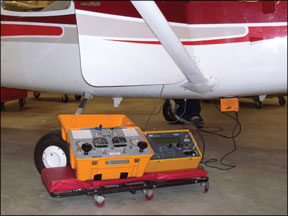
Aside from annual inspection, one of the most dreaded chores of aircraft ownership is complying with FAA-required pitot, static and transponder system recertification. You do comply, dont you? Maybe its the hassle of clearing your schedule to fly the airplane to the shop for the inspection. Or the bigger hassle when the inspection reveals problems that create unplanned expense because the huge amount of labor involved with static-system repairs can cost real money. For the aging fleet of steam-gauge equipped aircraft, pitot/static systems and related instruments often require repair or rebuild. Many owners motor along clueless to their substandard system.
Read More »

What Goes Around Comes Around… Again

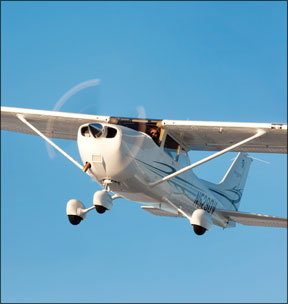
Sometimes the only answer to a situation is, “No, not this time.” Maybe it applies during a to-minima instrument approach where the ground never appears; maybe while attempting VFR flight toward weather deteriorating into IMC. Often, it should be the first part of the answer to a questionable landing-with the second part of the answer being, “Yes, Im going around.” The high-profile landing accident involving a Hawker Beechcraft Premier IA at EAA AirVenture 2010 in Oshkosh, Wis., served to elevate the topic. But venue aside, normal application of the requisite skills and judgment can work there, just as they do elsewhere.

Read More »

(Oh) No Procedure Turn

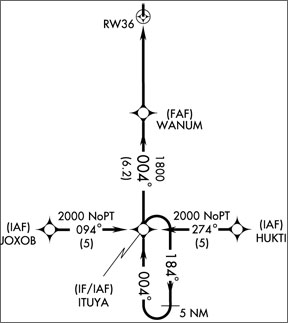
Where you are, smoking into your destination airport. Winds are calm, traffic is sparse, the ceiling is 1500 broken with good VFR underneath, youve got plenty of gas. But a close look at the approach plate creates confusion: Youre being vectored to a nearby fix, but its not at all clear how-or even whether-some kind of course reversal will be necessary. You certainly can slow down enough to easily nail the turn onto final, along with the approach, but something in the back of your mind says it wont be that simple. Suddenly, it dawns on you: Youre going to need to execute a procedure turn.

Read More »

Right Seat Tips

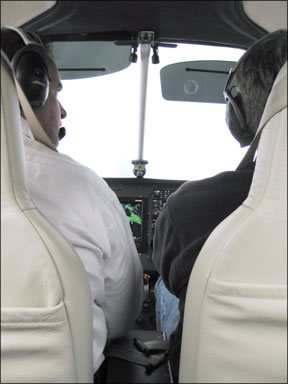
General aviation is just as prone to pithy sayings as any other worthwhile endeavor. When it comes to managing risk and defining the top three riskiest things weve seen, they include taking off with air in the fuel tanks, a private pilot with a #2 Phillips screwdriver and two pilots trying to fly the same airplane at the same time. While statistics and common sense bear out the fact two pilots up front enhances safety, there remain numerous instances when this has not proven true. Not surprisingly, after accidents with two pilots onboard, the actions of the PIC get the most scrutiny when fault is being assigned.

Read More »

Assuming The Position

About the time this issue hits your mailbox, the FAAs standard phraseology for taxiing onto an active runway and stopping to await takeoff clearance will change. Instead of “taxi into position and hold,” the new instruction will be “line up and wait.” The change goes into effect September 30, 2010. This is similar to the mid-1990s switch from the FAA-standard set of weather reporting and forecasting abbreviations to the METAR/TAF format. The FAAs set of abbreviations had been in use since at least the 1960s, and probably going as far back as the 1930s.

Read More »

Weapons Of Math Destruction

I just finished reading John Goldmanfs letter to the editor in Septemberfs issue regarding Mayfs “When the Sparks Stop” article and your response that the author had not made the errors, but your editors did. Then, I read Tom Turnerfs article, “From Denial to Final, II”, where this equation is presented for best glide speed: ((W1/WG) x V), where W1 = Current Weight, WG = Maximum gross weight & V = Published V-Speed. This equation is in error.

Read More »

July 12, 2010, Chapel Hill, N.C., Cirrus SR20

At 1513 Eastern time, the airplane collided with pine trees and a perimeter fence after veering off the runway. Visual conditions prevailed. The private pilot was killed, the front-seat passenger received serious injuries and the rear-seat passenger received minor injuries. According to the rear seat passenger, the flight was uneventful until landing.

Read More »

July 3, 2010, Fairfield, Penn., Piper PA-25-235/Schleicher ASW-27

At about 1315 Eastern time, the Piper collided with the stationary glider, N747GW while landing. Both aircraft sustained substantial damage. There were no injuries. Visual conditions prevailed. The Pipers pilot reported he “couldnt get the brakes to work” after touchdown and intentionally ground looped the airplane to prevent running into people and other parked aircraft.

Read More »

July 5, 2010, Marion, Ky., Robinson Helicopter R44

The helicopter collided with a guy wire at 1745 Central time and was substantially damaged by impact forces and post-crash fire. The commercial pilot was killed. Visual conditions prevailed for the aerial application flight. A witness heard a loud “pop”, and turned, then watched as the helicopter became entangled in a guy wire before colliding with the ground and bursting into flames.

Read More »
Pilot in aircraft
Sign-up for newsletters & special offers!

Get the latest stories & special offers delivered directly to your inbox.

SUBSCRIBE