Aviation Safety

Accuracy Landings

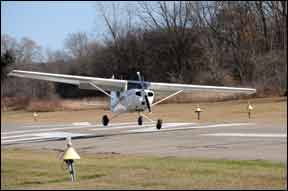
One of the rewards from operating personal aircraft involves meeting and overcoming challenges, particularly those self-induced by targeting an outcome and nailing it. Many pilots feel an understandable sense of accomplishment with spot-on flight planning. “Got it within two minutes!” one close friend exclaimed a few weeks back about an ETA. Others get seriously into predicting their fuel consumption, then comparing their flight-plan numbers to those on the fuel truck. My aviation upbringing valued many factors, but my mentors were a little like drill sergeants over accurate landings. That meant nosewheel (or tailwheel) on the centerline, inside the touchdown zone, ideally within an airplane length of the threshold paint.
Read More »

Glider Lessons

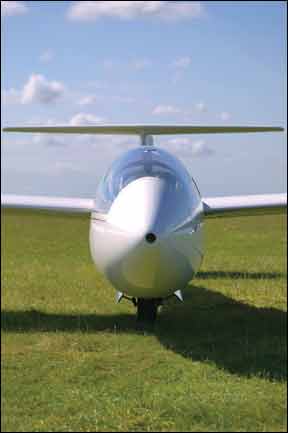
A year ago and mostly for fun, I decided to obtain an add-on glider rating. For any private or commercial airplane pilot, an add-on glider usually can be accomplished in three or four days, provided the weather cooperates. You dont even need a current medical certificate or a drivers license. It also is one of the least expensive add-on ratings an airplane pilot can attain. Flying gliders is fun, but after flying single and multi-engine aircraft for almost 50 years, glider training also helped me to look at airplane flying techniques with fresh eyes. Here are some of the things I learned.

Read More »

Ducking Under

A crash occurring during an instrument approach almost always happens because the airplane descends below the published minimum altitude. Its easy for any pilot to say, “Id never do that,” and dismiss this brand of controlled flight into terrain (CFIT) as a non-hazard…at least for ourselves. True, evidence suggests that some “ducking under” decision height, decision altitude or the minimum descent altitude is intentional-the pilot knowingly flies “just a little bit lower” to try to find the runway in the murk. But ducking under is not always intentional-a conscientious pilot may be susceptible to ducking under in some circumstances. The question is, how can we avoid the traps?

Read More »

Multiple Items

Several items of interest crossed my desk in recent weeks, all of them involving the FAA and its ongoing struggle with technology and funding. That the agency has difficulties identifying and implementing strategies embracing new hardware, software and procedures shouldnt come as a surprise to anyone whos been paying attention over the last few years. Yet, these news items point out the FAA doesnt seem to have learned anything from its past mistakes and is poised to make a few more.

Read More »

Never Exceed Speed

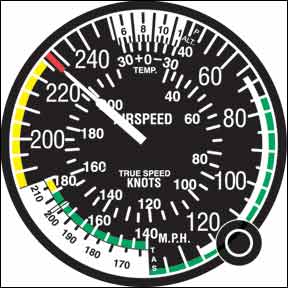
The article “Slow Down, You Move Too Fast” (January 2011) was enlightening. While Mr. Gibbs statements are logical, it would be helpful to have a reference describing this in more detail. Would you please provide a reference that explains the aerodynamic theory or aircraft certification process that substantiates Mr. Gibbs explanation? Although I find Aviation Safety very useful, I cannot use it as a sole reference when providing instruction.

Read More »

December 23, 2010, Glendale, Ariz., Kitfox 4 Experimental

At about 1421 Mountain time, the airplane was substantially damaged when it impacted terrain shortly after takeoff. The private pilot/owner received serious injuries. Visual conditions prevailed.According to witnesses, the airplanes initial climb “didnt look right.” They reported the airplane climbed to about 250 feet agl and appeared to “crab to the left.” The right wing dropped and the airplane descended to the ground.

Read More »

December 27, 2010, Loveland, Colo., Cessna 210B

The airplane was substantially damaged upon impacting terrain at 1436 Mountain time. The solo private pilot was fatally injured. Visual conditions prevailed. Radar data indicated the airplane departed Boulder, Colo., at 1323. At 1434, the pilot reported on emergency frequency 121.5 MHz he was “losing elevator control” and was in the vicinity of Carter Lake prior to the last radar return.

Read More »

Sloshed

Miscellaneous AircraftRandolph Tank Sealing CompoundWhile an unspecified aircraft was undergoing renovation, a steel fuel tank was sealed using a Randolph Aircraft Products sloshing compound.

Read More »

December 1, 2010, Madras, Ore., Taylorcraft BC-65/Cessna 185A

At about 1130 Pacific time, the Taylorcrafts propeller and the Cessnas empennage came in contact with each other while both aircraft were on final approach. The flight instructor and student in the Taylorcraft were not injured, but the airplane, which was owned and operated by Berg Air, sustained substantial damage to the forward part of its fuselage. The commercial pilot and passenger in the Cessna were also uninjured. The Cessna sustained substantial damage to its empennage and aft fuselage.

Read More »
Pilot in aircraft
Sign-up for newsletters & special offers!

Get the latest stories & special offers delivered directly to your inbox.

SUBSCRIBE