Aviation Safety

The Red Knob

Ordinary auto maintenance shops use modern sophisticated computers to analyze engine status and performance. New cars and trucks use computer circuits to control ignition timing, fuel flow and mixture, among other parameters. Drivers do not need any specialized knowledge or skill to operate their automobile engines efficiently and safely. Pilots are in a much different position. Aircraft maintenance shops use tools little different than they were a half-century ago. Aircraft piston engines have seen little or no improvement in decades. In fact, some argue aircraft engines are less reliable and durable than they were even a few years ago. Unless several physical laws are repealed, substantial improvement of aircraft piston engines does not appear to be imminent.

Read More »

The Psychology of Fuel Exhaustion

I need to wrap my head around how people run out of gas in airplanes.” Ive been saying that to myself (and my editor) for over a year, marveling at how almost half of all known engine failures are due to fuel mismanagement. Most of those result from fuel exhaustion: attempting to fly beyond the fueled range of the aircraft, or more simply, running out of gas. Very frequently the pilot almost makes it, landing just short of the planned destination. How could a pilot take off with less fuel than needed to complete a trip? Shouldnt it be a pilot imperative to have enough fuel not just to meet the preflight planning requirements of FAR 91.151 or 91.167 as appropriate, but also to be certain there would always be enough fuel on board to make it safely to an airport, regardless of the conditions encountered en route?

Read More »

Is This Approach Legal?

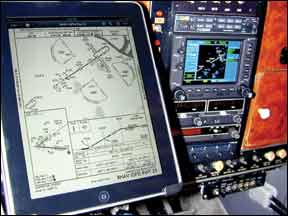
Any instrument-rated pilot should know, as a double-I we knew well would stress, “While youre flying straight and level is a good time to get set up for the approach.” Sage advice, but that was back in the days when pilots of most personal airplanes considered themselves fortunate to have a working DME. Moving maps hadnt been invented and the first GPS satellite had yet to be launched. As long as we had current plates-which was most of the time-and a record of a VOR check having been performed in the preceding 30 days, we were good to shoot almost any approach this side of a CAT IIIa ILS, including the then-feared-but-now-rare NDB procedure.

Read More »

Using Ground Effect

Ever watch an airplane float down the runway before the wheels touch? Mooneys and other clean, long-winged planes are prone to this, especially when their pilots carry a little too much airspeed down the final. How about someone doing a soft-field takeoff, who staggers into the air, nose-high, while bystanders start taking bets on whether the plane will end up in the trees? Both are encountering ground effect, which is basically some free lifting energy produced when an airfoil-whether fixed, as with an airplane or glider, or rotating, as with a rotorcraft-is within a certain distance from a surface, but both also are mishandling it.

Read More »

Keep Your Speed Up

No matter what and where we fly, our speed usually is of interest. Sometimes, were just out loafing, watching the clouds above us and the cars below us. Other times, were trying to get somewhere and for any number of reasons want to do it as quickly as possible. In fact, a personal airplane often is an ideal traveling tool, one ensuring the fastest door-to-door travel times this side of a Star Trek transporter beam. Speed usually is a good thing.

Read More »

Your Next BFR

Aviation engages us in various checks and balances, all in the name of safety-ours as well as those on the ground. Consider the checks faced by aircraft owners and pilots. We have annual inspections and 100-hour checks for aircraft commercially engaged. The goal, of course, is assuring the airworthiness and safe operating condition of the aircraft, spinner to tailcone. Humans also face an “airworthiness” check, the medical exam. The intervals vary, too. Beyond our own “airframe” inspection, our favorite aviation agency also requires a periodic demonstration of our competence every two years called the flight review.

Read More »

Privacy For Me, Not Thee

Back in the late 1990s, the FAA began making its aircraft situation display to industry (ASDI) data available to the public. This is the near-real-time data stream of aircraft position and identification data used by applications like Flight Explorer and Web sites such as FlightAware.com to facilitate flight tracking. The ASDI data includes all IFR flights along with certain VFR operations.

Read More »

International Airspace

Reader David R. Wilkerson is incorrect when he says (Unicom, February 2011), “[A]irspace can have more that one designation, even under ICAO.” Firstly he mentions TRSA, which is not part of ICAO airspace designations. Instead, its a carryover from old U.S. airspace designations. Some TRSAs still exist today usually because traffic volumes are not sufficient to make them Class C airspace. Participation remains voluntary within them. Other airspace designations used in the U.S. are not ICAO designations. These include MOA, MTR and restricted areas.

Read More »

January 2, 2011, Clovis, N.M., Bellanca 1419

The pilot reported the nosewheel had just touched during a normal, full-stop landing when he lost control. The airplane departed the left side of the runway, impacted airport signage and other obstructions, and came to rest 450 feet to the left of the centerline.

Read More »
Pilot in aircraft
Sign-up for newsletters & special offers!

Get the latest stories & special offers delivered directly to your inbox.

SUBSCRIBE