Aviation Safety

June 23, 2011, El Monte, Calif., Beech A36 Bonanza

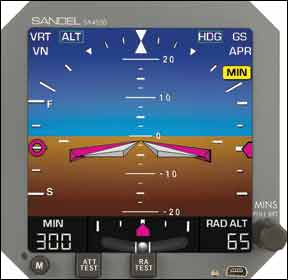
At about 1845 Pacific time, the airplane landed hard during a forced landing. The commercial pilot was not injured but the airplane sustained substantial damage. Visual conditions prevailed. The airplane had just undergone an avionics and flight-instrument upgrade. This was the first time the pilot had flown the airplane solo since the new system was installed.

Read More »

Using A Flight Director

Fly a jet or turboprop airplane and youll consider a flight director to be an essential tool for precision and aircraft control. Turbine-powered airplanes are generally very powerful and slick, so being off as little as a degree in pitch attitude can quickly lead to an altitude bust. Fly a jet up high, where indicated airspeed provides only a small margin above one-G, wings-level stall speed-the so-called “coffin corner”-and a flight director provides the precise guidance you need to keep the wing flying. You may be new to turbines and just becoming acquainted with flight directors. Many of us who fly piston-powered airplanes also have flight directors as integral parts of an autopilot system. But the system isnt well understood by many pilots, especially those not yet fortunate enough to be flying turbine equipment.

Read More »

Maintaining Safety Margins

Students of introductory biology learn a basic lesson about sensory perception in a quirky behavior found in certain amphibians that has become common lore. By now we all know that if a frog is placed in hot water, he will immediately jump out to safety. However, if the frog is placed in cool water that is gently heated to boiling, the frog does not perceive the gradual rise in temperature or the impending danger. Likewise, when a pilot is presented with a problem or emergency that is an obvious attention-getter, he or she will react quickly to solve the immediate threat-a frog leaping from scalding water.

Read More »

Dissecting The Hold

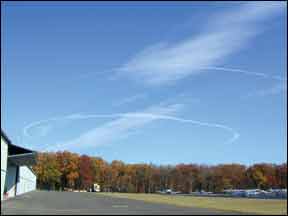
November 12345, cleared to Avsaf, hold east as published, expect further clearance at 1845.” Thats a typical clearance into a holding pattern for an IFR flight when ATC needs to “park” it somewhere until traffic or other conditions allow it to continue to its destination. A holding clearance usually isnt something a pilot or crew wants to hear, and they are much rarer in these times of flow control and ground delays, which are designed to minimize holding in the first place. But ATC still hands them out when needed, and FAR 61.57, Recent Flight Experience, requires regular practice in “holding procedures and tasks” to maintain currency. For the most part, holding can be relatively simple: Fly to the fix and turn right. But it also can get a bit complicated if the hold isnt published. And there are ways to avoid it entirely if youre willing to play ball with ATC and eliminate the reason for the hold. Lets explore.


Read More »

Summertime Flying

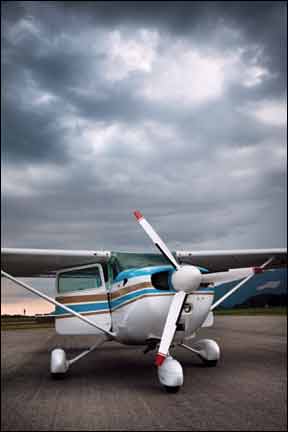
Here in the Northern Hemisphere, were firmly in the season of the bumps, when the suns angle and proximity help contribute to significant swings of weather. Many a high-temperature record fell well before summers “official” entry on June 21, as late spring served up conditions more often associated with the dog days of summer. Pilots debate which season treats them worse, but my vote goes consistently to summer. Confirmation and justification come again and again by way of accident reports detailing how a pilot lost a tussle with the seasons inclement weather.

Read More »

About The Vertical Axis

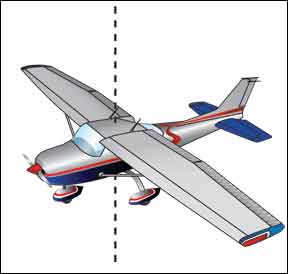
Conventional airplanes have three primary flight controls: ailerons to manage rolling about the longitudinal axis, elevators/stabilators to establish and maintain the desired pitch about the lateral axis, and a rudder to deal with any yawing moments around the vertical axis. All three of these axes meet and pass through the airplanes center of gravity and, when used correctly, are coordinated to produce smooth, efficient flight. If one spends much time listening to the old-timers populating FBO pilot lounges, todays pilots dont know how to use the rudder to manage yaw, especially when flying an older airplane or one with a tailwheel.

Read More »

Departure Deviation

Pilots and non-pilots alike fret about and measure a flights quality by the landing. Yes, landings are important to get right, but takeoffs and initial climb procedures can be just as critical. In fact, I worry about takeoffs more than landings. One of the reasons is a takeoff involves more variables and uncertainties than a landing. As an example, the airplane weighs more than it will the rest of the flight and exhibits its worst performance. For another, were accelerating, not slowing down. In fact, were trying to go as fast as we can in as short a distance as possible. A third thing is the relatively unknown status of the airplane: How will it feel? Is it loaded correctly? Is it trimmed correctly? Will it perform as expected? What about the local wind and weather-is it what we expected from our preflight briefing and personal observations? If there are obstacles, will we be able to clear them if something goes wrong?

Read More »

Potpurri

Aviation media outlets and those covering many other industries have been exploring what appears to be a significant threat to the viability and utility of the Global Positioning System (GPS) in the U.S. This comes courtesy of LightSquared, a Reston, Va.-based company building what it says is a state-of-the-art open wireless broadband network. Originally, LightSquared was to use satellites instead of ground stations to provide the necessary coverage, and it received Federal Communications Commission (FCC) authorization in 2004.

Read More »

Training Reform

While training certainly has to keep pace with modern avionics, driven by the use of GA airplanes as an alternative to airline travel but with the same expectations of mission completion (“Will Training Reform Help Reduce Fatals?” July 2011), the training industry must also keep in mind that these are still mechanical devices and not magic carpets driven from takeoff to landing by a fail-safe computer. Pilots must still master basic stick and rudder skills. In its July issue, your sister publication, Aviation Consumer, report 25 percent of Twin Comanche accidents involved runway loss of control during takeoff or landing. This is typical of those reports.

Read More »

May 18, 2011, Point Mugu, Calif., Boeing 707-321B

The airplane collided with terrain during takeoff at 1727 Pacific time. The airline transport pilot captain, commercial pilot first officer and flight engineer sustained minor injuries. The converted aerial refueling tanker sustained substantial damage to its wings, fuselage and empennage from impact forces and a post-crash fire. Visual conditions prevailed. At about 20 feet agl, the number two (left inboard) engine throttle lever slammed back to the idle position. The airplane stopped climbing, and the captain adjusted the pitch slightly down to hold V2 speed.

Read More »
Pilot in aircraft
Sign-up for newsletters & special offers!

Get the latest stories & special offers delivered directly to your inbox.

SUBSCRIBE