Aviation Safety

Winter Weather Patterns

Winter is upon us. This doesnt mean we have to strike a baleful note of doom, though it should remind many of us that winter generally brings more cloudy skies to North America. In 2015, an Alaska-based climate blogger, Brian Brettschneider, examined cloud coverage data from selected weather stations in the National Climate Data Center’s (NCDC) Global Historical Climatology Network (GHCN). He created a series of maps showing the cloudiest parts of the U.S., the distribution of cloud cover by month and the cloudiest months for each first order reporting station.
Read More »

FAA Revises Part 23

The FAA December 16 released its long-awaited final rule making significant revisions to small aircraft certification standards. The new FAR Part 23 rule addresses how airplanes weighing up to 19,000 pounds can be certified and implements performance-based airworthiness requirements instead of the prescriptive design requirements it replaces. It apparently offers little regulatory relief to owners or operators of existing or aging aircraft. Given the scope of the rule changes, the FAA is delaying its implementation eight months, to August 30, 2017.

Read More »

Automation Casualty?

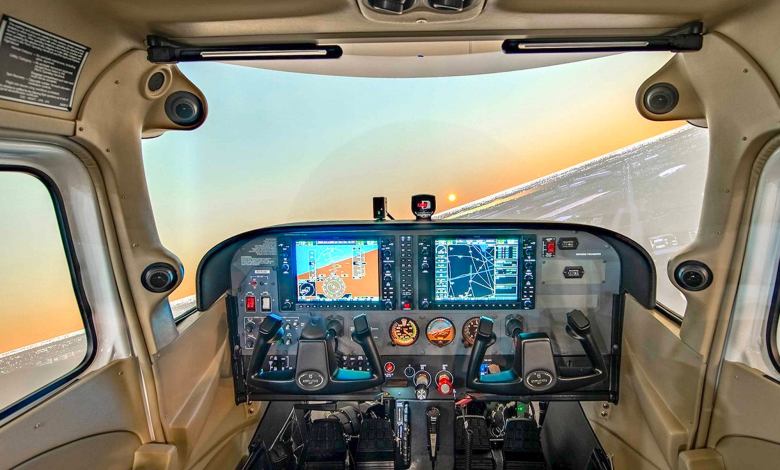
One of the downsides of automation is that the pilot often is removed from the control feedback loop. In other words, he or she isnt sensing what the airplanes control feedback is saying. When manually making a certain control input, the pilot receives instant feedback-through the control system and the instruments-on whether the airplane is responding as expected. All that is lost when Otto is flying, even though the instruments may tell us everything is nominal.

Read More »

Download the Full February 2017 Issue PDF

At this writing, its impossible to know what ongoing investigations will determine, and whether either the flight crew or the controller will face consequences. This and other incidents, however, highlight a longstanding problem: air traffic control is designed by and comprised of humans, and its therefore imperfect. Controllers make mistakes just like the rest of us, pilots included. The challenge is to recognize those mistakes when they happen and take action appropriate to resolve the issue. A recent encounter I had at a towered airport reinforces the old, bad joke that the controller likely will feel really bad after an accident. The pilot likely wont feel a thing.

Read More »

Making The Grade

Self-evaluation can be an important component of a pilots ongoing training and currency efforts. If we dont know how well we did on a given flight, how will we know what to practice on the next one? How will we know how well well shoot an ILS when it counts if we cant manage one in severe clear on a nice day? Presuming you, like me, always want to fly with the fewest mistakes, some kind of self-evaluation is both necessary and appropriate. How you go about it is key.

Read More »

NTSB Reports: January 2017

At about 0925 Central time, the airplane was destroyed after impacting trees and terrain during final approach. The pilot and the child passenger were seriously injured. Visual conditions prevailed. Initial reports showed the airplane experienced a complete loss of engine power when about one-half mile from the runway. During the accident sequence, both wings were separated at the wing root and the fuselage came to rest upright about 20 feet beyond initial impact with trees. The airplane was immediately involved in a fire. The pilot removed the child passenger, exited the airplane and walked to a nearby rural residence.

Read More »

NTSB Takes On Midair Collisions

In the aftermath of its investigations into recent midair collisions the National Transportation Safety Board (NTSB) in November released guidance for pilots stressing the inherent limitations of the long-standing see-and-avoid practice and urging adoption of technological solutions. The NTSBs guidance is found in Safety Alert SA-058, Prevent Midair Collisions: Dont Depend on Vision Alone. The Safety Alert is available in the PDF file format free for the download at tinyurl.com/SAF058.

Read More »

Altitude? Or Speed?

Last year, I flew maybe 40 hours in piston twins, building time and getting through a checkride. With a bunch of experience in the IFR system flying high-performance singles, keeping up with the twins I was flying-and planning ahead and managing their systems, even in the busiest airspace-was relatively easy. Performing the engine-failure drills, the VMC and drag demonstrations, and practicing various other systems failures also were relatively easy, thanks to my experience in complex airplanes.

Read More »

Drive Shafts

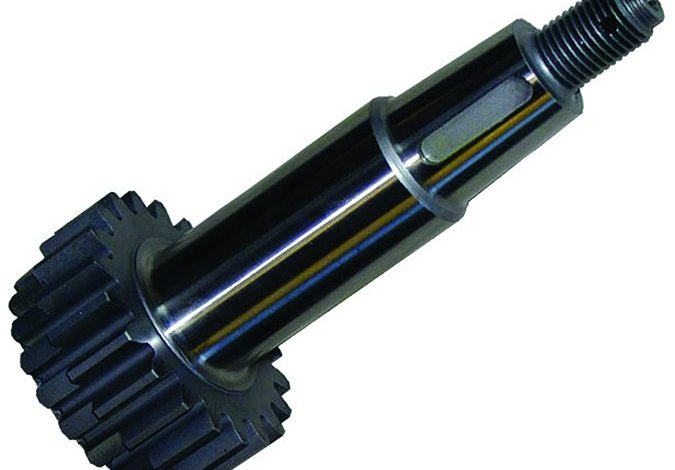
On attempting to start the engine for a post-maintenance ground run, the propeller turned through approximately three blades then stopped. Propeller was difficult to rotate forward or backward. Inspection of the starters Bendix drive shaft revealed cracks in the gear running parallel to the teeth, causing the gear not to properly mesh with the flywheel.

Read More »

Muscle Memory

Have you encountered a situation or hazardous condition that yielded lessons on how to better manage the risks involved in flying? Do you have an experience to share with Aviation Safetys readers about an occasion that taught you something significant about ways to conduct safer flight operations? If so, we want to hear about it.

Read More »
Pilot in aircraft
Sign-up for newsletters & special offers!

Get the latest stories & special offers delivered directly to your inbox.

SUBSCRIBE