Aviation Safety

Cant You Read The Signs?

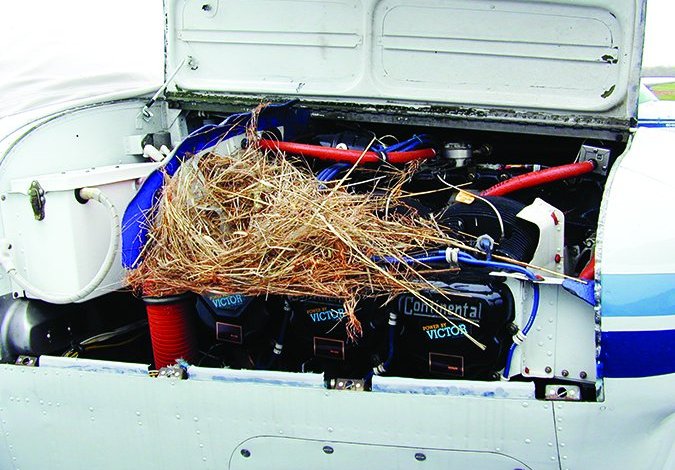
Airplanes are mechanical contrivances. So it shouldnt come as a surprise to learn they sometimes break. The object, of course, is for them to break on the ground, preferably right in front of a maintenance shop at which you have a credit on your account. It rarely works out that way, of course. Instead, airplanes can and do break while were flying them. But even when they let us down, they usually have been signaling in some fashion whats about to happen.
Read More »

Re: When ATC Screws Up

I guess Im a dodo, but I use roger all the time. And I hear it all the time from ATC. The term is in the Pilot/Controller Glossary (November 2016 edition): ROGER-I have received all of your last transmission. It should not be used to answer a question requiring a yes or a no answer. Buffalo Airways still flies a DC-4 so maybe the articles statement is predicting roger will go out sometime in the future?

Read More »

Some Extra Runway

From the beginning of our flight training, we spend many hours learning about and practicing landings. We often pay little attention to the beginning of a flight, though. Sure, we might pull out the handbook and compute what it tells us about takeoff performance-ground roll, distance required to clear obstacles-but we simple dont put into takeoffs the kind of study and attention given to landings. Ive always found that rather odd.

Read More »

Linked

The pilot could not pull the right engines condition lever into the fuel cutoff position; the firewall shutoff was used to shut down the engine. Inspection revealed the linkage between the power lever and the condition lever on the fuel control unit was corroded and the linkage jammed with residue. The linkage was cleaned and lubricated, and the aircraft returned to service.

Read More »

NTSB Reports: February 2017

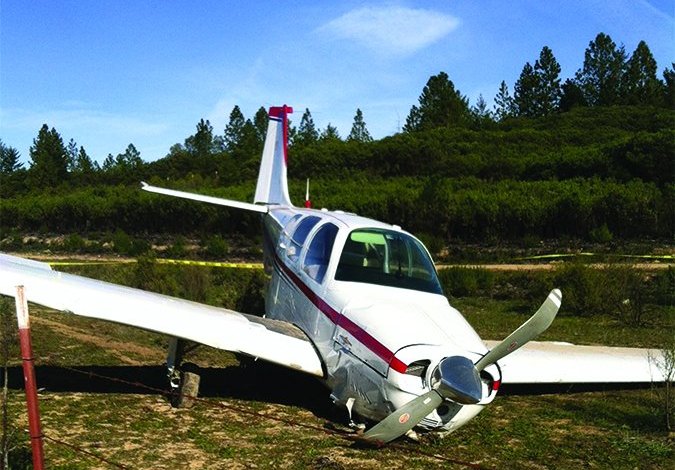
According to the pilot, about 10 minutes into an otherwise-normal the flight, the engine began to run rough. The pilot adjusted the power controls, but the engine started to backfire and continued to lose power. He made a spiraling descent from about 1000 feet agl and maneuvered the airplane to land on a paved area of a driving track. During the landing roll, the airplane struck a fence. The pilot stated the engine continued to operate throughout the landing and landing roll until the airplane struck the fence.

Read More »

Revising Slow Flight

By now, U.S.-based flight instructors and training organizations should be fully up to speed on last years formal implementation of the airman certification standards (ACS), which is designed to eventually replace all practical test standards (PTS). For now, only the private pilot and airplane instrument rating checkrides employ the ACS, but more are coming. The new standards went into effect June 15, 2016-if youre in the primary training environment and dont know about the ACS, you havent been paying attention.

Read More »

Preflight Strategies

Preflight inspections are kind of like landings: a good one takes some practice. As students, we were trained to walk around the airplane with a formal checklist, perhaps with our thumb pointing to the task at hand, so we wouldnt miss anything. And in the rental/training environment, a methodical approach to preflighting what youre about to fly has a great deal of merit: You never know who flew it last, the airplanes condition afterward and what they broke until you look for yourself.

Read More »

Fate Can Be The Hunter

Kudos to Robert Wright on achieving 50 years of accident/incident free flying and receiving the FAAs Master Pilot Award (On Getting To 50, September 2016). I too have reached that milestone, but not without accident nor incident in my 6100-plus hours of private pilot flying, most of which has been recreational. My incidents occurred despite what I believed to have been reasonable risk management.

Read More »

5 Ways to Crash an Airplane

Lately, the general aviation community has focused, quite correctly, on the very preventable loss-of-control in-flight type of accident (LOC-I). Too many people somehow manage to bend an airplane-or worse-each year basically because they forget to fly it. Its a broad category, and includes a mix of accident causes, from low-level maneuvering, to VFR-into-IMC and to multi-engine training operations. As complex and dynamic as the LOC-I category is, it most assuredly doesnt include the full range of things pilots do to make the accident reports. For example, a look at the other category of pilot-related accidents, as broken down by the AOPA Air Safety Institute (AOPA ASI) in its 25th Nall Report, highlights some other areas where pilots regularly make contributions to the aviation-accident records. Here are five of them, not related to LOC-I.

Read More »

When ATC Screws Up

On December 16, 2016, shortly after takeoff at 0119 local time, an EVA Air Boeing 777-300ER apparently came well within 1000 vertical feet of mountainous terrain after departing the Los Angeles (Calif.) International Airport (KLAX). While a formal investigation reportedly is underway at the FAA and the carrier, unofficial transcripts and aircraft tracking data make it clear this event was a very near thing. The publicly available information depicts confusion and uncertainty in the 777s cockpit. It also suggests non-standard phraseology on ATCs part may have contributed to the event. The sidebar on the opposite page explores it a bit more, based on unoffocial sources.

Read More »
Pilot in aircraft
Sign-up for newsletters & special offers!

Get the latest stories & special offers delivered directly to your inbox.

SUBSCRIBE