Features

Why Cant We Land?

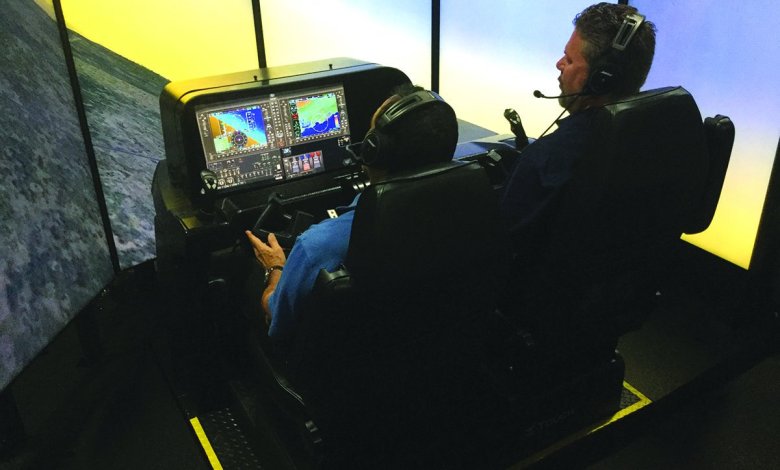
[IMGCAP(1)]Day in day out, week after week, in good weather and in poor, pilots are beating the snot out of airplanes, using the runway, edge lights, signs, ditches or anything else that gets in the way of their landings.

Landing accidents account for more than a third of all general aviation accidents. While landing accidents are not as likely to be fatal as other kinds of crashes – only 3 to 4 percent of fatal accidents are caused by poor landings – they are responsible for nearly 500 bent airplanes per year.

General aviation accidents tend to be caused more often by pilot error than by mechanical problems, and those pilot errors can be separated into two categories: judgment error…
Read More »

Nowhere to Hide

[IMGCAP(1)]If the lure of exploration is strong, those magazine pictures of the backcountry airstrips, such as those in the Northern Rockies, are an irresistible lure. Vast areas in the United States are designated as wilderness area and are accessible only by horseback, hiking, drift boat – or airplanes.

Most wilderness areas contain a system of airstrips ranging from nice grass airstrips with plenty of width and length to strips that are barely wide enough for the landing gear of a STOL aircraft. This is a very challenging aviation environment that must be flown by the right pilot, with the right equipment, training, experience and weather.

The safety margins are very thin in thes…

Read More »

Low Time Surprise

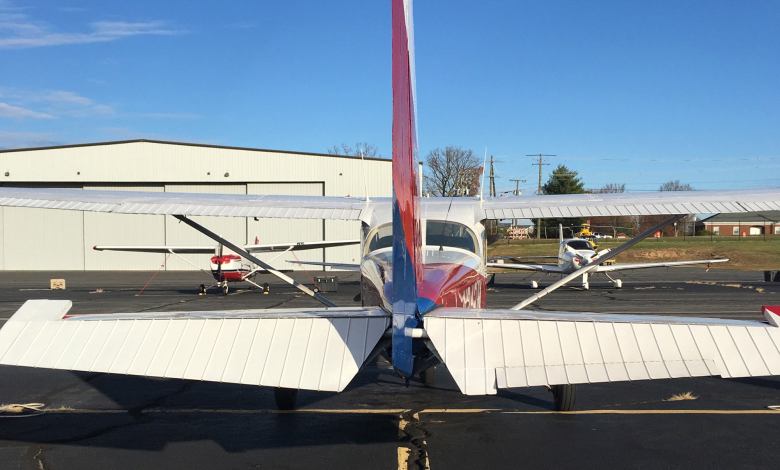
[IMGCAP(1)]Check the ads for used airplanes and its pretty clear that most buyers are looking for a 1970s era airplane with low airframe and engine time. The Holy Grail, it seems, is a mid- to late-70s model with under 2,000 hours.

Although the buyers intent is usually to find an airplane that has been well cared for, there are some cases where low time means neglected. Furthermore, many owners rely on operating hours when scheduling maintenance, not accepting the fact that many parts also need attention after the passage of time, even if the airplane has been on the ground.

The buyer of a 1975 Cessna 177RG thought hed found a good deal when he bought the airplane Dec. 30, 1999….

Read More »

You Cant Fly There!

[IMGCAP(1)]In the interest of national security, flying light planes has become a confusing and dynamic business where the rules can change between the time you get your briefing and start your engine. In this brave new world, prepare to be wrong.

If thats too pessimistic a view, there is a bright side. The FAA has backed off enforcement actions when pilots can show theyre following the rules that existed an hour ago. And the number of airplanes forced to land by armed fighter jets has been small. So far, the trouble appears to be borne of changing rules, nervous politicians and a paranoid public.

But staying out of trouble has gotten decidedly more difficult.

Consider that in t…

Read More »

Experienced, But How?

[IMGCAP(1)]Being a responsible pilot means there are a lot of things you cant take for granted. Proficiency, maintenance, charts, briefings, inspections, review and judgment are all routine parts of the game.

Some people play it well and play it to win. Some play it to have fun or pass the time. Some play because they think they should. Some shouldnt play at all, but do.

Accidents that involve the latter group are easy for more serious pilots to dismiss. They reason that by virtue of a more businesslike approach they are immune from many of the troubles that befall their unfortunate brethren.

As you go up the aviation hierarchy to more flying hours, more ratings and bigger airpl…

Read More »

Living With Mins

[IMGCAP(1)]The pilot-in-command is in control of the safety of the passengers and care of the airplane. His judgment is the deciding factor in whether the flight should go or not go. His decisions are based on his evaluation of the conditions existing for a safe flight. He doesnt give in to the demands or influences of the passengers.

He also knows he cant always rely on the FAA weather minimums as guidelines for the safety of his flight. FAA minimums for flight – both VFR and IFR – are the absolute minimum weather conditions to legally fly. They are not – nor were they ever intended to be – the standard every pilot can use to determine the level of safe operating procedures.

Not e…

Read More »

Stopping the Roll

As summer takes hold, the days are getting long. Theyre also getting hot, which means the other thing that will be getting long is takeoff distance.

High temperatures – and therefore high density altitudes – affect every airplane, single-engine or multi, piston or jet. Higher elevations and bigger payloads only make the problem worse.

In a single-engine airplane, the loss of engine power makes the next step pretty easy to determine. If the engine failure happens on the ground, you will stop. If the failure happens in the air, you will land. Sir Isaac Newton assures us that this is so. Such outcomes are non-negotiable and cannot be changed.

In a multi-engine plane, it is not alway…

Read More »

Light Retract Safety

For owners not blessed with heroic stick-and-rudder skills and cash to burn, the usual sequence of ownership starts with a fixed-gear single and progresses to a high-performance retractable. For many owners, the retract is the end game.

The attraction of a folding-gear single is undeniable. These models are plentiful in both variety and price, most offer good performance at reasonable operating costs and they usually do represent a step-up in performance and capability.

Ignoring price and performance for this analysis, were comparing these aircraft strictly on one narrow parameter: the models accident record. What kinds of accidents do they suffer and how do they compare with each ot…

Read More »

Round and Round

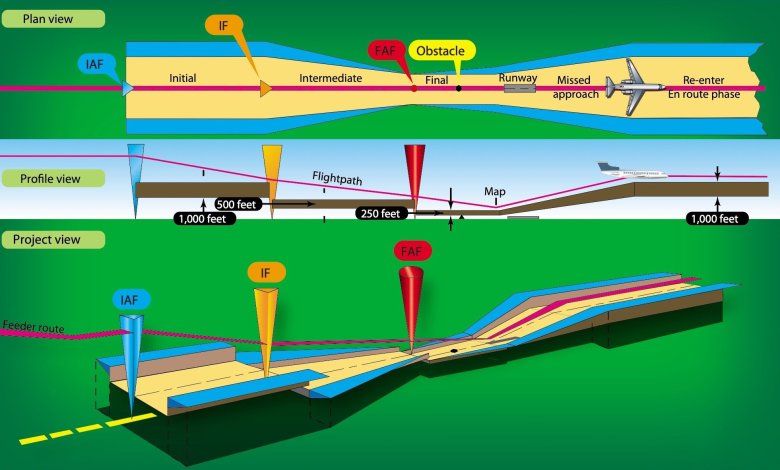
The circling approach should be the easiest maneuver in an instrument-rated pilots repertoire of skills.

Its really just an IFR descent to get beneath the clouds and then a visual approach to the landing runway – in essence a VFR pattern, but at roughly half the usual pattern altitude. Yet NTSB data shows that circling approaches account for about 30 accidents per year, most of them fatal. Since 1983 there have been 577 accidents due to circling instrument approaches. A review of the record shows that three major causes stand out: circling below minimums, steep turns to stay within the runway environment, and beginning the final descent before acquiring the proper glide path.

Recal…

Read More »
Pilot in aircraft
Sign-up for newsletters & special offers!

Get the latest stories & special offers delivered directly to your inbox.

SUBSCRIBE