Features

Nailing the Needles

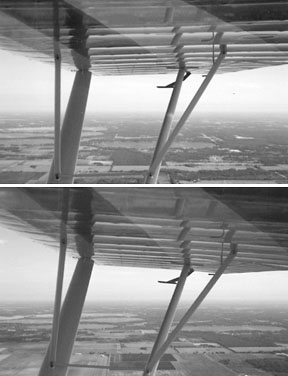
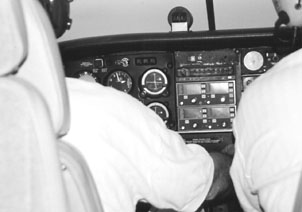
[IMGCAP(1)]The first time a pilot on an ILS approach sneaks under the glide-slope is almost always a situation where he is on an ILS final, approaching minimums. Hes close to decision height and suddenly there are patches of ground appearing intermittently below. An instant later, the strobes are visible. He drops below the glide path and the runway is straight ahead. The pilot later realizes that remaining on glide slope at decision height would have meant executing a missed approach and possibly a trip to the alternate airport.

On the next gamble, he descends a little bit more below the glideslope path – and it works again. In fact it may work a number of times. The best estimates i…
Read More »

Risky When Real

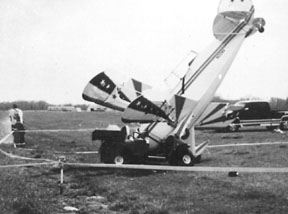
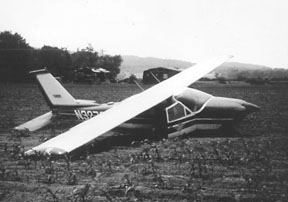
[IMGCAP(1)]I was driving down a country road when I had to blink to make certain I wasnt hallucinating. There was a Cessna 152 by the side of the road. It was undamaged, which was surprising because the road had a number of power lines running along it.

I stopped to see if the person standing next to the aircraft was okay. He said the flight instructor had pulled the mixture to simulate an engine failure when they were doing S turns along a road. The student had few options for an emergency landing area and chose the road. There was no time to try re-starting the engine.

The student said the flight instructor had walked down the road to try to find a better stretch of the road for…

Read More »

Going Up, Going Down

Theres a classic childrens story in which a little train says I think I can, I think I can – and lo and behold, it can. The power of mind over body is ably summed up in the tale, as it is in cliches such as when theres a will, theres a way.

But whos fooling whom?

Sure, there are times when you can suck it up and get through whatever it is you have to get through. Who hasnt had to work through a deadline or clear a fallen tree before dawn or pull an all-nighter through college? Sometimes you just have to do it.

But for every time you manage to endure the agony, there are countless times when you punt. With your exhaustion swaddling you like a Los Angeles smog, you wearily…

Read More »

Flying a Fleet

For the average owner/pilot, its not hard to stay knowledgeable about the systems and procedures of the airplane youre flying. You fly not only the same make, model, and year, but the very same airplane every time you fly.

If youre lucky, you have a panel equipped the way you want it, with the avionics you chose, laid out in the pattern you found most convenient. Switches fall easily to hand and, after you learn them once, you know exactly how to operate each piece of equipment. You know how it works, how to make it do what you want, what it can do and what it cant.

Airline pilots are in much the same situation. Even though they dont fly the same airplane, there is much consiste…

Read More »

Why Engines Fail

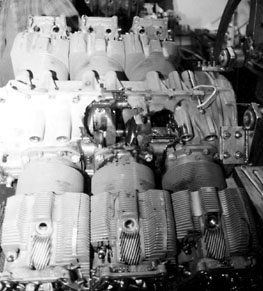
[IMGCAP(1)]Except for those who fly gliders, most pilots live in fear of an engine failure. Some are so wary they fly multi-engine airplanes for no reason other than to give them more options should an engine decide to imitate a brick. Pilots of singles, of course, have no choices. When the engine crumps, its time to hit the softest thing you can find as softly as you can manage.

But the fear of imminent engine failure is in some ways misguided. Annual inspections, preflights and runups are all designed to catch little problems before they become big ones. In addition, the relatively simple engine design helps make them more reliable.

On the other hand, there are forces at work agai…

Read More »

Involuntary Gliding

[IMGCAP(1)]In singles and even light twins in some circumstances, an engine failure means the airplane is going down. The pilots job at that point is to pick the best spot to land and properly execute the forced landing.

Sounds simple, but its a procedure that pilots routinely botch, either because their skills are so rusty or because they dont know the right way to make a forced landing.

Glider pilots are sometimes smug about their ability to land without power, but in fact, an airplane with a windmilling prop is markedly different from a glider. For one thing, the lift/drag ratio is about three times higher in gliders than in powered airplanes. An airplane cant gain altitude in…

Read More »

Repelling Terrain

There are large parts of this country where the terrain can impede your climb-out after takeoff. Sometimes it can even be a factor during en route climbs.

It takes just a quick glance through the NTSB database to find dozens of accidents in which the aircraft was unable to outclimb rising terrain. Those accidents reveal a number of common factors involved with this type of accident, in addition to the rising terrain. High density altitude carries much of the blame, to be sure, but so does restricted maneuvering area, adverse winds, heavy aircraft weights and relatively low power-to-weight ratios.

When most people think of rising terrain, they picture mountain peaks that rise nearly 1…

Read More »

Fallen Icon

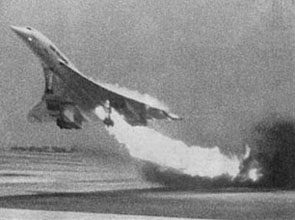
[IMGCAP(1)]When the magnificent Concorde thundered down runway 26R at Paris Charles de Gaulle Airport in July 2000, it became one of the most scrutinized airplane accidents on record. After a spectacular display of flaming fuel, the aircraft climbed to about 200 feet agl, pitched up, rolled inverted and crashed. All 100 passengers, six flight attendants and three cockpit crew members were killed, along with five people on the ground.

Aircraft accident investigators often refer to the chain of errors, preventing any one of which would stop the accident from happening. The Concorde mishap is perhaps an all-time classic in this regard, since there was a clear indication that there were…

Read More »

When Flying in Ice

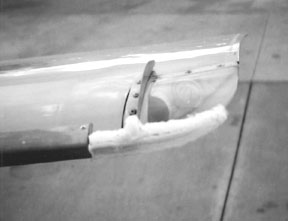
[IMGCAP(1)]On Valentines Day 2000, Indy racer Tony Bettenhausen went down in a Baron 58 that was approved for flight in known icing conditions. FAA records show that in mid-afternoon the day before his fatal accident, he called Nashville Automated Flight Service Station to file an IFR flight plan and get a standard weather briefing.

He was told that along his route of flight there was a convective Sigmet reporting a line of thunderstorms 30 miles wide, with tops to 30,000 feet. In addition, the forecast called for moderate rime and mixed icing from the freezing level to 24,000 feet, with moderate turbulence below 15,000 feet. He updated the weather later, then wisely decided to cancel…

Read More »

Unseen, Unheard

[IMGCAP(1)]Heres a news flash: There is no such thing as a perfect flight. Every pilot is forced to examine the airplane he is about to fly, his own skills and the demands of the mission, and make judgment calls about the risks involved and how to minimize them.

Sometimes the calls are easy, with the intended flight well within the limitations of the airplane and pilot or so far outside those capabilities that a decision is black and white. Most times, however, the choice requires not so much a go/no-go decision as an analysis of where the pitfalls of the flight might be.

In those cases, a pilots experience leads to certain assumptions, for better or for worse. Just as you may expec…

Read More »
Pilot in aircraft
Sign-up for newsletters & special offers!

Get the latest stories & special offers delivered directly to your inbox.

SUBSCRIBE