Editor’s Log

Unobtainium

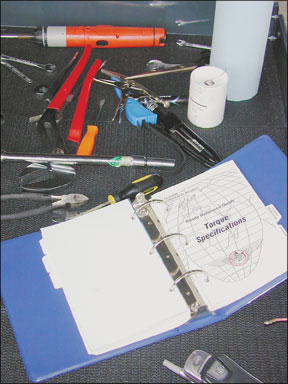
Got a pencil?” So began a recent phone call from my airplane mechanic. We were (well, he was) in the middle of a multi-day effort to completely overhaul my airplanes landing gear and other mechanical systems. While theres no Part 91 requirement for such a massive project, those with more experience working on my airplane type-a mid-60s Beech Debonair-strongly advocate doing this kind of service at around 4000 hours. I was slightly more than 1000 hours late. We already had spent a substantial amount of time researching sources and pricing on various replacement parts like rod ends and bearings, as well as refinishing and reusing many of the parts removed for close inspection. In all, the airplane was in good shape. Still, we opted to replace several components. Or tried to, anyway.

Read More »

Odds And Ends

For years, NASAs Aviation Safety Reporting System (ASRS) has been an invaluable, timely source of information for researchers and observers interested in how our national airspace system works. Granting limited immunity to those who complete an ASRS form and send it in is one of the few things the FAA has done right in the enforcement arena. In addition to maintaining a detailed database of submitted incidents (which likely didnt make even the trade press), the organizations Web site (asrs.arc.nasa.gov), includes free and immediate access to a wide variety of research papers and other resources to anyone interested in learning more about the “real world” of aviation.

Read More »

Irony Out Of Control

A recent Friday evening found me liberating my airplane from its hangar for a short local flight designed to warm the oil before draining and sampling it. Home plate, the Venice (Fla.) Municipal Airport (VNC), is afflicted with a common ailment: anti-airport activism. Since noise is a common complaint, Runway 22 is preferred in “calm” winds; its even in the AWOSs remarks. On this day, winds were something like eight knots from 290, and two aircraft were in the pattern for Runway 31, which intersects 22. Choosing a safe interval between other traffic, I launched, climbing above the pattern and leaving the area. Since I wasnt really going anywhere, I left the local Unicom frequency active. At this point, a student/instructor combination in a 152 had the airport to themselves.

Read More »

Bling

As I write this, the annual Sun n Fun Fly-In is ongoing at the Lakeland (Fla.) Linder Regional Airport, less than two hours away from me by car. I spent opening day there and will be returning as soon as I put the finishing touches on this issue. Even sun, fun and airplanes must wait when deadlines approach. My full day on the show grounds was spent mostly shopping. Events like this are great opportunities to stock up on airplane consumables-I bought some spark plugs, hydraulic fluid and other odds and ends at great prices-as well as drool over the latest and greatest offerings from a wide range of vendors. Owning and operating an airplane is never for the faint of heart, and finding good deals on parts and supplies leaves more scarce cash laying around for important stuff like $5.50/gallon fuel and unscheduled maintenance.

Read More »

Unprepped

Im usually fairly well prepared to tackle whatever airborne challenge I might face. Then there was a day in early March when I felt woefully unprepared. I got through it, but Im still licking my wounds. The mission was supposed to be a short hop to a nearby airport, pick up a fourth and re-launch for some airborne headset evaluations on behalf of sister publication Aviation Consumer. The weather was forecast to be broken layers at 1500 and 5000 feet, with good visibility between them. Walking out the door for the first-thing flight, I notice the early-morning stars had been replaced by a low overcast; an IFR clearance was definitely necessary. Soon, the three of us were on top of the lower layer, motoring off to our destination. But the plot thickened: Our destinations ceiling and visibility were down the tubes and the only glideslope was out of service. Not wanting to waste fuel, we turned around and headed back to our departure point, not far behind us. After a quick series of button pushes and leafing through the plates, we were set up for the approach and, after flying the full procedure, found the runway right where we left it.

Read More »

Osmosis

In putting together this issue, which includes major articles on flight training and gaining experience, I got to thinking about how I obtained what experience I have. I also got to thinking about all the experience I have yet to obtain. My primary training included at least four different airplanes, five or six instructors and several months. For the next five or so years, I seldom flew enough to stay legally current; forget proficient. As my “career” got going, I had more free time and flying was one way to occupy it; aviating had the added benefit of setting me apart from the masses. It also made for some quick and easy beach and holiday trips. Very soon, an instrument rating was necessary, which I eked out over a year or so, thanks to a veteran ATP/CFII/ABC/XYZ. Then came weather flying, longer trips and the ongoing quest for IFR currency.

Read More »

Dimensions

Two round trips up and down the east coast over the recent year-end holidays reinforced for me the incredible transportation value that is the personal airplane. They also reminded me we are operating these airplanes in not just three dimensions, but four. The fourth? Time. My first flight involved a solo “hop” of some 755 nm from my new home in Florida to my old one in the D.C. area. Due to some personal complications as well as the need to perform some much-needed TLC on the airplane, I didnt get away until late in the day; most of the flight would be at night. Some of that delay was by design, however, involving a fast-moving and wet front pushing in along my route from the west, extending north to New England and south into the Gulf of Mexico. It was dumping rain all along the east coast, and the weather-guessers were advertising real wind-gusts to 35 knots in some locations-to come in behind it. Ceilings were low until the front passed, but they wouldnt matter much if I had a 35-knot direct crosswind at my destination.

Read More »

OJT

Several recent newspaper and magazine articles have reported on supposed pilot shortages in the U.S. and, especially, abroad. The reporting, of course, focuses on airline flight crews but doesnt really distinguish between long-established U.S. carriers flying Boeings and Airbii and what at least one industry observer labeled the “lower rungs of the aviation career ladder:” regional jets and turboprops. At least one close friend, himself serving as a regional jet captain, has expressed amazement at the relatively low talent and experience levels hes finding in the seat to his right.

Read More »

Winterization

Its that time of year when the IFR pilots primary aviation weather concern finally shifts completely from thunderstorms to airframe icing. Even if weve been forced to consider both hazards on the same flight, we probably can leave the thunderbumpers by the wayside for a few months. In truth, we should always be concerned about airframe icing, depending on the altitudes at which were flying. But winters onset doesnt mean airframe icing is the only operational concern we might face. In last months issue, Mike Gugeler tackled the topic of runways contaminated by rain, snow, slush, ice or a some evil combination. This month he serves up a detailed discussion on preheating. As Mike demonstrates, thinking about the whole airplanes preheating needs is not just a good idea, its also a significant safety consideration.

Read More »

Sliced Bread?

Beginning on page 12, Frank Bowlin tackles the question, “Can ADS-B Work?” We all should hope the answer is a resounding “yes.” The FAA is busy firewalling its throttle and pushing its nose down, intending to get us there by 2020. In October, the agency released the first of several proposed rules on ADS-B, on complying airborne equipment. Im a confessed ADS-B skeptic. Put bluntly, I have zero confidence in the FAAs ability to manage a multi-year project of this scope. Im also not sanguine about doing away with much of the ground-based surveillance radar network as the agency proposes, and dont believe all the airspace efficiency claims being made. (The vast majority of congestion problems dont involve airspace; they involve available runways and airline scheduling.)

Read More »
Pilot in aircraft
Sign-up for newsletters & special offers!

Get the latest stories & special offers delivered directly to your inbox.

SUBSCRIBE