Editor’s Log

Fixing Your Bounce

The primary cause of a bounced landing is flaring too high above the runway, perhaps with too much speed. In our ideal, perfect landing, the airplane will quit flying just inches above the runway. Instead, a bounce results when the flare occurs a few feet above it, and the airplane has the energy-resulting from excess altitude, excess airspeed or both-to rebound back into the air. In any event, a bounce results when the airplane isnt finished flying.
Read More »

NTSB Reports

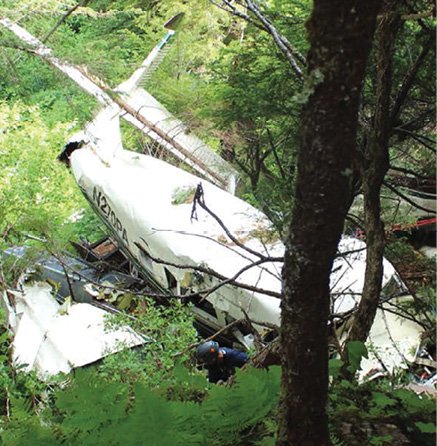
After flying south through the Cajon Pass at 6500 feet msl, the airplane turned west and encountered what the commercial pilot presumed was leeside turbulence from the mountain range. She turned back south to find smoother air but the turbulence became more severe and the airplane began to descend rapidly. As the airline transport pilot struggled to change frequencies in the turbulence, the airplane descended to 2000 feet msl (about 500 feet agl). The commercial pilot applied full power but the engine did not respond. After the airline transport pilot enrichened the mixture and applied carburetor heat, the engine momentarily regained power. At about 2300 feet msl, the engine again lost power, and the ATP decided to land on the westbound lanes of a freeway. As he attempted to avoid a vehicle, the airplane landed hard.

Read More »

Express Elevator Up

As the morning waned, the weather picture improved greatly, with only scattered showers and clouds over the Mojave Desert and clearing over the west side of the Tehachapi Mountains. We ended up filing to go over Victorville and into Bakersfield to visit family. Soon, we were cruising in VMC at 10,000 feet and looking at the activity over the Mojave. Ahead, there were Pireps for icing above 8000 feet, so we asked for and received routing over Edwards AFB at 6000. Based on what we saw visually and on the FAAs flight information system (FIS-B), we thought we were well out of danger.

Read More »

Lack Of Peer Pressure

When I was a student pilot, I was lucky to have some grizzled mentors. There were a lot of do this and dont do that admonitions, a lot of tips regarding shortcuts and rules of thumb, plus some sage advice about decision-making. A lot of that advice could be broken down into the old Its better to be on the ground wishing you in the air than to be in the air wishing you were on the ground genre, but it was often accompanied by a Let me tell you what I learned the hard way kind of introduction.

Read More »

Losing Orientation

A common night disorientation scenario is transiting from an area with many lights to empty countryside with few scattered lights (or none at all). I distinctly remember my first experience with night disorientation. I was a VFR-only pilot at the time and did not have a good instrument scan, nor much night experience, but thought I was proficient enough. I was flying from Boise to American Falls, Idaho, in a rented two-seat Alarus. The plane was painfully slow, so instead of flying over the highway, I hit the Direct To button on the GPS so I could fly the shortest path over the empty sagebrush back to the airport. Between the lack of lights and the moonless night, I strayed significantly off-course more than a few times. I knew my saving grace was the magenta line that I was able to keep pointed ahead.

Read More »

Twelve Months

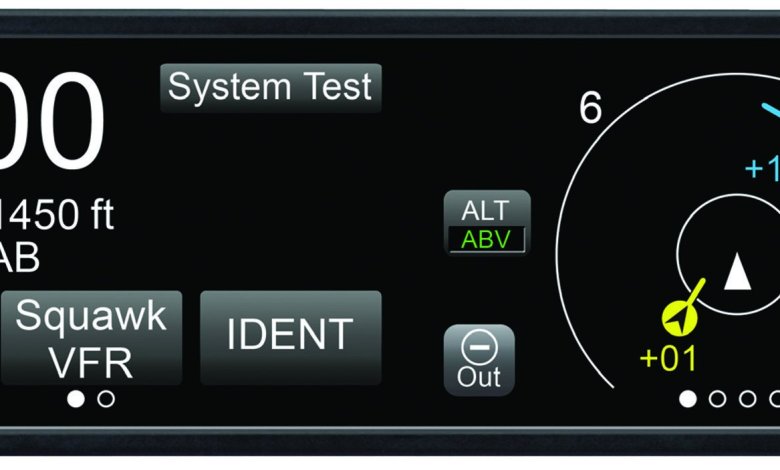
According to panelists at a recent Miami, Fla., conference geared to the business jet community and reported by Aviation International News (AIN), not all of the in-service fleet is expected to be compliant by the deadline. (Full disclosure: I often perform freelance work for AIN, for which I am compensated.) In fact, data cited by AIN show compliance is far from universal, with 17.5 percent of the piston-powered general aviation fleet (35,791 of 204,191) currently equipped.

Read More »

No Checklist For This

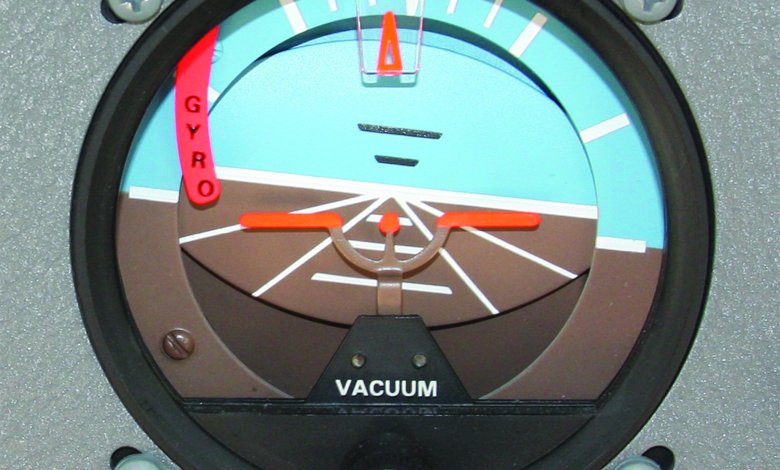
I was flying a 2002-model A36 Bonanza (yeah, with me its always a Bonanza) home to Wichita from Thanksgiving in Ohio with my wife and our son aboard. Somewhere over Indiana, the Bonanzas attitude indicator (AI) began to tumble. The failure announced itself slowly, but very soon the instrument was pitching up and down in very distracting oscillations. It then displayed a range of indications-from off-scale nose-up pitch excursions to slightly below 20 degrees nose-down-in a roughly two-second cycle, while indicating bank angles between wings-level and about 10 degrees left.

Read More »

NTSB Reports

The pilot reported that he and his co-owner had flown the airplane the night before the accident; it flew normally without problems. On the morning of the accident, he had to use the low-pressure boost pump to start the engine, but the pre-takeoff run-up was normal. The airplane ised most of the 4201-foot-long runway before becoming airborne. On reaching about 500 feet agl, the pilot determined the engine was not producing full power. He turned on the low-pressure boost pump and climbed to 1000 feet agl before turning back to the airport. The engine continued losing power, so he conducted a forced landing to a cornfield. A witness reported observing dark exhaust trailing the airplane during the takeoff.

Read More »

Assembling MOSAIC

By now, youve probably heard the news coming out of a recent AOPA Fly-In: The FAA is considering the idea of increasing the maximum takeoff weight limitation for wheel-equipped light sport aircraft (LSA) from 1320 lbs. to as much as 3600 lbs. On its face, this would allow a sport pilot with the appropriate endorsements to serve as pilot in command of, say, a Cirrus SR22 or an A36 Bonanza. Its one narrow focus of a broader initiative dubbed Modernization of Special Airworthiness Certificates, or MOSAIC, which may find its way into forthcoming FAA regulations.

Read More »
Pilot in aircraft
Sign-up for newsletters & special offers!

Get the latest stories & special offers delivered directly to your inbox.

SUBSCRIBE