Editor’s Log

Is ADS-B In Helping?

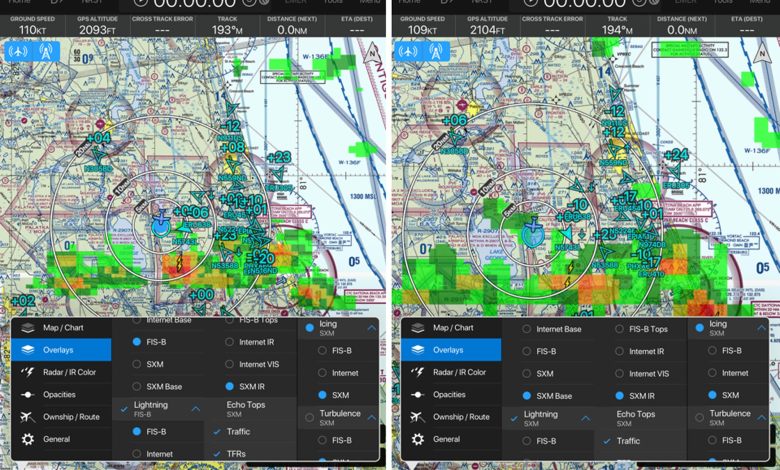
There probably are few pilots in the U.S. who arent aware of ADS-B and its In and Out flavors. The traffic and weather services ADS-B In brings to the cockpit have proven popular and inexpensive, portable receivers used with consumer-grade tablet computers have proliferated along with panel-installed equipment to bring enhanced situational awareness to even the lowliest cockpit. Yes, the data and information available through ADS-B In is for advisory purposes only-it cant be used in lieu of airborne radar or collision-avoidance equipment required by operating rules.


Read More »

Buddy System

Normally, I might have panicked, but with my experienced copilot at my side, I stayed calm. We talked through our options and decisions along as I continued to fly the plane. I began a series of small adjustments to the throttle and mixture to see how the engine responded. We quickly discovered these changes only made matters worse, so we left the settings as is. My buddy reminded me to stay high-altitude is our friend-and we looked for landing spots in case things deteriorated.

Read More »

Flying On The Ground

Your primary training probably included a diagram explaining where the elevator and aileron controls should be positioned based on where the wind is coming from while taxiing. When we have such wind conditions-and even when we dont, if we want to be honest- we can and should use the ailerons to help control the airplane on the ground. Alas, we dont always have that diagram available, and its easy to forget whether the upwind wings aileron should be down or up. (Hint: It depends.) Lets try to come up with a one-size-fits-all understanding of when and how to use ailerons on the ground.

Read More »

Odds And Ends

This issue likely will hit your mailbox just before the Sun n Fun International Fly-In Expo in Lakeland, Fla. The annual event informally kicks off each years air show season, and 2019 will be no different. If you plan to attend SnF or any other fly-in event (cough, EAA AirVenture, cough), youre not alone. In fact, thousands of your closest friends are planning the same thing, and well all want to arrive and depart at more less the same time.

Read More »

Autopilots

While in IFR cruise at 4000 feet, the pilot observed the flight director command bars move out of view as the airplane started a gradual descent. When the pilot corrected, the electric trim started to run nose down and the aircrafts descent rate increased. The pilot attempted to disconnect the autopilot and trim with the control switches and the red disconnect switch. None of this had any effect. With the turbulence and conditions, the pilot was unable to reach the autopilot and electric trim circuit breakers. After all other remedial procedures had failed, he shut off the avionics master switch at about 1000 feet and recovered the airplane at about 500 feet.

Read More »

NTSB Reports

Upon raising the landing gear after takeoff, the gear motor continued to operate longer than normal, and the pilot heard an abnormal sound toward the end of the sequence. The right main gear was hanging at about a 45-degree angle, and the left main gear was not visible. The pilot completed the appropriate checklists, without change. The pilot declared an emergency and ATC confirmed during a fly-by that the main gear was not extended. During the landing, the nose gear remained extended and the two main gear were retracted. The airplane came to rest on the runway and the passengers egressed without further incident.

Read More »

Shut Down

The recent partial shutdown of the U.S. federal government had a far-reaching impact on aviation, thanks to its parent Department of Transportation (DOT) being one of the agencies lacking an enacted appropriations bill for the current fiscal year. Since related agencies are tacked onto DOT spending bills, the NTSB also closed for the duration, delaying ongoing investigations and postponing new ones. (Our monthly listing of preliminary accident reports might look a bit strange until the NTSB has caught up with the backlog.)

Read More »

Engine-Failure Risks

It fascinates me that many GA pilots of single-engine airplanes cruise at such low altitudes. Theyre apparently oblivious to the fact that they are flying behind a single engine and if it fails you are on short final to somewhere! Extra altitude not only increases your radius of action, it also adds extra time for trouble shooting (which might eliminate the initial problem altogether) and increases the probability that a Mayday call might be heard. The side benefits include greater aircraft efficiency, cooler temperatures in the summer and possibly a smoother ride, in addition to less-congested airspace. Those long, low, flat, power-on final approaches can put you in the trees if your engine even coughs on short final. Keep a little energy in the bank and make it SOP to shoot for a reasonable aiming point on the runway.

Read More »

The Big Picture

I ts widely accepted that having good situational awareness is vital to safe and efficient flying. But what does situational awareness even mean? How do we develop and maintain the good kind? How do we fit ourselves into the big picture, and why is it important to do so? And once we understand these aspects of situational awareness, how can we use it to make things easier? On three recent flights, I feel I had a high level of situational awareness and used it to make a difference. In one I used my knowledge of my place in the big picture to help another pilot. In the second I used it to help myself. In the third I used it to eliminate a possible delay on an approach. Heres what Im talking about.

Read More »
Pilot in aircraft
Sign-up for newsletters & special offers!

Get the latest stories & special offers delivered directly to your inbox.

SUBSCRIBE