Editor’s Log

Best. Nordo. Ever.

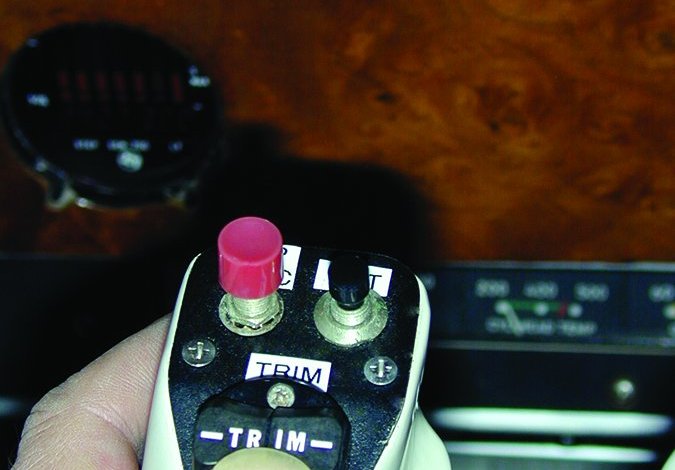
Earlier in the year, I found myself headed toward Albany, N.Y., to visit a long-time pilot-friend and play with airplanes. I was flying a second friends airplane, IFR, and being vectored for a visual approach through a cloud deck. All of a sudden, I can hear ATC, but they cant hear me. So I reached down between the front seats for the handheld mic-but there is no handheld mic. Theres a bracket, but nothing on it.

Read More »

Im Not That Good

So I got into one of those internet discussions with other pilots about airplane performance. The focus was on a 2100-foot-long grass strip near sea level and how well a Bonanza would handle it. We didnt disagree on the typical Bonanzas ability to get in or out, but I think some people might be a bit more optimistic about such things than I am.

Read More »

Multicom Frequency

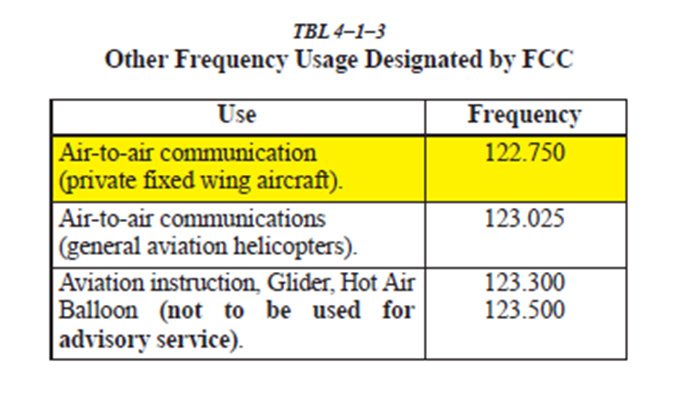
Like many airports in the U.S., my home base does not have a dedicated Unicom frequency. Instead, we use the Multicom frequency, 122.9 MHz, to self-announce our positions and intentions. Occasionally, two or more pilots trying to use the same runway at the same time will use the frequency to work out details of sequencing themselves, but thats about it. Other airports in the vicinity also use 122.9, including nearby Cheap Fuel County, so its easy and convenient to leave the selected comm radio on that frequency when popping out to top off before a longer flight.

Read More »

The Worst Case

I always try to ask myself before each takeoff, Whats going to try to kill me on this flight? Its a fair question to ask, and one that deserves a considered response, at least to yourself. The trick is theres usually more than one answer.

Read More »

Airmanship: Legal VS. Safe

I hope it wont come as a shock to learn magazine editors dont always practice what they preach. Kind of like fat-cat politicians urging austerity for the proletariat, we arent always as prolific in our flying as we may seem, or as we encourage others. In fact, over the last couple of years, competing and conflicting priorities conspired to keep me and my airplane on the ground much more than was good for either of us.

Read More »

Privatize ATC?

Decades ago, when commercial air transportation was first, umm, getting off the ground, it soon became apparent some way to sort and separate the growing amount of traffic was necessary to keep them from swapping paint. The first steps toward a modern air traffic control system were taken before WWII, and the U.S. government quickly began spending money, erecting navigational aids, creating airways and developing procedures to ensure the steady demand for more air travel would not be impeded.

Read More »

My Sport Does Not Assume My Net Worth

If youve been following the general aviation industrys efforts to secure federal legislation deregulating FAA medical certification, you know its been a long, frustrating process (though not nearly as long or frustrating as some of the industrys other legislative efforts). The legislation is S. 571, the Pilots Bill of Rights 2 (PBOR2), introduced in the U.S. Senate by Sen. James Inhofe (R-Okla.). A companion bill, H.R. 1086, was introduced in the U.S. House of Representatives by Rep. Sam Graves (R-Mo.)

Read More »

Aviation Area Forecast Says Goodbye

The area forecast is being eliminated. The old, familiar, text-based weather product, coded as FA, will be discontinued by the National Weather Service (NWS) sometime during 2016. The upcoming change applies to the six area forecasts covering the Continental U.S., plus the single product for Hawaii. Area forecasts for Alaska, the Caribbean and the Gulf of Mexico will be unaffected, at least for now.After a public comment period begun in 2014, the FAA and NWS determined the FA resulted in a broad forecast of limited value. The NWS said it provides equivalent information through a number of better alternatives, including more-modern digital and graphical forecasts, observations, and communications capabilities.

Read More »

FAA and Medical Certificates

In recent months, weve highlighted the general aviation industrys efforts supporting federal legislation to ease existing FAA requirements to hold a medical certificate for many non-commercial flight operations. Both AOPA and EAA have worked hard on this project for several years, and U.S. Sen. James Inhofe (R-Okla.) earlier this year spearheaded the effort with his Pilots Bill of Rights 2 (PBOR2). As this issue of the magazine was being prepared, some additional details were publicized, designed to help ensure the bills passage. Its always risky predicting Congressional action, but that could happen around the time this hits your mailbox. The results probably wont look like the original PBOR2, however.

Read More »

Crashworthiness

In Septembers issue, we ran a small article about NASAs crash-testing of three Cessna 172s as it researches emergency locator transmitter (ELT) technologies and mountings. A sidebar with that article published still images from an in-cabin video of a test, highlighting the value of shoulder harnesses for occupant protection.

Read More »
Pilot in aircraft
Sign-up for newsletters & special offers!

Get the latest stories & special offers delivered directly to your inbox.

SUBSCRIBE