Editor’s Log

Remember Your Training

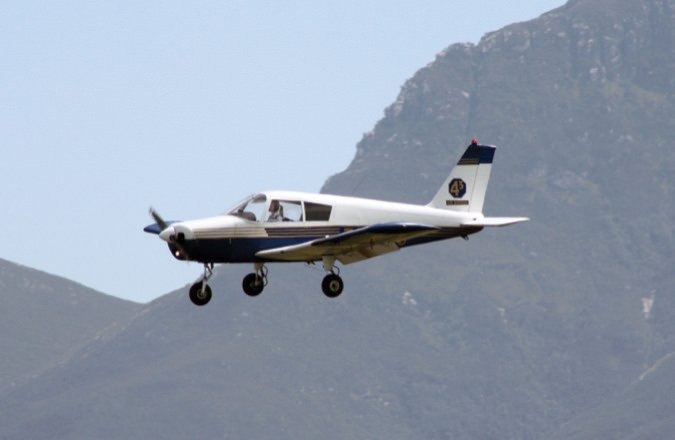
I was still a student pilot, with maybe 20 hours, most of it dual instruction, somewhere between my first solo and the checkride. My primary mount was a Cessna 150 but I had recently been checked out in the FBOs Cherokee 140. One day, rather than take the 150 for a local flight, I opted for the Piper.The airplane actually was a bit intimidating: A more powerful engine. Only one door. A low-mounted wing, like a jet fighter. A fuel system demanding that the pilot energize the auxiliary pump for takeoffs and landings (and change tanks every now and then), both of which were features the 150 didnt have. Rear seats! It was definitely a step up from the 150, at least in complexity, and I was itching to solo it.

Read More »

Normalizing ADS-B

A favorite pastime is surfing the online used airplane ads. I check the market value of what I already own, Im interested in whats available if I wanted to trade up and Im curious about obvious trends in used airplanes. Its a non-scientific exercise, but one from which I can draw some conclusions.

Read More »

Seeing The Invisible

Most pilots venture into windy conditions with enough skills and smarts to know how to either avoid or cope with them. But wind-related accidents are still commonplace, so clearly we dont always get it right. One reason for this may be fairly simple: With the exception of blowing snow, tornadoes, dust devils and some cloud formations, wind is usually invisible. To visualize what is going on, you have to visualize wind currents, which is where my experience whitewater rafting has served me well.

Read More »

A Big Win, For Now

Long-time readers will recall my several scribblings in opposition to proposals to privatize the U.S. air traffic control (ATC) system, and my encouragement to those same readers to communicate their views to their federal elected officials. Im happy to report our opposition to this solution in search of a problem has been successful: On February 27, U.S. Rep. Bill Shuster (R-Penn.), the proposals architect and chairman of the House of Representatives Committee on Transportation and Infrastructure, announced he would remove it from pending FAA legislation.

Read More »

Cockpits By Braille

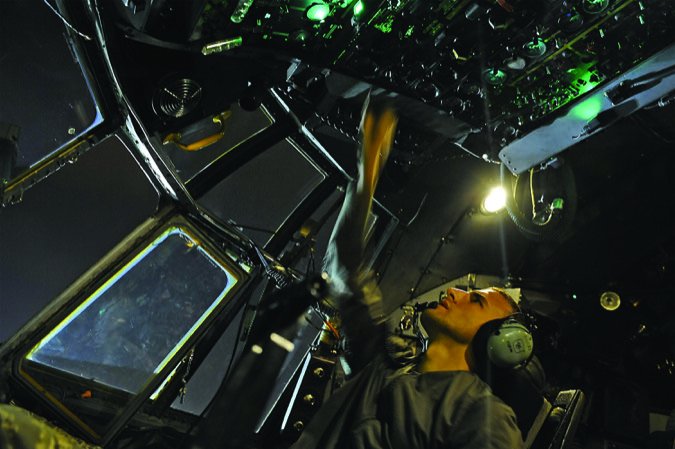
Stuff happens. One minute the engine may be purring like a kitten, the next it can be coughing up a hairball. Pilots who react well to such challenges often credit their training, applying the instincts honed by indoctrination without the need for excessive thought. How does that happen? Most pilots regularly practice simulating an engine out, picking a field and pitching for best glide. That is one scenario to be ready for, but emergencies come in many forms, and your preparation in advance will pay off when that time comes.

Read More »

Down Time

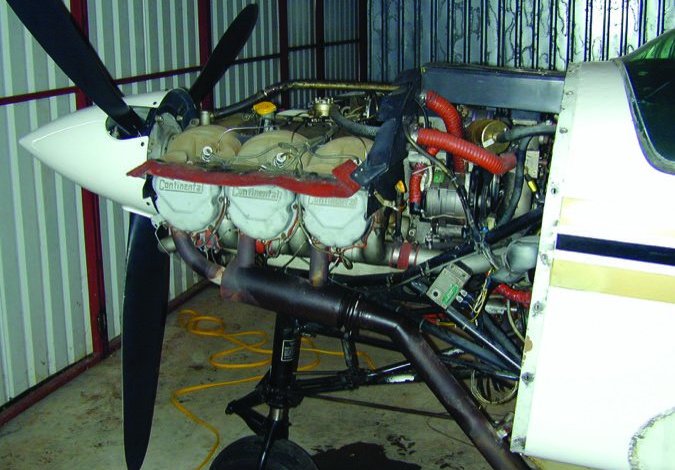
If youre an aircraft owner like me, you enjoy rolling up your sleeves and tackling various tasks to help maintain or preserve your airborne conveyance. Those tasks can be as simple as a wash and wax, or more complicated, like an engine oil and filter change, or other preventive maintenance (PM) items allowed in FAR 43s Appendix A. And if youre also busy like me, you may find it difficult to work these projects into your schedule. One result is starting a PM project and not having time to finish it. Thats a place I find myself.

Read More »

Get Out The Fork

Long-time readers may recall my earlier screeds about the threat of privatizing the nations air traffic control system. The most serious attempt to privatize ATC is found in legislation pending before the U.S. House of Representatives, H.R. 2997, the 21st Century Aviation Innovation, Reform, and Reauthorization Act, or simply the 21st Century AIRR Act. In addition to privatizing the U.S. ATC system, the bill funds FAA programs for a multiyear period.

Read More »

Holiday Gifts

Despite all the gloom and doom about piston-powered general aviations future youve probably heard lately around the FBOs coffee pot, the industry actually isnt doing too badly. Three data points that became available late in 2017 bear this out.

Read More »

Advancements

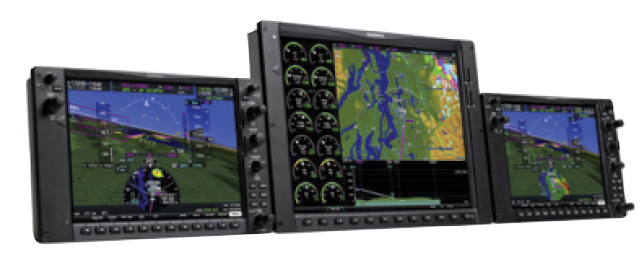
In another forum, I recently complained that much of the technological advancement the general aviation industry has seen in my flying career manifests itself only in the instrument panel, not in the airframe or the powerplant. The evidence supporting my complaint is rather abundant, and my own airplane-manufactured in 1966-is something of a poster child.

Read More »

FAA Targets Incorrect Surface Landings

On July 7, 2017, an Airbus A320 operating as a scheduled Air Canada passenger flight and conducting a night visual approach to Runway 28R at the San Francisco International Airport overflew other airliners positioned on a taxiway and awaiting takeoff clearance. As we wrote in our October 2017 issue, Runway 28L was closed at the time; its lighting was turned off and a 20.5-ft-wide lighted flashing X (runway closure marker) was at its threshold. The Airbus lined up for its landing on parallel Taxiway C, which had four air carrier airplanes on it awaiting takeoff clearance-a Boeing 787, an Airbus A340, another Boeing 787 and a Boeing 737. Subsequent investigation reveals the Airbus crew advanced its thrust levers for a go-around when the airplane was about 85 feet above the taxiway; the minimum altitude recorded on the FDR once the go-around was initiated was 59 feet agl. The Boeing 787 is 55 feet 10 inches high.

Read More »
Pilot in aircraft
Sign-up for newsletters & special offers!

Get the latest stories & special offers delivered directly to your inbox.

SUBSCRIBE