Critical Moments

Why We Lose Control

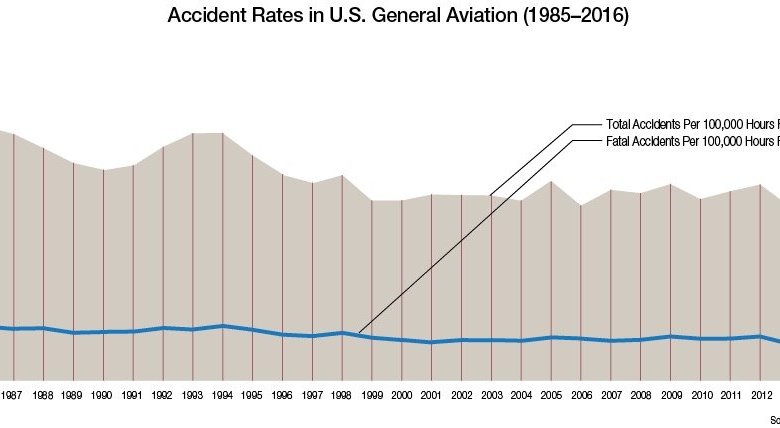
The aviation industry in recent years has highlighted loss of control in-flight (LOC-I) as the leading cause of general aviation fatal accidents. Many aviation organizations, including government agencies, have devoted considerable time and resources to target this problem and develop effective mitigations to reduce the number of LOC-I accidents. Much of that effort focuses on a pilot losing control, and how to train and equip to prevent it, because its the final event in the accident chain.
Read More »

Engine-Failure Risks

It fascinates me that many GA pilots of single-engine airplanes cruise at such low altitudes. Theyre apparently oblivious to the fact that they are flying behind a single engine and if it fails you are on short final to somewhere! Extra altitude not only increases your radius of action, it also adds extra time for trouble shooting (which might eliminate the initial problem altogether) and increases the probability that a Mayday call might be heard. The side benefits include greater aircraft efficiency, cooler temperatures in the summer and possibly a smoother ride, in addition to less-congested airspace. Those long, low, flat, power-on final approaches can put you in the trees if your engine even coughs on short final. Keep a little energy in the bank and make it SOP to shoot for a reasonable aiming point on the runway.

Read More »

NTSB Reports

After flying south through the Cajon Pass at 6500 feet msl, the airplane turned west and encountered what the commercial pilot presumed was leeside turbulence from the mountain range. She turned back south to find smoother air but the turbulence became more severe and the airplane began to descend rapidly. As the airline transport pilot struggled to change frequencies in the turbulence, the airplane descended to 2000 feet msl (about 500 feet agl). The commercial pilot applied full power but the engine did not respond. After the airline transport pilot enrichened the mixture and applied carburetor heat, the engine momentarily regained power. At about 2300 feet msl, the engine again lost power, and the ATP decided to land on the westbound lanes of a freeway. As he attempted to avoid a vehicle, the airplane landed hard.

Read More »

Express Elevator Up

As the morning waned, the weather picture improved greatly, with only scattered showers and clouds over the Mojave Desert and clearing over the west side of the Tehachapi Mountains. We ended up filing to go over Victorville and into Bakersfield to visit family. Soon, we were cruising in VMC at 10,000 feet and looking at the activity over the Mojave. Ahead, there were Pireps for icing above 8000 feet, so we asked for and received routing over Edwards AFB at 6000. Based on what we saw visually and on the FAAs flight information system (FIS-B), we thought we were well out of danger.

Read More »

Trim Failures

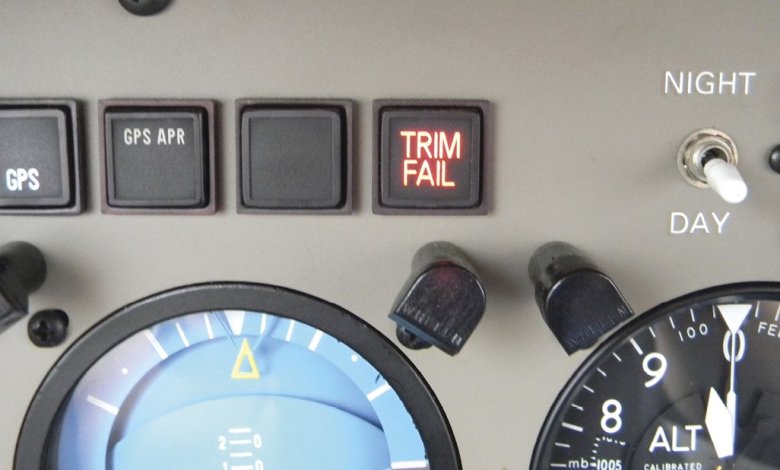
Years ago, when I first heard the term runaway trim, my initial thought was something along the lines of, How can that happen? All of the trim systems Id seen up to that time had been manual, unassisted crank, lever or thumbwheel affairs, which rely on the pilot grabbing something and moving it to achieve the desired change. I was aware that trim systems could mechanically fail, but generally would stay in a fixed position when they did. I had discussed and trained for abnormal trim conditions, but how could a trim system run away? Then I learned about electric trim, autopilots and runaway trim, and it all became clearer.

Read More »

NTSB Reports

According to the pilot, he was delayed about 10 minutes by traffic before completing the engine run-up and takeoff roll with no anomalies noted. After the pilot lifted off and retracted the landing gear, the engine stopped producing power about 300 feet above the runway. There was no time to perform remedial actions to restore power, so the pilot lowered the landing gear and touched down on the remaining runway. The airplane went off the departure end of the runway, down an embankment and across a road before coming to rest upright 384 feet beyond the runways departure end in low brush.

Read More »

Whos In Charge?

I started my lessons (at 50 years old!) at an airport called Howell-New Lenox in Illinois. On my first solo, I had to go around due to a back taxi by another student with his instructor (my first exposure to being PIC in a two-pilot operation. But I was cool; I also learned that I was pretty calm in an abnormal situation-when Im alone.

Read More »

Air In The Tanks

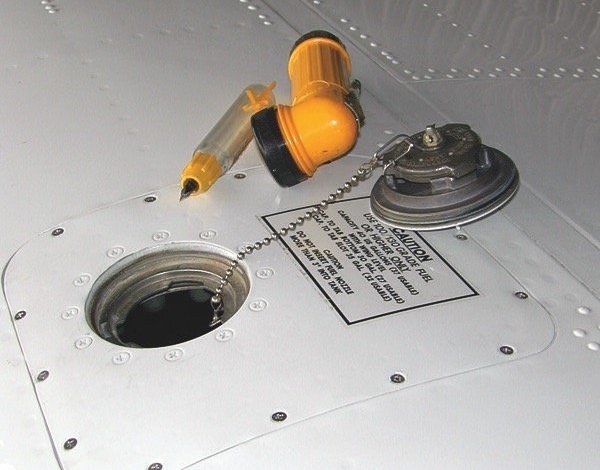
Ive owned Cessna T210s since 1977; first a 1969 J model and then a 1979 N model with a TSIO-520-R engine. In the 1980s, there were a number of fuel exhaustion accidents in 210s, all of them attributable to not getting a full fill and resulting in being shorted an hours supply when fueling stops after fuel backs up out of the filler port. The outboard sections of the fuel tanks are slightly higher than the bottom of the filler port. To get the last one-plus gallons in the tanks requires the slowest of fueling until reaching the real full point.

Read More »

Turbochargers

During descent, pilot noted oil streaking back from top engine cowl louvers, then dropping oil pressure. Pilot conducted precautionary shutdown and feathered propeller. Pilot continued descent and landed at destination without issue. Maintenance removed cowling and found oil appearing to come from the turbocharger (p/n 4066109025) area. Further investigation revealed oil bypassing the seals on the turbo.

Read More »

Assembling MOSAIC

By now, youve probably heard the news coming out of a recent AOPA Fly-In: The FAA is considering the idea of increasing the maximum takeoff weight limitation for wheel-equipped light sport aircraft (LSA) from 1320 lbs. to as much as 3600 lbs. On its face, this would allow a sport pilot with the appropriate endorsements to serve as pilot in command of, say, a Cirrus SR22 or an A36 Bonanza. Its one narrow focus of a broader initiative dubbed Modernization of Special Airworthiness Certificates, or MOSAIC, which may find its way into forthcoming FAA regulations.

Read More »
Pilot in aircraft
Sign-up for newsletters & special offers!

Get the latest stories & special offers delivered directly to your inbox.

SUBSCRIBE