Critical Moments

The Indie ATC

Key officials introduced legislation in Congress that would establish an independent, not-for-profit corporation to modernize and operate ATC in the U.S. The federally chartered ATC corporation would be governed by a board representing the aviation systems users and the public interest. Many major U.S. airlines applauded the bills.

Read More »

The Impossible Turn

This magazine often has discussed the so-called impossible turn: returning to the departure runway and landing downwind after an engine failure during takeoff. Our view of the impossible turn is that it is possible, but only with practice, sufficient altitude and some luck. Generally, executing a forced landing straight ahead is preferable to attempting a steeply banked turn at low altitude. This is especially true without engine power or sufficient airspeed above the wings stalling angle of attack to enable the steep turn.

Read More »

NTSB Reports

At about 1950 Mountain time, the airplane was substantially damaged during a forced landing following a loss of engine power. The commercial pilot and his passenger were not injured. Night visual conditions prevailed. While en route, the pilot determined adequate fuel to complete the flight as planned was not aboard. The right fuel tank apparently failed to feed the engine. While preparing to land, the engine lost power. The pilot performed a forced landing to a field, during which the airplane nosed over and came to rest inverted.

Read More »

Lessons Relearned: Emergency Aircraft Landing

My wife and I planned a flight to the San Francisco area to attend our eldest granddaughters college graduation. On the morning of departure, I obtained a standard briefing indicating beautiful VFR for the entire flight. We headed to the airport, preflighted the aircraft and loaded our luggage. A smooth takeoff run was followed by a crisp climbout in the cool morning air to our cruising altitude of 9500 feet.

Read More »

Snow on the Runway

Snow that has persisted on the ground for a long time will form crusted layers from wind packing, melting and refreezing. Often the base layer and areas between the crusted layers are hollow. This happens when lighter, fluffy snow consolidates into more dense grain structures. These larger grains, referred to as depth hoar, result from water vapor depositing or desublimating onto existing snow crystals. Granular depth hoar acts like a layer of ball bearings beneath the sheet of frozen crust. Backcountry skiers know this is the stuff avalanches are made of. For pilots, the crusts have a similar catastrophic effect of catching gear or skis resulting in airplanes getting stuck, or worse, getting flipped.

Read More »

Landing Re-Dos: Things to Think About

There you are, on short final to a nearby airports runway, hoping to get to the fly-in breakfast before the sausages get too old. Youve made your position reports on the CTAF throughout the pattern, the landing checklist is complete, the airplane is configured for landing and youve nailed the airspeed. All youre waiting for as you glide down to the runway is raising the nose for the flare and the final power reduction. Theres no reason to expect this wont be one of your better landings. Until that airplane thats been sitting in the run-up area decides to taxi onto your runway, turn its back to you and begin accelerating for its takeoff roll. Its time to go around. What will you do?

Read More »

Memorable Aircraft Accidents

The typical flight in a personal airplane is uneventful. We take off, fly the mission and land. Every now and then, though, stuff happens. Its one of the reasons flying has been called hours and hours of boredom punctuated by moments of sheer terror, a description it shares with many other activities. In fact, most of us have our own tales to tell, stories of airborne drama weve experienced personally or heard directly from the people involved.Ive been doing a lot of flying recently, spending quality time at airports and remote landing strips with other pilots and their airplanes. Along the way, I picked up several there I was narratives from pilots who made serious errors in judgment, plus others who experienced what can only be described as bad luck. Sharing these narratives with other pilots helps add to our knowledge of what can happen, how we should prepare for it and what we can do in response. In reflecting on them, I soon realized they all have a common element. And since I was the pilot for one such event, I can assure you: When an event begins, it often happens very quickly, providing little warning.


Read More »

Fly Safe

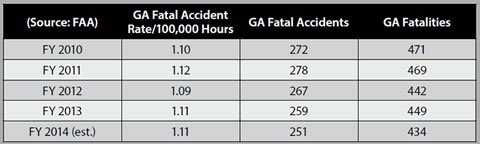
On June 6, at AOPAs Homecoming Fly-In, the association and the FAA formally kicked off a new program focused on improving general aviation safety. Dubbed Fly Safe, the FAAs campaign will be highlighting GA accident causes and solutions in partnership with AOPA and other industry organizations. The agency says preventing GA fatalities is one of its top priorities, with the goal of reducing the GA fatal accident rate by 10 percent over a 10-year period (2009-2018). Noting that loss of control (LOC)-mainly stalls-accounts for the largest number of GA accidents, the new program will start there.

Read More »

Tools You Can Use?

So, youve decided the risk is worth it and youre going to execute a zero-zero or low-visibility takeoff. Youve thoroughly prepped the airplane, the cockpit and yourself for the operation, youve practiced it, you have a solid-gold takeoff alternate only a few miles away, with an ILS above minimums, and youre ready. One problem: The weather is so bad, you cant see more than one or two of the runway stripes at a time. Is that enough to help ensure directional control on the takeoff roll? Probably not.

Read More »

The Ditching Option

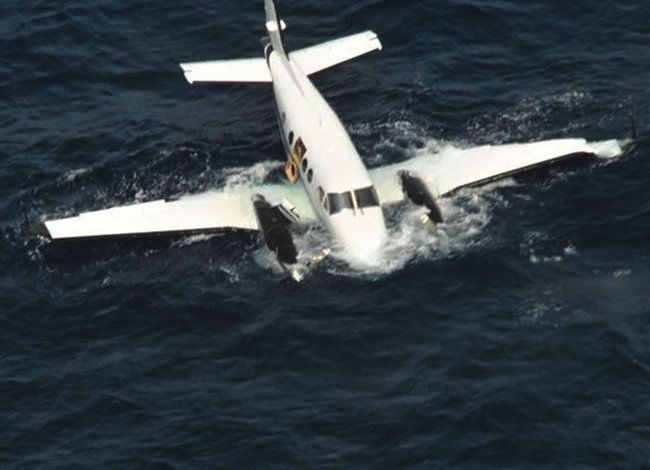
Let’s dispel some myths: Ditching done well is not all that dangerous. My recent ditching was devoid of actual trauma. Most people—about 90 percent—survive a ditching, and those who don’t are usually the ones who did not take basic steps to prepare. Some recent incidents and my own experience demonstrate ditching usually is very survivable and taking a few precautions can greatly enhance the possibility of a favorable outcome.

Read More »
Pilot in aircraft
Sign-up for newsletters & special offers!

Get the latest stories & special offers delivered directly to your inbox.

SUBSCRIBE