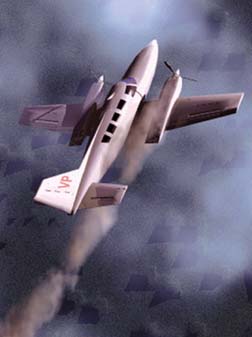
As we noted in our January 2007 article, “Because it involved two very modern jets operating under IFR and equipped with the latest in collision avoidance equipment, and because it occurred in controlled airspace, this is an accident that simply should not have happened.” We could have added to that statement information regarding Brazils modern ATC system, along with a discussion of the hyper-accurate altimetry and navigation systems required in RVSM (reduced vertical separation minima) airspace implemented throughout the world between 1997 and 2005. In fact, its arguable the accident happened because of RVSM and the accuracy it demands. Think about it: In years past something called the “Big Sky Theory” applied to so much of the altimetry and navigation standards. That theory held that, even if ATC screwed up and violated separation standards or-as in this case-put two oncoming aircraft at the same altitude-the inevitable variables in tracking a VOR radial or selecting barometric pressure in a Kollsman window provided a margin of error against midair collisions. Instead, this midair collision occurred in spite of all the “slack” built into the system. As the computer-generated image on the facing page demonstrates, the two aircraft were pretty much at the same altitude and displaced only 60 or so feet laterally. In the scheme of things, those are “noise-level” errors, the values of which dont really matter. In years past, with less-accurate systems, you couldnt have put these two aircraft that close together if you tried. The other automation-related event helping ensure this tragedy involves the way Brazils ATC system computer inserts a flights “cleared” altitude into the datablock displayed on controllers screens. In the event, they were presented with ambiguous data showing what the NTSB described as both the Embraers requested and cleared altitude. As the NSTB summarized it, “a design in which two distinctly different pieces of information…appear identical on the display is clearly a latent error.” Brazilian authorities defended this data presentation by noting, “controllers have always operated the system in this manner,” according to the NTSB. The NTSB went on to note the original clearance received by the Embraer crew cleared them to maintain FL370. Upon reaching the Brasilia VOR (BRS), the flight turned northwest to follow airway UZ6. As the NTSB drily put it, “The automatic change to the cleared altitude field did not accurately reflect the status of [the Embraers] clearance.” See below for an excerpt of the relevant FAA/NACO en route chart.