Airmanship

What Went Wrong?

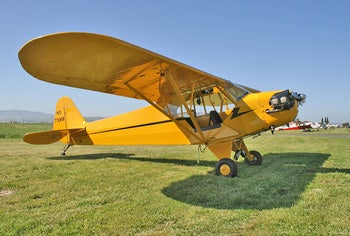
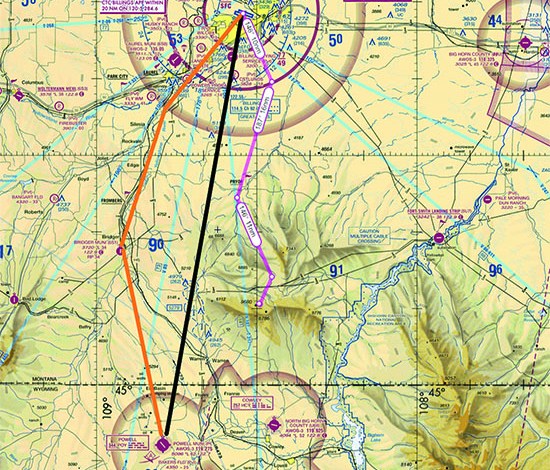
Every year, the Montana Department of Transportation Aviation Division offers its well-attended and comprehensive Surratt Memorial Winter Survival Clinic. Just about every pilot who has attended raves about the experience, and, thankfully, the majority in attendance will never have to apply the survival skills outlined at the clinic. Little did one pilot know that only […]

Read More »

States And Trends

Pilots tend to be pretty good at noting the airplane’s state, that is, whether it is high or low, left or right of target for instrument and visual approaches. Instructors are pretty good at teaching awareness of the airplane’s state, and pointing it out during flight training—“you’re left of course,” “check your altitude,” etc. In […]

Read More »

I Heard This Is Fun To Do

When I was in the Air Force, my colleagues would tell the story of how some fighter pilots used to do touch-and-goes on a tall, flat mesa that stuck up somewhere in the southwest desert, perhaps in Nevada or Arizona. It was dubbed “Touch-And-Go Mesa.” (Imaginative, huh?) One pilot supposedly did the thing, and then […]

Read More »

Helicopter Wakes

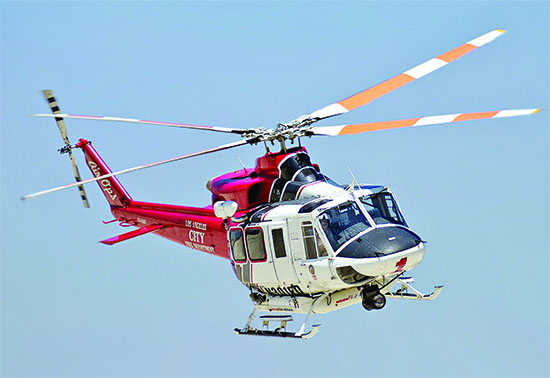
Long ago and far away, my T-hangar at a busy reliever airport outside Washington, D.C., was across from where a nearby county’s law enforcement and emergency medical services helicopter operation was based. Since I was at the end of the hangar row, they were well within 100 yards. The ’copter, a Bell 412 as I […]

Read More »

Recognizing The Unstable Approach

After turning from base to final, a pilot should be able to quickly and correctly determine whether to continue or discontinue the approach to landing by judging salient visual clues. What clues? The runway sight picture, glide path, descent rate, runway heading, airspeed and altitude are the primary ones we should be using. Pilots need […]

Read More »

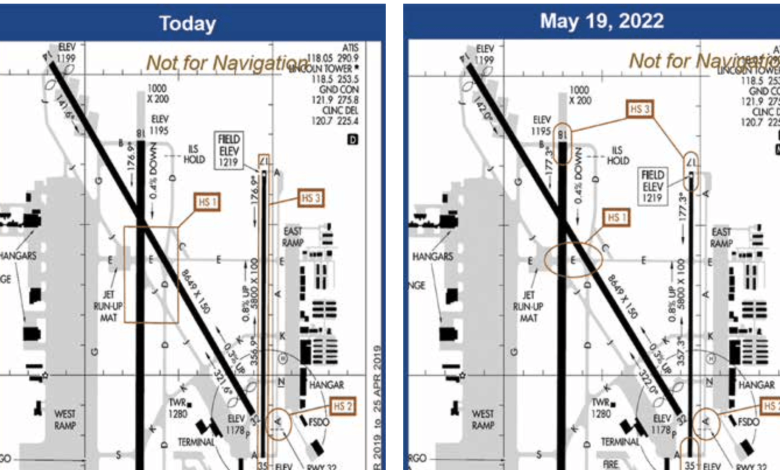
‘Wrong-Surface’ Events Get Greater FAA Focus

Since about the time two airplanes tried to use the same airport at the same time, runway and taxiway collisions have been a safety issue. With the growth in traffic outpacing construction of new facilities in recent years, the FAA has also noticed greater numbers of what are called “wrong-surface events.” It’s a broad term, […]

Read More »

Fly In The Yellow Arc?

One instrument almost all aircraft have is an airspeed indicator. Of course, it’s important to know how fast we’re going, if for no other reason than bragging rights, and that’s true for airplanes, rotorcraft, gliders and even dirigibles (hot air balloons need not apply). Piston-powered personal airplanes, meanwhile, often have a bunch of color-coded markings […]

Read More »

Signs of Success

One of the local GA airports in my area recently got an FAA improvement grant. They got new taxiway lights—real ones, to replace the old blue reflectors—and new paint for all of the surface and runway markings. The hold-short signs at the ends of the runway are now carefully mounted, bright red and well-lit at […]

Read More »

In The Pattern: If you See Something, Say So

Many years ago, when I was still a bold pilot, I was in the U.S. Air Force, based at Beale AFB and flying as a copilot aboard the KC-135Q, the venerable airborne tanker system based on the Boeing 707. The “Q” version of the KC-135 was specially modified to refuel the Lockheed SR-71 Blackbird with […]

Read More »

AOA: Benefits, Choices

In 2015, a public-private partnership involving the FAA, pilot and industry organizations, plus airframe and powerplant manufacturers, and known as the General Aviation Joint Steering Committee (GAJSC), used accident data to identify in-flight loss of control as the leading cause of fatal general aviation accidents. A GAJSC working group determined we could substantially reduce the […]

Read More »
Pilot in aircraft
Sign-up for newsletters & special offers!

Get the latest stories & special offers delivered directly to your inbox.

SUBSCRIBE