











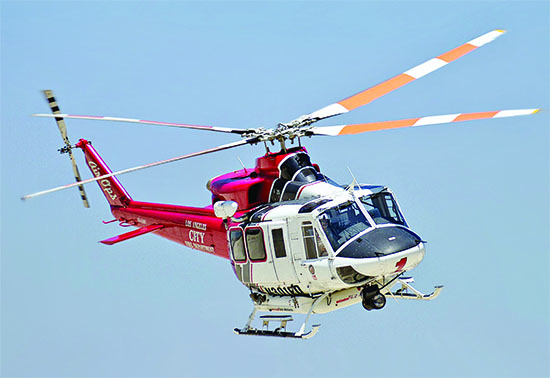


Long ago and far away, my T-hangar at a busy reliever airport outside Washington, D.C., was across from where a nearby county’s law enforcement and emergency medical services helicopter operation was based. Since I was at the end of the hangar row, they were well within 100 yards. The ’copter, a Bell 412 as I recall, came and went on an unpredictable schedule, as they do, and always seemed to come and go when my hangar door was open. It was close enough that the dust, small gravel and other loose items it stirred up easily found their way inside. I expressed my displeasure on several occasions.
But it was educational: I learned there’s a lot of force in the wake that 412 generated and that I really don’t want my airplane within its range. The thing is, the wake generated by a hovering helicopter isn’t something most pilots think about, since it’s just another aircraft moving slowly around the ramp before it departs. But hovering without any forward motion is one of the times when a helicopter’s wake production is at its greatest. And it doesn’t trail out behind it, as with an airplane—but radiates in all directions.

