Airmanship

VFR Pop-ups

While this article is primarily focused on popping up on a controllers radar screen to request an IFR clearance, VFR pilots also can find themselves suddenly needing to be in the ATC system. Reasons can include an in-flight emergency, an inadvertent encounter with poor weather, to request VFR flight following or to enter certain airspace. As with anything involving aviation-and especially when considering ATC-theres a right and a wrong way to do it.

Read More »

Surviving Inadvertent IMC

AOPAs Air Safety Institute tells us half of all crashes attributed to attempted visual flight into instrument conditions involve instrument-rated pilots. You can survive, however, if you have a plan. If, despite your best efforts, you blunder into instrument meteorological conditions (IMC) while attempting to remain VFR until you pick up your IFR clearance, use the following to get out of the situation:

Read More »

Popping Up

Youre departing on an IFR trip in a well-equipped aircraft with two passengers aboard. When you call for your clearance, ATC cannot immediately find your flight plan-you get the oft-dreaded clearance on request response. After completing all your pre-taxi checklists and entering what you expect will be your route into the GPS, youre still sitting on the ramp with the engines turning, waiting. Eventually clearance delivery returns and says they cannot find your flight plan. Take a moment, and look at the pop-up pop quiz questions in the sidebar on the opposite page. What is your most likely response if you actually found yourself in this same scenario, given the information you have so far?Lets add some additional details to this scenario. For one, the airport youre trying to depart is a busy, tower-controlled facility in Class C airspace, and under an inner ring of a very busy Class B area. To get to your destination, youll head southwest, away from the Class B airport. But youre still sitting on the ramp, with the engine running, waiting on ATC to get its act together. Does this change your response to the quiz? But wait, theres more. The weather is marginal VFR, thanks mainly to low ceilings (1000 to 3000 feet agl). Visibility is greater than five sm. Take the pop quiz again. Has your answer changed? Oh, did I mention that this is at night? Does that change your answer again?These kind of questions are standard fare for instrument pilots, and many conducting VFR-only operations in or near certain airspace. And while missing flight plans arent the norm, their not at all unusual, either.


Read More »

Staying Flexible

Anytime we use a personal airplane as regular transportation, we risk running afoul of the weather, mechanical failures and other schedules. It can be done, and done safely, but doing so requires flexibility. In the end, youll likely be as punctual on the airlines or by driving, but it wont be as much fun unless you fly yourself.

Read More »

This Is War!

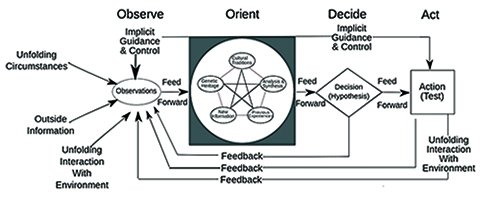
In our February 2013 issue, we briefly discussed the late USAF Col. John Boyds famous OODA Loop, a decision-making process originally developed to assist fighter pilots in air combat training. We noted, Key to understanding and implementing the OODA Loop, according to Boyd, was the accuracy and rate with which we step through the decision-making process. If we fail to accurately assess our environment, we cant make effective decisions. If we fail to make those decisions quickly enough, external events will overtake us and also result in poor decisions. The OODA Loop is derived from the acronym formed by it’s four basic steps: observation, orientation, decision and action.

Read More »

Mastering The Zen Of Flying

Around 600 BCE, Lao Tzu quit a good government job to seek his fulfillment in nature. He summarized his resulting thoughts in the Tao Te Ching, which can be translated as something like The Way of Nature. Its central tenet is that wisdom can be achieved by accepting reality and its causes, and responding accordingly. Questioning or pushing back against nature causes disharmony. In essence, one must go with the flow of nature to avoid unhappiness.

Read More »

The Ditching Option

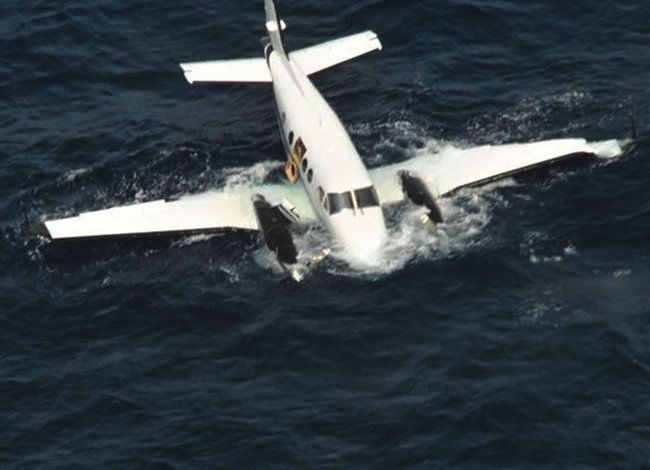
Let’s dispel some myths: Ditching done well is not all that dangerous. My recent ditching was devoid of actual trauma. Most people—about 90 percent—survive a ditching, and those who don’t are usually the ones who did not take basic steps to prepare. Some recent incidents and my own experience demonstrate ditching usually is very survivable and taking a few precautions can greatly enhance the possibility of a favorable outcome.

Read More »

Abnormals

Things can go “bump” in the night. Daytime, too. Most of them either have been considered before or encountered by someone, resulting in a section of your AFM/POH labeled “Emergency Procedures.”

Read More »

The Art of Crashing

When considering how to crash, my first bit of advice is don’t do it. Since the reality of any flight is that things can go wrong, that isn’t particularly helpful, I know. What can go wrong? Your crankshaft can break, your fuel lines can clog or, if you are a damn fool, you can run out of gas. The point is, someday your engine may stop working for reasons beyond your immediate control and your next option is an off-field landing, or worse. If you’re lucky, you will be mid-field downwind at your home airport and it will work just like the last time you practiced engine-out procedures—you do still practice those, right?

Read More »

Master The Rudder

Rudder coordination is vital to stall and spin avoidance, which is where most attention to rudder coordination training is focused today (with good reason). But when you develop a feel for proper rudder input, you’ll not only manage high angles of attack correctly, you’ll also get better aircraft performance all around. Yes, even in the latest airplanes, there is still a need to stress proper rudder use in all phases of flight. If you’re an experienced pilot, you probably recall an instructor in your early days endlessly hounding you to “step on the ball” to coordinate with the rudder.

Read More »
Pilot in aircraft
Sign-up for newsletters & special offers!

Get the latest stories & special offers delivered directly to your inbox.

SUBSCRIBE