Airmanship

Trim Stalls

There’s a school of thought that says no pilot should react to anything in the cockpit quickly. At least some of the thinking behind this philosophy is that humans make more mistakes when they are rushed to a decision or action than when they have time to consider what steps to take and then, you […]
Read More »

Why Your Performance Charts Are Wrong

There’s a performance chart for every basic phase of flight. Pilots use them to determine how fast they can fly, for how long and how much runway they’ll use doing it, among other things. The tables, graphs and charts in the performance section of your typical personal airplane’s flight manual or operating handbook purport to […]

Read More »

Bendixking Aerovue Touch

The AeroVue Touch is a full-function PFD/MFD solution designed to replace all six legacy instruments. Features include SmartView synthetic vision and a vertical situation display show terrain. It also handles ADS-B In weather and traffic. The system includes the 10.1-inch display shown at left, plus a panel-mounted control set. A remote-mounted magnetometer and outside air […]

Read More »

Wind’s Effect on Vortices

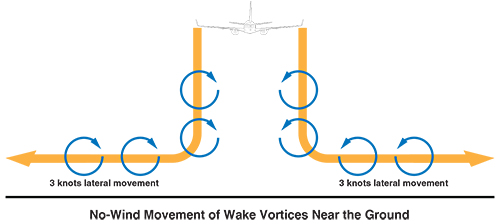
In no-wind situations as pictured in the diagram at top right, wake vortices tend to move outward laterally across the surface at about three knots. However, when light crosswinds are present, the downwind vortices will move at three knots plus the wind velocity. The upwind vortices, meanwhile will stay over the runway, as shown in […]

Read More »

Page 18 Top

At right is a sectional chart excerpt, covering the Ocala (Florida) International Airport-Jim Taylor Field, KOCF. You want to get to nearby Marion County Airport (X35), shown here at the end of the blue line to the southwest. Also depicted are two areas of obstructions on either side of your route, circled in red, just […]

Read More »

Pg 18 bottom

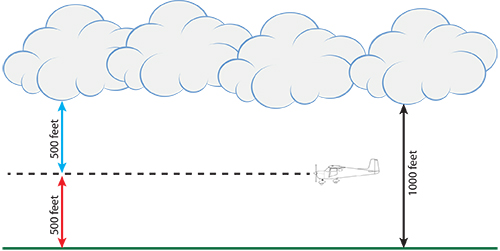
Once you’ve cleared the Class B/C/D or E surface area airspace where you obtained an SVFR clearance to exit, you’re likely in Class E airspace, where VFR minimums are the “standard” 1000 feet and three miles. You’ll need every bit of that to stay in legal VFR over non-congested areas, as shown at right. Since […]

Read More »

Preventing Wrong-Surface Airport Operations

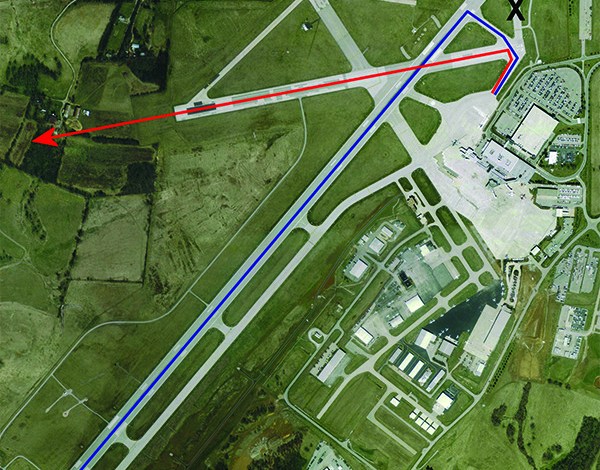
On August 27, 2006, just after 0600 Eastern time, Comair Flight 5191, a Bombardier CL-600 regional jet, began taxiing for its scheduled departure from Blue Grass Airport (KLEX) in Lexington, Kentucky, to Atlanta, Georgia. Night visual conditions prevailed. In the control tower, the lone controller busy with daily administrative duties cleared the flight to depart […]

Read More »

Pitch and Power Habits

According to the NTSB, “between 2001 and 2011, over 40 percent of fixed wing GA fatal accidents occurred because pilots lost control of their airplanes.” The National Business Aviation Association adds that NTSB’s more recent numbers show 46.4 percent of all fatal accidents in the U.S. from 2014 to 2018 were attributed to loss of […]

Read More »

FAA Approves Covid Vaccines For Airmen, ATC

Following the Emergency Use Authorization from the U.S. Food and Drug Administration for Pfizer, Inc.’s COVID-19 vaccine, the FAA has determined that pilots may receive the vaccine under the conditions of their FAA-issued airman medical certification. FAA Air Traffic Controllers, who are subject to FAA medical clearance, may also receive the vaccine.” So reads the […]

Read More »

Winter-Flying Tips: Our Top Five

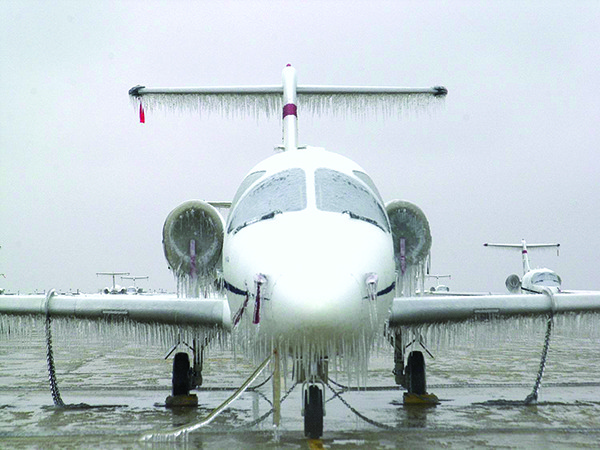
One pilot’s romantic ideal of flying might be the soft, sighing touchdown of a taildragger on freshly mowed grass at the end of a warm summer day. Another’s could involve a floatplane splashing down next to a favorite Alaskan fishing hole, or a sailplane working the thermals. No matter which of these might be your […]

Read More »
Pilot in aircraft
Sign-up for newsletters & special offers!

Get the latest stories & special offers delivered directly to your inbox.

SUBSCRIBE