













Register

Preventing Wrong-Surface Airport Operations

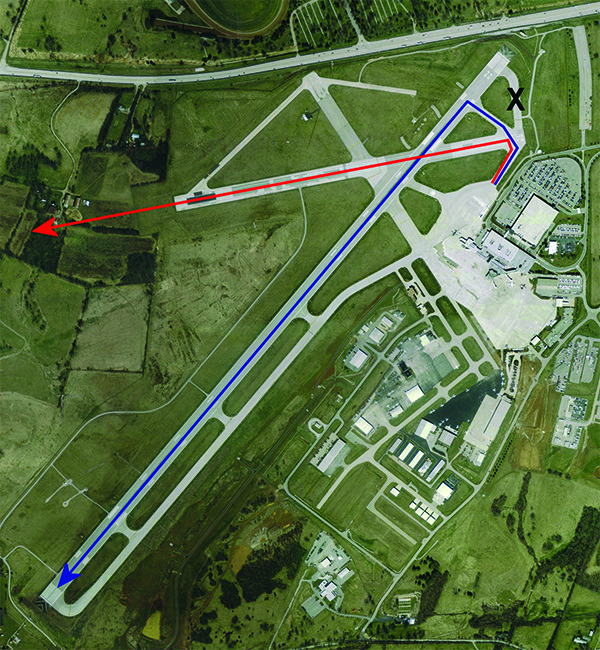
The image at right shows the runway and taxiway layout at KLEX on the day of the Comair Flight 5191 accident. The blue line is the path the pilots should have taken, given the closed section of taxiway A (black X) and the re-designated taxiway A5 now taxiway A. The red line is the path actually taken by the aircraft. By the time the crew recognized something was wrong with the takeoff, the aircraft was beyond the point from which it could be stopped on the remaining available runway.
Gemini Sparkle

Key Takeaways:

  • Comair Flight 5191 crashed because the flight crew failed to use available cues and verify their location, leading them to attempt takeoff from a shorter, incorrect runway.
  • A key contributing factor was pilot complacency, stemming from familiarity with the airport, which caused the crew to operate by rote and disregard critical information like a closed taxiway and unlit runway.
  • The article suggests that effectively preventing such accidents requires designing systems and environments (like the Blue Grass Airport's redesign) to proactively mitigate human complacency, rather than solely relying on individual vigilance.
See a mistake? Contact us.

On August 27, 2006, just after 0600 Eastern time, Comair Flight 5191, a Bombardier CL-600 regional jet, began taxiing for its scheduled departure from Blue Grass Airport (KLEX) in Lexington, Kentucky, to Atlanta, Georgia. Night visual conditions prevailed. In the control tower, the lone controller busy with daily administrative duties cleared the flight to depart from Runway 22. After a brief taxi, the captain and the first officer believed they were on the designated Runway 22 and began their takeoff roll. Instead, they had taxied onto Runway 26.

The pilots apparently failed to recognize that a section of Taxiway A between the approach end of Runway 26 and Runway 22 had been closed for maintenance. This was despite a local Notam announcing the closure and low-profile barricades with flashing red lights blocking that part of the taxiway. To reach Runway 22, the crew would have had to use an alternate route. When the crew reached the barricades, however, they turned left onto Runway 26 and began the takeoff roll. The NTSB’s 174-page report notes that while the accident aircraft required at least 3744 feet of runway to reach rotation speed, Runway 26 provided only 3501 feet.


Ready to Sell Your Aircraft?

List your airplane on AircraftForSale.com and reach qualified buyers.

List Your Aircraft
AircraftForSale Logo | FLYING Logo
Pilot in aircraft
Sign-up for newsletters & special offers!

Get the latest stories & special offers delivered directly to your inbox.

SUBSCRIBE