Aircraft Analysis

NTSB Reports

The airplane was destroyed when it impacted terrain at 1159 Eastern time. The solo private pilot was fatally injured. Visual conditions prevailed. The pilot had recently purchased the airplane and was relocating it to a private airstrip near his home. Witness observations were consistent with the airplane flying at low altitude and maneuvering erratically before it impacted. Each witness reported the engine was running prior to impact. The accident…


Read More »

Sumped

Many years ago, I had an experience that is still fresh in my mind, and I thought I would share it with your readers. I was a member of the Beech Aircraft Flying Club at the time and was using one of their Sundowners for a short trip from the factory in Wichita to Chanute, Kan. Before taking off, I preformed the typical walkaround, sumping the fuel drains, checking the oil, etc.

Read More »

Maintaining Performance

Airplane performance and good maintenance are closely related. The figures published by the manufacturer are frequently viewed as optimistic once an airplane is put into service-and suffers prop nicks, bugs on the leading edge and a couple of bad landings-but book numbers can be achieved even years later. When actual performance differs from the published numbers, its often because the airplanes condition has diminished over the years and hours of use. The level of maintenance an airplane has received over the years will have a significant impact on its overall performance.

Read More »

Single-Pilot Challenges

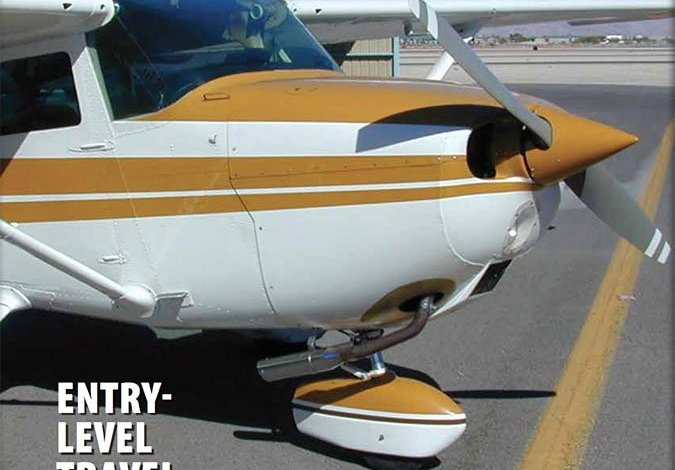
Most of us start our piloting careers in some sort of basic trainer. Some pilots flying purely for sport or recreation may stay with simple fixed-gear airplanes and stick to VFR conditions. Others learned to fly to travel somewhere for some purpose and on their own schedule. Nothing beats a personal airplane for that purpose, but trying to do it single-pilot in all-weather conditions can tax even the most capable general aviation pilots. As Dave Higdon explored in last months article, Entry-Level Travel, its possible to use simple fixed-gear airplanes for personal transportation, but a more-capable airplane makes it easier.

Read More »

Stabilizing Your Approaches

Stabilized approaches have gotten a lot attention lately, not only with those who fly airplanes, but also with the general public. The proliferation of video cameras has done quite a good job of educating people on how an otherwise airworthy aircraft can be flown into the ground. As the images play out on the screen, a disembodied voice inevitably will at some point attribute the carnage to an approach that was not stabilized.While the voice might not mention just what that thing that was lacking in said accident really is, people will at least remember the phrase the same way they remember words such as shark, fire, disco or myocardial infarction. The true meaning is vague, but they do know it is usually associated with something bad. With that in mind, lets add some clarity by reviewing what a stabilized approach is. Perhaps if we understand what it is, we can then fly it.

Read More »

Top Five IFR Mistakes

Whether we want to admit it or not, human flight by reference to instruments alone is an unnatural act. To determine up from down or left from right without a natural horizon, we need hours of training, and even more hours of regular practice. We also need a decently equipped airplane, stuffed with radios, colorful moving maps, some gyroscopes or their electronic equivalent, and more than a few charts, telling us where to go and how to get there.

Read More »

Humble Pie

Everything that can be invented has been invented is a popular quote attributed to Charles H. Duell, commissioner of the U.S. Patent and Trademark Office from 1898 to 1901. Today, the quote often is used to ridicule those who refuse to embrace the latest technology or believe nothing new will be forthcoming. The thing is, Duell never said that. He said quite the opposite instead: In my opinion, all previous advances in the various lines of invention will appear totally insignificant when compared with those which the present century will witness. Yet, hes not remembered for that statement, only the former, erroneous one.

Read More »

Download The Full September 2017 Issue PDF

Everything that can be invented has been invented is a popular quote attributed to Charles H. Duell, commissioner of the U.S. Patent and Trademark Office from 1898 to 1901. Today, the quote often is used to ridicule those who refuse to embrace the latest technology or believe nothing new will be forthcoming. The thing is, Duell never said that. He said quite the opposite instead: In my opinion, all previous advances in the various lines of invention will appear totally insignificant when compared with those which the present century will witness. Yet, hes not remembered for that statement, only the former, erroneous one.

Read More »

Download The Full August 2017 Issue PDF

On the off chance youve forgotten, heres a helpful reminder: ATC privatization is still a thing. Its baked into a bill being considered in the U.S. House of Representatives to reauthorize the FAA. The legislation-or something like it that continues the agencys programs-needs to be enacted by September 30, 2017. Current U.S. Senate legislation to accomplish the same basic task doesnt have ATC privatization in it at this writing.

Read More »

Electrical Systems

Unless youre flying a hot-air balloon, a sailplane or something with an engine that must be hand-propped, your aircraft has an electrical system. It may power only the basic equipment, like lights and the engines starter motor, or it can power everything, including the landing gear, flaps and flight instruments. Modern systems-and even those aboard so-called legacy aircraft-usually are relatively simple and robust, with well-understood components and maintenance requirements.

Read More »
Pilot in aircraft
Sign-up for newsletters & special offers!

Get the latest stories & special offers delivered directly to your inbox.

SUBSCRIBE