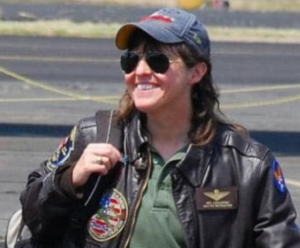
Aircraft Automation’s Double-Edged Sword

Vlogger’s tragic crash provides lessons in autopilot misuse and intricacies of high-performance planes.

Wreckage of Jenny Blalock’s Beechcraft Debonair [Credit: National Transportation Safety Board]
Gemini Sparkle

Key Takeaways:

  • The fatal crash of vlogger Jenny Blalock was primarily caused by her misuse of the autopilot and difficulty controlling aircraft pitch and trim, compounded by alleged use of prohibited medication and a documented history of struggling with automation.
  • Blalock's transition to a complex, high-performance aircraft (Beechcraft Debonair) without confirmed endorsements contributed to a "too much airplane, not enough pilot" scenario, emphasizing the risks of inadequate proficiency with advanced systems.
  • The incident highlights the critical need for comprehensive automation education for pilots, including understanding how to properly operate, troubleshoot, and safely disconnect autopilots and electric trim, to prevent reliance on automation from becoming a safety hazard.
See a mistake? Contact us.

You know an aviation accident is going to end up a teaching tool when it’s still being talked about weeks after the National Transportation Safety Board releases the final report.

Such is the case of the NTSB review of the crash that killed vlogger Jenny Blalock, known on YouTube as TNFlygirl, and her father on December 7, 2023.

At the time of the accident, Blalock had approximately 400 hours total time and had held a private pilot certificate for approximately one year. She had spent more than a year acquiring the training for a private certificate and documented most of it in her vlog. At the time of her death she was working on her instrument certification.

There are a number of disturbing facts in the final NTSB report, not the least of which was the fact the toxicology report also showed Blalock was allegedly using several prescription drugs  commonly prescribed for anxiety and therefore prohibited for use by pilots because the side effects are detrimental to cognitive function. Blalock had a valid medical certificate, and the NTSB could not say definitively if Blalock was impaired at the time of the accident.

The NTSB attributed the probable cause of the crash to Blalock’s misuse of the autopilot. If a pilot is medically compromised, a working autopilot might help reduce risk, provided they know how and when to use it. Based on previous videos on Blalock’s YouTube page—which have since been taken down—and the details of her last flight, it appears she was having difficulty controlling the aircraft’s pitch.

Blalock owned a 1965 Beechcraft 35-C33 Debonair equipped with a 260 hp Continental IO-470 engine. She purchased the Beechcraft shortly after earning her private pilot certificate in a Piper Cherokee. The Debonair was not only high performance, it had retractable landing gear, making it a complex aircraft. Both require additional training and an endorsement from a flight instructor to be flown legally. The NTSB report did not indicate if Blalock had these endorsements, which would have been given after she demonstrated proficiency in the aircraft. 

A high-performance airplane also means a higher pilot workload. You need to manage more systems, such as the complex propeller and landing gear, and in many cases the avionics, autopilot, and electric trim. If you don’t, you run the risk of a “too much airplane, not enough pilot” scenario, which often manifests by the pilot getting behind the airplane. That means they react rather than act because the airplane does something they don’t expect—like reaching the destination airport quicker than they thought it would, which results in them trying desperately to slow down and descend for landing or overflying the airport.

For the unfamiliar, “getting behind the airplane” is when the pilot loses situational awareness and fails to maintain positive control of the flight. The NTSB reports are filled with examples of this. It can happen to any pilot.

The NTSB report contained information gleaned from Blalock’s previous instructors. There was a recurring theme stating that she had difficulty “staying ahead of the aircraft” and became confused when using the autopilot. Both are concerning because ostensibly the purpose of the autopilot is to reduce pilot workload, something you should be thinking about when flying something that is fast and complex like the Debonair. It’s important at every level of aviation, but especially so when flying a faster airplane because you don’t want the airplane to get somewhere a few minutes ahead of your brain.

The NTSB noted that Blalock’s Debonair was equipped with a Century 2000 autopilot that didn’t have automatic elevator trim. According to the autopilot instruction manual, when trim is required, the down or up button on the panel will flash, and the pilot should depress the flashing button until the light extinguishers, which indicates the aircraft is now in trim.

Blalock’s instructors noted that she sometimes became confused as to which direction to apply trim and would disconnect the autopilot out of frustration. The accident report noted altitude and airspeed fluctuations, which seem to indicate that Blalock was chasing the trim, as the altitude fluctuated significantly, then the aircraft entered an unrecoverable oscillation that ultimately resulted in the crash. 

Autopilots More Common Now

Autopilots used to be a “nice to have” luxury in aircraft, and they were rare to find in your average training aircraft.

Then in 2018 the FAA defined technically advanced airplanes (TAA) in regulation cFAR 61.129(j) that allowed TAAs to replace complex airplanes for commercial pilot training. Per the rule, a TAA must feature an electronic primary flight display (PFD), a multifunction display (MFD), a GPS moving map, and a two-axis autopilot. 

When flight schools added these aircraft to the fleet, automation education became mandatory,  although many don’t allow that until the private pilot has developed stick-and-rudder skills and basic navigation skills using pilotage and dead reckoning.

When you train or teach in an airplane that has autopilot and or electric trim, one of the conversations you should have before engine start is what should be done if either  “runs away,” in addition to knowing how to activate and deactivate both. In the words of one of my former CFIs: “Pull the circuit breaker” because this de-energizes the component and terminates “autopilot/trim surprise.”

I learned about autopilot surprise when I was self-loading ballast in the back seat of a new-to-the-school multiengine aircraft. One of my coworkers was getting a multiengine lesson, and I was invited to observe from the back seat. On command from the multiengine instructor (MEI), the pilot activated the autopilot. The aircraft entered a climbing turn to the right, which, judging by the exclamations from the front seat, was unwanted. The pilot pushed forward on the yoke and was flailing to disconnect the autopilot when the MEI pulled the circuit breaker stopping the uncommanded movement.

Problem solved. I wasn’t sure if that was part of the lesson, or an oops, but learning still took place. To this day, when I get in a new-to-me airplane, I note the location of each and every circuit breaker, especially the autopilot and electric trim, and teach my learners to do the same.

Remember, automation is a wonderful assistive tool. Just don’t let it turn it into a crutch.

Meg Godlewski

Meg Godlewski has been an aviation journalist for more than 24 years and a CFI for more than 20 years. If she is not flying or teaching aviation, she is writing about it. Meg is a founding member of the Pilot Proficiency Center at EAA AirVenture and excels at the application of simulation technology to flatten the learning curve. Follow Meg on Twitter @2Lewski.


Ready to Sell Your Aircraft?

List your airplane on AircraftForSale.com and reach qualified buyers.

List Your Aircraft
AircraftForSale Logo | FLYING Logo
Pilot in aircraft
Sign-up for newsletters & special offers!

Get the latest stories & special offers delivered directly to your inbox.

SUBSCRIBE