













Acknowledge Your Attitudes

Recognizing the hazardous attitudes we all have is the challenge, and there’s an FAA Advisory Circular for that. 

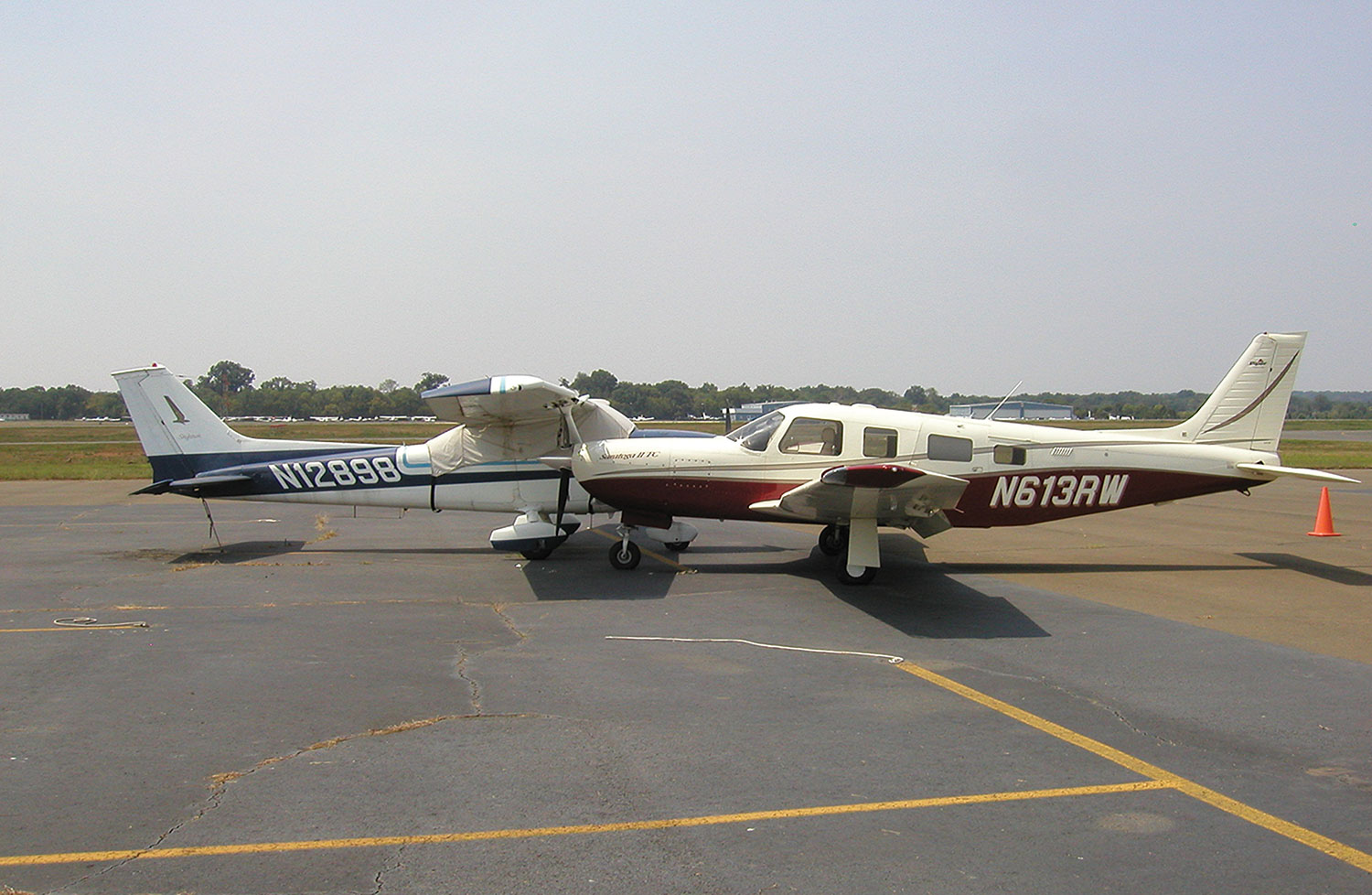
The scene here occurred at the Manassas Regional Airport/Harry P. Davis Field, KHEF, in 2006. Outcomes like this only happen when the taxiing pilot is distracted. It’s possible they were in a hurry, and nothing bad could happen because they were invulnerable, right?
Gemini Sparkle

Key Takeaways:

  • Pilots rely on acronyms and mnemonics to memorize vast amounts of aviation information, with the author introducing "Mr. Aii" for the FAA's five hazardous attitudes.
  • The FAA identifies five hazardous attitudes—Macho, Resignation, Anti-Authority, Impulsivity, and Invulnerability—which can lead to poor pilot judgment and compromise flight safety.
  • Self-assessment is crucial for pilots to identify and counteract their own hazardous attitudes, a process similar to the Tokyo DMV's surveys or the FAA's Advisory Circular 60-22, which helps pilots understand their "attitude profile."
  • Proactive self-analysis of one's attitudes and emotions can prevent incidents and accidents by allowing pilots to "nip in the bud" potentially dangerous thought processes before they manifest in unsafe actions.
See a mistake? Contact us.

We pilots use all kinds of acronyms to remember stuff, because, like doctors and nurses, we have to memorize scads of information (SOI) and operate on people (OOP), sometimes removing their stomach contents for display all over the cockpit when we forgot to bring a bag. 

We also use mnemonics or phrases, like, “Mary had a little lamb, her fleece was white as snow, and if the VASI’s red o’er red, I’m too blanking low.” Or, “High to low, look out below,” which means to not dork up your altimeter setting and remember to clear the area below the aircraft when dropping stuff.


Memory Items

We pilots also are rightfully proud of our knowledge, our memorized stuff, because, if you haven’t noticed, this flying stuff is difficult. It takes real effort to memorize a 22-step preflight flow in a jet, or all the FAA regs.

We all have our memorization techniques: flashcards, or maybe bouncing or juggling tennis balls while reciting flows or emergency procedures. Admit it, my fellow nerd pilot, you’re proud of knowing the huge list of visual references you need to descend below the MDA or the DA. It’s like memorizing the Preamble to the Constitution: “We the Pilots, in order to descend below the decision altitude, hereby….”

Acronyms come in all sizes—we use giant ones like “A TOMATO FLAMES” (Huh?), “ARROW,” “GRAB CARD.” You have your smaller “GUMPS” acronym, the one I chant on base and final about five times.

With that in mind, I’m happy to announce that I’m creating—and of course patenting—an acronym to remember the FAA’s five hazardous attitudes. Here it is, in all its brilliance: “Mr. Aii.” Think maybe of Mr. Miyagi in The Karate Kid, give or take a few letters.

The letters stand for: Macho, Resignation, Anti-Authority, Impulsivity and Invulnerability. They’re bad attitudes to have in a cockpit.


According to the FAA’s Pilot’s Handbook Of Aeronautical knowledge (PHAK,
FAA H-8083-25C), “Hazardous attitudes contribute to poor pilot judgment but can be effectively counteracted by redirecting the hazardous attitude so that correct action can be taken. Recognition of hazardous thoughts is the first step toward neutralizing them. After recognizing a thought as hazardous, the pilot should label it as hazardous, then state the corresponding antidote. Antidotes should be memorized for each of the hazardous attitudes so they automatically come to mind when needed.”

The Tokyo DMV

Like “Mr. Miyagi,” I lived in Japan for many years. Perhaps unlike him, I had to visit the dreaded Tokyo DMV, where you must go every three years to renew your driver’s license. If you’ve had any kind of ticket over the last three years—and I mean any kind of ticket—they make you sit through lectures and films, and fill out surveys. So, of course, I always had to sit through the hours-long lectures, and fill out the multiple-question surveys, on account of the parking ticket I got two years and eleven months before.

But these surveys were very interesting. They want you to see, for yourself, what kinds of thinking and attitudes would make you break the laws or drive unsafely. Of course, you already broke one or more laws if you’re with me on the Group W bench full of traffic sinners: They already have the violation on record, but they want the violator—person experiencing real pain (PERP)—to understand their own thought process, their emotional state while driving.

It Gets Personal

I wish we pilots had a survey like this, a questionnaire made just for pilots. Oh, wait, we do! There’s one in FAA Advisory Circular 60-22, Aeronautical Decision Making, or ADM. Perhaps I would benefit from periodically looking at the AC, which “illustrates how personal attitudes can influence decision making, and how these attitudes can be modified to enhance safety in the cockpit.” 

Ah ha! There they are, those somewhat scary words: “personal attitudes.” This is no FAA quiz on airspace or radio phraseology, airport signage or holding airspeed above 6001 feet. Nope. This is personal. Kind of like the Tokyo DMV’s surveys.

Of course, we pilots have to prove to the FAA we know all the impersonal rules and regulations of flying to get a pilot’s license. Heck, we have to prove to our instructors that we know all the rules and regulations of flying just to get our instructors to sign us off for the checkride.

And when we pilots are gabbing, wherever we gather to gab, do we talk about ADM, risk assessment, hazardous attitudes? Nope. Well, sometimes, but usually I notice we talk about stick-and-rudder stuff like, “That gusty crosswind was so huge, I needed full rudder deflection and then suddenly no rudder, and then full, then….” Or, “The snow was blowing so hard that day in late May up by Minot, it was like January.” (Minot is a city in North Dakota, a state where more than 700 people live.) But there most likely will be no talk of what made him—or her—decide to fly into the snowstorm. 

As a pilot, I’m proud of my knowledge and my stick-and-rudder skills, but I ain’t proud of having any of the “hazardous attitudes.” So I answer the questions in AC 60-22, and find out my “attitude profile,” just like at the Tokyo DMV, which maybe totally copied the idea. I know from experience what Japan’s DMV is looking for on their survey—impatience, irritation, hurried-mindset driving, anger, etc. An example might be, “Only six cars ahead of you made it through the traffic signal before it turned red again. How does that make you feel?”

Answers to these questions can get to the real reason a pilot—me—does something I know I shunta, oughtta notta done, or something I did accidentally when, uh, “under the influence” of one of the hazardous attitudes.

So I Said To Myself…

I read a fair number of accident and incident reports because I try to learn from them. As my T-37 flight commander at Vance Air Force Base, Captain Kirk (yes, his real name) said to me with a sigh when I was a new and floundering second lieutenant in a green bag: “Lieutenant Johnson, try not to make every mistake.” So nowadays, I don’t have to—I can read and learn. The internet is my friend, like pitch trim, autopilots and coffee.

Often, it seems near-incidents, incidents and accidents were caused by the pilots’ attitudes. They knew the regulations, the procedures and the correct radio calls, but still wound up doing something to draw attention.

So I can take the questionnaire/survey and find out what my attitudes are toward different flying situations. Get personal and find out what, if anything, bothers me when flying. Find out if I have any kind of chip on my shoulder, any kind of lurking bad attitudes. I can work on taking corrective mental action before I get in trouble, or cause an incident or accident because of a hazardous attitude. 

With that insight, I can spot the hazardous attitude, and nip it in the bud, squash it like a cockroach. That’s what a hazardous attitude is like to me—a gross, shiny, black cockroach, with its antennae and little feet.

Does the anti-authority attitude rear its ugly head as I approach a non-towered airport? “Hey, there’s really no rules here!” Does macho man come out of, uh, the closet and beat his chest and say, “Watch this!” as I fly—legally—at 200 knots for an overhead pattern while everyone else is going about 80 knots?

Do I sometimes make snap—impulsive—decisions, like, “I think I’ll enter the pattern by flying over the runway at 500 feet above pattern altitude for the reversal to the 45-to-downwind, and then—no, wait, I changed my mind—I’ll just enter the downwind directly. Oops, now I’m at the wrong altitude; that’s okay, though, because there’s no one, probably, on downwind, and I’m kinda invulnerable anyway. I haven’t died yet, so there’s your proof.”

No wonder I keep hearing people say, “Attitude is everything!” And when reading incident and accident reports, which thankfully are easy to find on the interwebs and in the back of this very magazine, I can learn, not judge, and remember the antidotes to the five hazardous attitudes.

It may not be all that much fun to look at my attitudes and emotions, evaluate my thought process. However, flying is fun, and it’s better for me to do a self-analysis than have someone else analyze my behavior, like the FAA or the NTSB.

Or the Japanese DMV.

Ready to Sell Your Aircraft?

List your airplane on AircraftForSale.com and reach qualified buyers.

List Your Aircraft
AircraftForSale Logo | FLYING Logo
Pilot in aircraft
Sign-up for newsletters & special offers!

Get the latest stories & special offers delivered directly to your inbox.

SUBSCRIBE