













I Thought Of It Later

Formation flying is not something you want to do on a whim. Doing it properly requires planning and proper procedures.

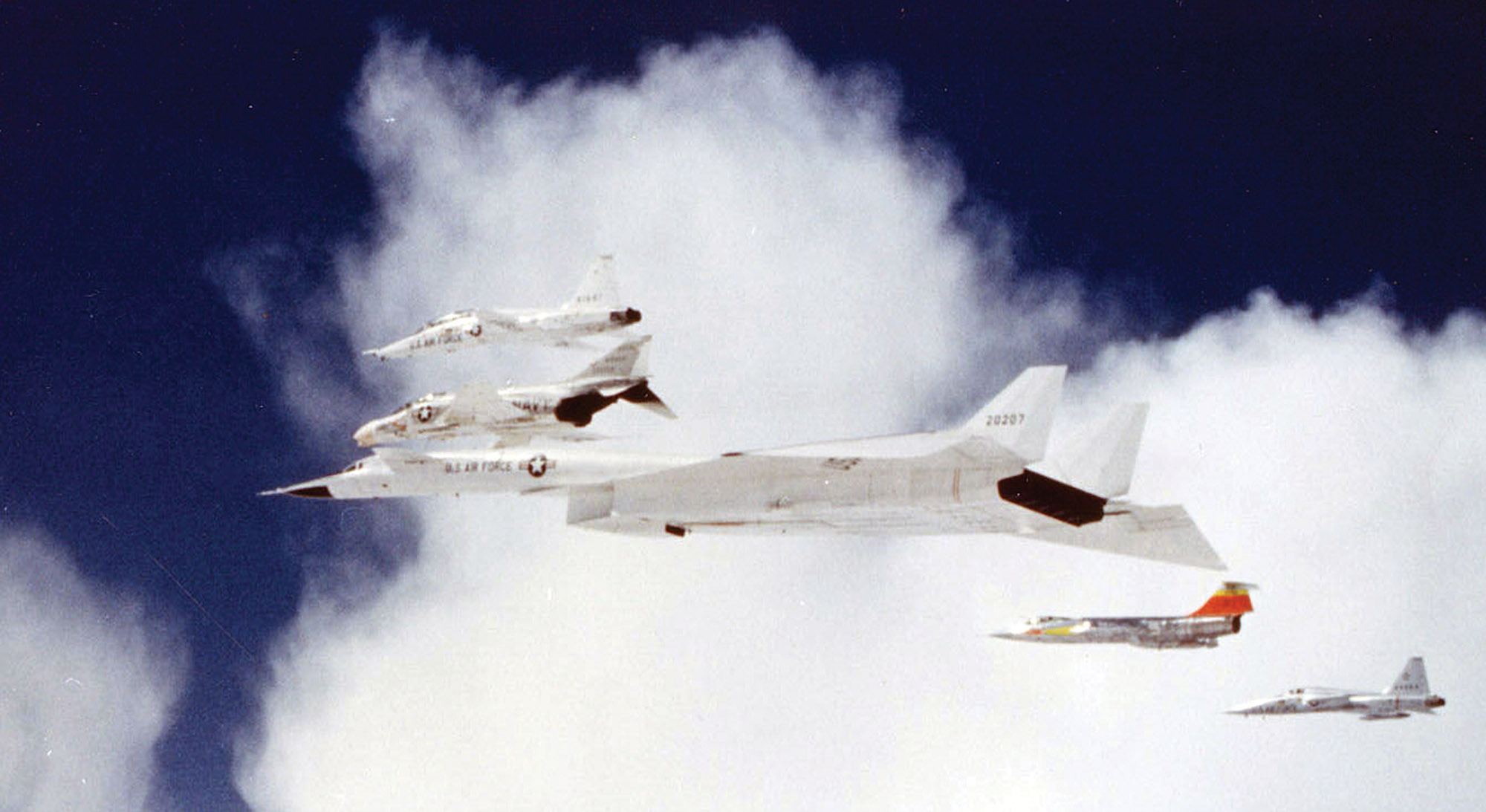
Just moments after this formation-flight photo was taken, the Lockheed F-104 Starfighter—second from the right, with the red tail—collided with the XB-70A and sheared off both its vertical stabilizers. The XB-70A’s co-pilot, Carl Cross, was killed, as was the F-104’s pilot, NASA Chief Test Pilot Joe Walker. The XB-70A’s pilot, Al White, managed to eject and survived with major injuries.and Northrop YF-5A-NO S/N 59-4989. (U.S. Air Force photo)
Gemini Sparkle

Key Takeaways:

  • The author's experience with a challenging photo formation flight highlighted difficulties in speed management and the critical need for efficient radio communication protocols.
  • Thorough pre-flight briefings are paramount for formation flights, needing to cover communication methods, emergency procedures, and critical safety parameters like minimum safe altitudes to prevent operational errors and hazards.
  • Successful and safe formation flying, as reinforced by FAA regulations and professional guidance, requires meticulous planning, agreement on all flight parameters, detailed emergency procedures, and clear leadership among all participants.
See a mistake? Contact us.

One day I noticed that our airplane was being photographed by a man with a telephoto lens, who was about 10 feet away. Oh, did I mention we were airborne? We were.

We flew our aircraft as “two,” in formation with the “lead” aircraft, a Bonanza A36. I was “voluntold” by my fellow pilot to fly in the left-seat of “two” (our aircraft), since I had formation experience. (Never mind that it was in a T-38 back when we stayed within the confines of an MOA using Tacan radials, and all our gauges ran on steam. Yes, it was the Pleistocene Era. Or was it the Iron Age?) 

When flying a two-ship formation in the U.S. Air Force, when the leader was briefing, he’d often say, “All I want to hear out of you is, ‘Two’s up!’ or, “Lead—you’re on fire!” Radio silence was the goal in our formation-training missions, so we used hand signals to check fuel, oxygen, lower or raise the landing gear, flaps, speed brakes or change radio frequencies. We even had a way to indicate that we had 1700 pounds of fuel remaining without holding up all 17 fingers.

Photo Mission

So the “leader” takes off ahead of us in his single-engine prop job with the rear right doors taken off. The white-haired photographer sat in a rear-facing seat near the gaping opening where the rear doors were, with what I hoped was a parachute on his back, or at least a big life insurance policy.

As they took off, I heard Fargo tower call out, “Bonanza 12345, it looks like your rear doors are open.” The pilot, a wily older former Air Force fighter pilot, said, “Bonanza 12345, we removed the doors for photography, but very observant!” I thought, “Hush, you Air Force puke, you’re just visiting Fargo. I have to live here!” (“Puke” is not a derogatory term, by the way; we used to call everyone “pukes.” “Those F-15 pukes out of Nellis,” or “The U-2 pukes,” or “The pukes in Delta squadron,” etc.)

I was the puke in the left seat of this Cessna Citation business jet, being photographed for a company that was testing out a new type of, uh, I can’t say, but they wanted some photos of, uh, that thing. Some 700 photos, it turned out, as the photographer later told us he took on that first flight. 

After the photo plane—the Bonanza—took off, we waited a fair bit until they got away from the airport and then took off and caught them. In like five minutes. We blasted up to 10,000 feet, and then swooped down to join on them. They were flying at 150 knots, so we slowed down—and down and down—as we descended, which is kinda hard, I found out, in that particular jet. We had to go idle thrust and deploy the speed brakes (“the boards”) early, but it worked out, and we crept up on them.

We flew another formation flight the next day and I noticed, as we blew past lead at like 200 knots, that going “idle/boards” doesn’t always allow a pilot to slow down enough to stay behind “lead.” Trying desperately to slow down, I thought of opening the little triangular pilot window on the left side, putting my hand out to add a little parasite drag—or would that be form drag?—but I didn’t, because I didn’t want to “look bad.” I also wanted to keep my hand and arm attached.

Shoulda, Woulda, Coulda

Like other times I have dorked up, it was later that I thought of the answer to the dilemma: If I had dropped the gear—maybe flaps, too—I could’ve slowed right down. Would have been so easy to drop the gear, but no. Oh, and I thought of it later—I shoulda thought of where to go, exactly, if I overshot a straight-ahead rejoin, instead of flying halfway to Minneapolis.

After the second flight, I realized I should have thoroughly briefed the guy in the right seat to only key the mic and say, “Two!” when the photo plane would give us directions, like, “Move up ten,” or, “Move back twenty,” or, “Move down ten.”

The right-seater, with the best of intentions, would key the mic and say, “Okay, we’ll move back ten,” a bit like fingernails on a blackboard to me, who had taught formation flying and radio silence in a T-38. My fault for not briefing that we minimize radio chatter, that we could just key the mic and say, “Two!”

We could hear another two-ship formation out there somewhere over the Ten Thousand Lakes of Minnesota on the clever “discrete frequency” we chose, 123.45, everyone’s go-to air-to-air chat room, when the published air-to-air number is 122.750 Mhz for fixed wing aircraft and 123.025 for rotorcraft. They were chattering like a couple of goats, “Baaaa! Baaaaa!” “Gooooat flight, turn riiiiiiight,” cluttering up the freq. At least no one meowed. This irritating radio chatter hardly allowed us, sometimes, to make our own blathering 30-second radio back-and-forth exchanges. 

Lead: “Two, move back twenty and down five.” 

Us: “Okay; we’ll move back twenty and then, uh, down five.” 

Lead: “No, make it down ten.” 

Us: “Okay, got it, we’ll move down ten then.” 

All this as I stared at the little aircraft really close by, the white hair of the photographer whipping in the wind blast, looking like Captain Kangaroo if he hung out the doors of airplanes with a telephoto lens. I used the old Air Force trick of wiggling my toes inside my shoes to alleviate the mental stress of flying an airplane so close to another one.

Knocking It Off

Suddenly the leader called, “KNOCK IT OFF, KNOCK IT OFF, KNOCK IT OFF!” I only had heard this call once before “for realsies,” back when I was in the Air Force. We were out over the Mojave Desert, someplace where the fighter pukes play. We heard some radio calls and then, “KNOCK IT OFF, KNOCK IT OFF, KNOCK IT OFF!” Then we heard an ELT beacon going off. Whoa.

Dave Higdon/Photoprose ProductionsJust Aircraft’s Escapade (foreground) and Highlander.

So we knocked it off, all right, and I moved the jet out wider. The reason someone called to knock it off was terrain avoidance. We (my right-seater, actually) noticed we were getting pretty close to the ground, which pleasant and all that, with lakes and trees and colorful fall leaves of which we could make out the veins on. I called out daringly to “lead,” “Lead, the min safe altitude here is twenty-two hundred.,” He pulled up a bit, from the 22 feet agl he was flying at, the “ground level” in this case being a tower.

The photographer, we found out later, had egged him on into going lower and lower, to get nice fall foliage in the background. I realize later we should’ve pre-briefed the min safe altitudes around where we were flying. They are right there, “bigger than Dallas” as my Texan buddy would say, on the VFR sectional, the MEFs are.

Think Of It Now, Not Later

So my lessons from these really fun “dissimilar aircraft” formation flights were actually the kinds you might expect from planning any flight: Try to think of everything beforehand, and pre-brief the heck out of the flight. Ask questions about anything I’m not sure of. And if no one has the answer, or it’s one I don’t trust, dig in and find the answer on my own.

Formation flying is one of those things you likely don’t do every day, and that’s why a poorly planned air-to-air session goes bad. Use the recommendations in the sidebar at upper left, so you won’t have to think of it later.


Ready to Sell Your Aircraft?

List your airplane on AircraftForSale.com and reach qualified buyers.

List Your Aircraft
AircraftForSale Logo | FLYING Logo
Pilot in aircraft
Sign-up for newsletters & special offers!

Get the latest stories & special offers delivered directly to your inbox.

SUBSCRIBE
