













Register

Anchorage (PANC)

Gemini Sparkle

Key Takeaways:

  • Ted Stevens Anchorage International Airport (PANC) presents unique operational challenges due to its mountainous topography, proximity to active volcanoes and associated ash hazards, and overflying Cook Inlet.
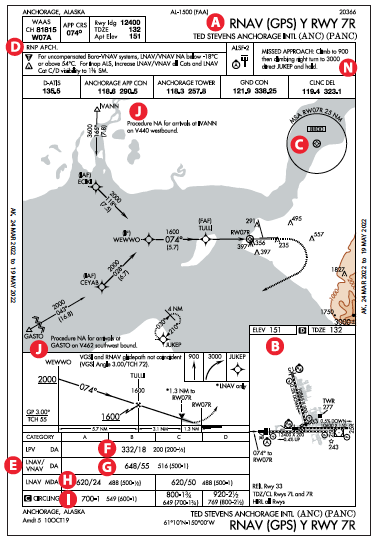
  • The article clarifies the distinction between two types of RNP approaches for Runway 7R: the common RNAV (GPS) Y RWY 7R (RNP APCH) which doesn't require special authorization, and the specialized RNAV (RNP) Z RWY 7R (RNP AR APCH) which requires authorization and specific equipment for curved paths.
  • Both approaches feature distinct design elements, such as the "Y" approach's 45-degree intercept and the RNP Z's curved (RF) legs, with varying LPV, LNAV/VNAV, and LNAV minimums influenced by terrain and missed approach procedures.
  • Given these complexities, thorough pilot preparation, including detailed study of charts, topography, potential volcanic activity, and NOTAMs, is critical for safe operations at airports like PANC.
See a mistake? Contact us.

Runway 7R approaches at Ted Stevens Anchorage International airport (including the missed approach portions) [A] overfly Cook Inlet. The inlet stretches about 180 miles from the Gulf of Alaska to Anchorage and was named after explorer James Cook searching for the Northwest Passage. Today the airport is a refueling stop for flights between North America and Asia, offering the shortest route between many points.

Topography

Ready to Sell Your Aircraft?

List your airplane on AircraftForSale.com and reach qualified buyers.

List Your Aircraft
AircraftForSale Logo | FLYING Logo
Pilot in aircraft
Sign-up for newsletters & special offers!

Get the latest stories & special offers delivered directly to your inbox.

SUBSCRIBE
