














Register

How to Go About Taming the FAR/AIM

There are ways to navigate aviation’s thickest reference manual without a pilot losing their mind.

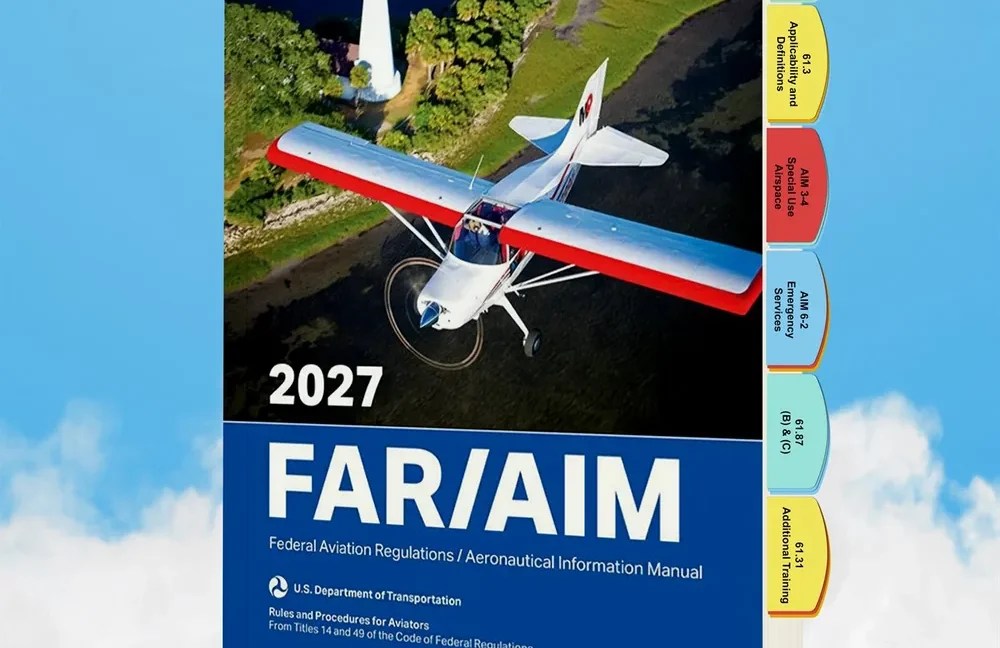
Learn to sift through reams of information in the FAR/AIM to determine what is pertinent and what is not. [Credit: ASA]
Gemini Sparkle

Key Takeaways:

  • The FAR/AIM, though intimidating in size, is a crucial reference tool for pilots, emphasizing understanding and effective use (like tabbing) over rote memorization.
  • Both digital and physical versions of the FAR/AIM have benefits; personal tabbing of a hard copy can enhance learning and quick access to frequently referenced regulations.
  • Modern pre-flight briefings often present an overwhelming amount of information, making it challenging for pilots, especially students, to discern what is critical for their mission.
  • Certified Flight Instructors (CFIs) are vital in teaching pilots how to navigate the FAR/AIM and filter pertinent information from pre-flight data to avoid information overload and ensure safety.
See a mistake? Contact us.

Before I taught my first private pilot ground school I was warned to keep the paper copy of the Federal Aviation Regulations/Aeronautical Information Manual (FAR/AIM) out of sight until everyone who had signed up for the class had paid the $400 tuition and purchased the $395 ground school kit that was essentially a cloth flight bag containing an E6-B, plotter, the Airplane Flying Handbook, the Pilot’s Handbook of Aeronautical Knowledge, and the FAR/AIM. 

Once all of them had paid the bags were handed out, and they were allowed to open them. Why was there such production? According to the chief ground instructor, there was something about the size of the FAR/AIM—it was over 2 inches thick with relatively small print and instilled panic in the students. 

Meg Godlewski

Meg Godlewski has been an aviation journalist for more than 24 years and a CFI for more than 20 years. If she is not flying or teaching aviation, she is writing about it. Meg is a founding member of the Pilot Proficiency Center at EAA AirVenture and excels at the application of simulation technology to flatten the learning curve. Follow Meg on Twitter @2Lewski.

Ready to Sell Your Aircraft?

List your airplane on AircraftForSale.com and reach qualified buyers.

List Your Aircraft
AircraftForSale Logo | FLYING Logo
Pilot in aircraft
Sign-up for newsletters & special offers!

Get the latest stories & special offers delivered directly to your inbox.

SUBSCRIBE

