











Flying High: Zbraslavice Gliding Diary, Part 2

Women's World Gliding Championships see share of frustrating weather and triumphant finishes.

The day’s racing task for Club Class was a 367-kilometer ‘bow-tie’ course deep into central Bohemia. [Credit: Sam Weigel]
Gemini Sparkle

Key Takeaways:

  • Sylvia Grandstaff's team initially struggled in the FAI Women’s World Gliding Championships due to poor weather and tactical challenges, leading to slow speeds and "landing out."
  • The competition underscored the complex strategic dynamics of competitive gliding, particularly the trade-offs between flying in a collective "gaggle" to find lift and the risks/rewards of an independent, early start.
  • Despite earlier frustrations, Sylvia and her teammate achieved a strong finish on the final day by strategically breaking from the gaggle and making an early start, securing first and second place for the day.
See a mistake? Contact us.

When i left off last month, my wife Dawn and I were crewing for our good friend Sylvia Grandstaff as she competed in the 13th FAI Women’s World Gliding Championships (WWGC) in Zbraslavice, Czech Republic.

Unfortunately, the first 10 days of competition had only yielded three flying days, thanks to a low-pressure system that had parked itself over the Baltic Sea and lashed central Europe with relentless bands of low clouds and rain. Furthermore, all three tasks had featured thoroughly marginal soaring conditions, and Sylvia had “landed out” each time, with commensurately poor scores. 
This Article First Appeared in FLYING Magazine

If you're not already a subscriber, what are you waiting for? Subscribe today to get the issue as soon as it is released in either Print or Digital formats.

Subscribe Now

The last three days of the contest, however, promised the belated return of good weather, and August 6 looked the best of these—strong sunshine, a cold and unstable air mass, moderate wind, and puffy scattered cumulus forming lovely cloud streets by noon. These are classic cross-country soaring conditions, much more typical of a Czech summer.

The day’s racing task for Club Class was a 367-kilometer bow-tie course deep into central Bohemia. After the pilot briefing, Sylvia discussed strategy with her “unofficial teammates,” Danish pilot Christina Solberg Hansen and Anne Soltow of the U.K. Sylvia and Hansen had flown together before and, lacking national teammates and racing similar gliders, decided to team up for the WWGC. Soltow joined the alliance midway through the contest.

Competitive soaring, at least in European and international contests, is very much a team sport. Two or three pilots coordinating their efforts will locate lift more easily than one lone wolf, and radio-equipped ground crew can keep an eye on weather, track the competition, and help formulate strategy.

In the United States, however, radio contact is forbidden and even less overt forms of cooperation are frowned upon. Our governing body, the Soaring Society of America (SSA), has endeavored to keep gliding an individual sport. This has put U.S. pilots at a disadvantage on the international stage, where European teams used to working cooperatively tend to dominate.

With good lift expected and the threat of overdevelopment later, team captain Tim Taylor advised an early start. Sylvia, Christina, and Anne launched, climbed, and immediately set out at 11:42 a.m.

Our first downwind leg was quite fast, but on the next two upwind legs we slowed dramatically. Lacking nearby competitors to help locate strong lift, our team circled in weak thermals while getting blown backward. The Czechs, meanwhile, started 40 minutes after us, amid most of the class. They wasted no time finding lift, circled in only the strongest thermals, took advantage of late-strengthening conditions, and stormed around the course at an average of 97 kph. 

Our team did speed up on subsequent legs and actually led the class all the way to the finish line. Dawn and I were ebullient as we finally retrieved Sylvia’s Rolladen-Schneider LS4 from the runway at Zbraslavice, rather than a farmer’s field with the trailer. Sylvia was less sanguine, pointing out that finishing first counts for nothing. It is speed that determines score, and our average of 83 kph was disappointingly slow. The Czech home team took all three podium spots for the day, while Sylvia placed 18th. 

This result demonstrates an important facet of glider racing. Much as bicycle racers form up into a drag-reducing, energy-saving peloton, gliders frequently coalesce into a gaggle. When you can see a large number of competitors, both visually and on FLARM (a traffic avoidance system for gliders), you can quickly determine who is climbing well and flock to their thermal, minimizing time spent searching for lift.

Early starters tend to get overtaken by the gaggle. Ideally, one starts just behind the crowd and catches up. This dilemma leads to all sorts of “start games” at the line, such as false starts and coded radio calls. 

Gaggle flying is particularly prevalent on weak or tricky days, and August 7 was as tricky as it gets.

The weather was absolutely perfect for flying powered aircraft—dry and stable air mass, clear blue skies, and a strong inversion at 1,000 meters agl. To glider pilots, however, dry air means no tell-tale cumulus, stability yields weak thermals, and inversions limit maximum altitude. The day would involve frequent climbs, short glides, and constant searching for lift. There would also be a lot of tense thermalling in close proximity to a dozen or more competitors.

There’s a reason glider pilots wear bailout parachutes. 

The contest organizers issued a three-hour-minimum area task. With a late launch and high clouds forecast later, a quick start was ideal. However, only a few loners went after the gate opened at 1:17 p.m., and they struggled badly. Our team started nearly an hour later, in a large gaggle with the Germans, French, and Czechs. For two hours we did very well, keeping right in the thick of things and running among the top seven scorers on handicapped speed.

But then, entering the third cylinder, the forecast band of cirrus moved in from the west. Follow the gaggle into shadows, or strike out alone in sunlight? Our team threw in their lot with the Czechs, and soon regretted it.

The lift became increasingly spotty, then Sylvia and Christina missed a climb and were separated from the group. After scrabbling around and getting increasingly low in a rough area with few landing options, Sylvia opted for a recently-harvested wheat field, while Christina struggled 16 km farther. The Czechs, meanwhile, made a low save and clawed their way to third and fourth place, behind two Poles who had gone their own way. 

Once again I hooked up the trailer and drove an hour southwest, this time alone as Dawn had flown home. I found Sylvia tired, defeated, and all but ready to throw in the towel. We disassembled the glider in silence and drove back to Zbraslavice in fading light. There was one day of flying remaining. 

August 8 looked like a repeat of the previous day’s clear “blue thermal” conditions, but with no inversion and possibly stronger lift. Again clouds were forecast to move in by 4 p.m., and this time Taylor expected them to shut down lift production even quicker than the previous day.

Given a two-hour, 30-minute area task, we set a latest start time of 1:30 p.m. Sylvia was on the front row of the grid and launched shortly after noon. Releasing from the tow, she found the lift still weak and scattered.

At 1:24 p.m., our team was in a decent position to start, but the gaggle was still busily engaged in start games well north of the line. Tim suggested we go anyways, gaggle be damned, and the women agreed and set off alone.

It was tricky going at first, and within a half hour Christina missed a bubbly thermal and got separated. Sylvia and Anne, however, rode the elevator to 1,800 meters, turned downwind, and then found incredible continuous lift in a “blue street”—like a cloud street, but invisible in dry air. They rode it deep into the second cylinder and back upwind toward the third. 

By 3:30 p.m., the mid-level clouds had reached Zbraslavice and it began to sprinkle. Our team was slightly under time, but Tim suggested just nicking the third cylinder for a speedy return. Twenty minutes later, Sylvia and Anne were among the first of all classes to land. Then we waited for the others to finish while we disassembled Sylvia’s LS4 and put it in the trailer one last time. 

As it turned out, the gaggle had indeed started too late. It charged deep into the first cylinder and rode the blue street well into the second but then ran into weakening conditions on the homebound stretch. Average speeds plummeted. Several landed out. 

Thus Sylvia took second place for the day, and Anne came in first—in a humble Standard Cirrus, no less. A good friend of the team, Ukrainian Olena Yakymchuk, also eschewed the gaggle and placed third. 

It was a really nice finish to a frustrating contest. I had a flight out of Prague early the next morning but lingered for the joyful podium ceremony, celebratory pizza, and a lighthearted debrief between Sylvia, Anne, Christina, and Olena. Then I got in my rented Skoda and drove off into the sunset, literally, on a curvy ridgetop road with achingly gorgeous views of the sun-draped Bohemian countryside. 

I really enjoyed crewing my first glider contest. I learned a ton about cross-country soaring in general and racing in particular. My one regret was that, given the weather, I never got the chance to go up myself in the Zbraslavice Aeroclub’s L-23 Super Blanik.

I’ve only used my glider rating a few times in the last few years, and watching 50 of the world’s top soaring women demonstrate their pure flying skills under difficult conditions inspired me to seek out more gliding instruction and experience.


This column first appeared in the December Issue 965 of the FLYING print edition.

Sam Weigel

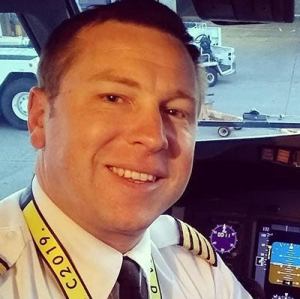
Sam Weigel has been an airplane nut since an early age, and when he's not flying the Boeing 737 for work, he enjoys going low and slow in vintage taildraggers. He and his wife live west of Seattle, where they are building an aviation homestead on a private 2,400-foot grass airstrip.

Ready to Sell Your Aircraft?

List your airplane on AircraftForSale.com and reach qualified buyers.

List Your Aircraft
AircraftForSale Logo | FLYING Logo
Pilot in aircraft
Sign-up for newsletters & special offers!

Get the latest stories & special offers delivered directly to your inbox.

SUBSCRIBE



