














Pipistrel Velis Electro Certified for Canadian Owners, Flight Schools

World’s first type certificated and commercially available electric aircraft earns another key approval.

Pipistrel Velis Electro aircraft
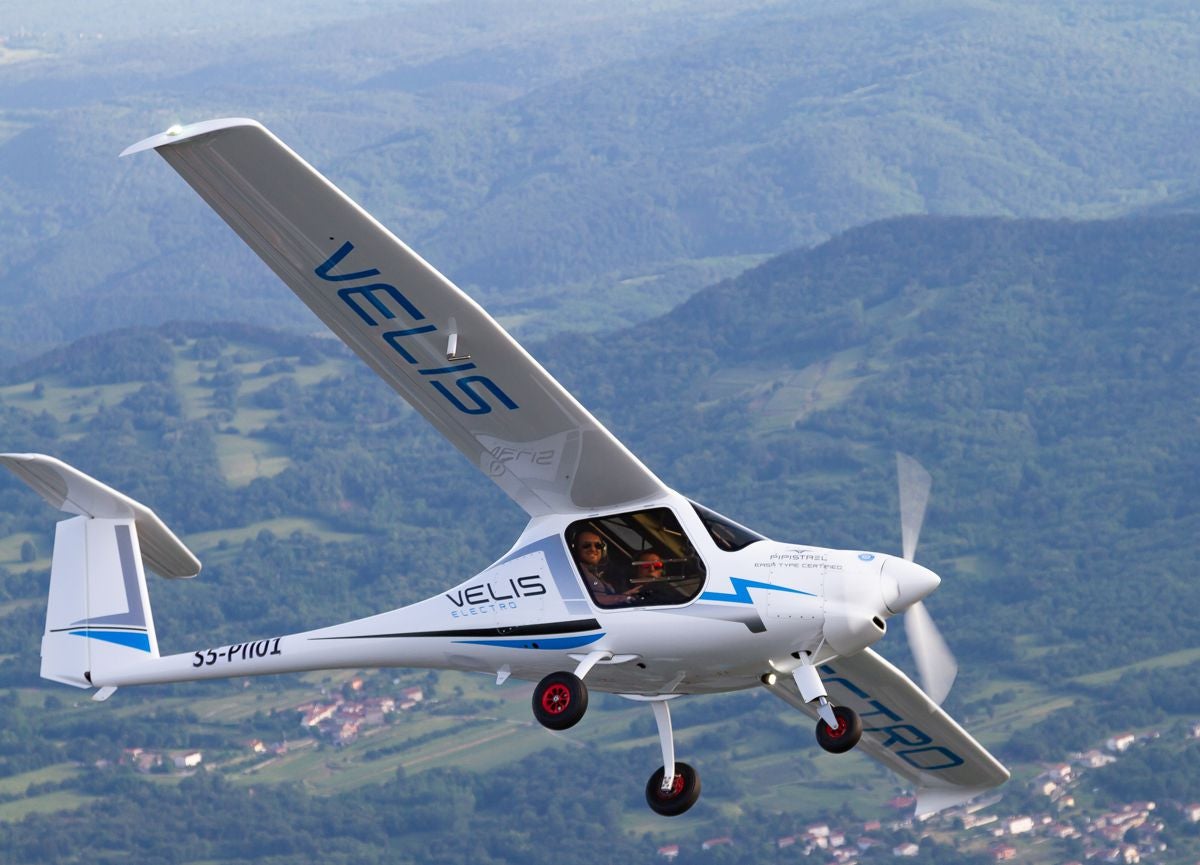
The two-seat, fully electric Velis Electro is designed primarily for day VFR flight training. [Courtesy: Pipistrel]
Gemini Sparkle

Key Takeaways:

  • Transport Canada has validated the type certificate for Pipistrel's Velis Electro, the world's first type-certificated electric aircraft, allowing its commercial and flight training use across Canada.
  • This Canadian approval expands the aircraft's global reach, adding to its existing certifications in Europe (EASA, UK CAA) and use in U.S. flight schools under an airworthiness exemption.
  • Primarily intended for flight training, the Velis Electro offers a low-cost, low-noise, and zero-emission alternative to traditional aircraft, noted for its responsiveness and comfort despite a limited flight endurance.
See a mistake? Contact us.

The world’s first type certificated and commercially available electric aircraft is becoming increasingly widespread as more regulators authorize it for commercial and flight training purposes.

Textron Aviation subsidiary Pipistrel on Wednesday announced that Transport Canada, the country’s aviation regulator, has validated the type certificate for its two-seat, single-engine Velis Electro, allowing Canadian operators to own and fly it.


Canadian flight schools will be able to add the aircraft to their curricula, joining a growing number of U.S. schools—including Embry-Riddle Aeronautical University (ERAU)—that train with the Velis under an FAA light-sport aircraft (LSA) airworthiness exemption awarded in 2024.

The European Union Aviation Safety Agency (EASA) was the first to let pilots fly the Velis, awarding it a type certificate in 2020. EASA also certified the aircraft’s E-811 engine. In 2022, the U.K.’s Civil Aviation Authority (CAA) validated Pipistrel’s primary-category EASA certification.

Though the manufacturer is still pursuing FAA validation of that certification, the Velis is authorized for day VFR flight training in the U.S. under its LSA exemption.

Pipistrel delivered its first Velis to Canada in 2022, allowing the University of Waterloo’s Institute for Sustainable Aeronautics to conduct research and evaluation. Its electric engine was the first approved by Transport Canada, which validated the E-811’s EASA certification in 2024. Now, the aircraft is available as a low-cost, low-noise, zero-emission flight training alternative.

Transport Canada also validated type certificates for Pipistrel’s Velis Club and Explorer.

“This validation not only strengthens our position in the Canadian market, but also significantly enhances flight training capabilities across the country,” Gabriel Massey, president and managing director of Pipistrel, said in a statement.

Velis Advantage

Primarily intended for flight training, the Velis is a two-seat, fixed-wing model with fully electric propulsion. Its 88 knots true airspeed (ktas) cruise speed and 56 minutes of flight endurance, with VFR reserves, limit it to quick hops rather than cross-country trips. However, its low energy and maintenance costs make it more accessible than conventional aircraft, per Pipistrel.

Student pilot Shane Fisher flew his check ride in the Velis in 2022, becoming the first in the U.S. to earn a private pilot certificate using an electric aircraft. Fisher completed cross-country requirements using Pipistrel’s Virus SW.

The aircraft is about 21 feet long with a 35-foot wingspan, 1,323-pound MTOW, and 380-pound payload. It is powered by the E-811 and a proprietary dual battery system, which can be charged in about 80 minutes.

The entire powertrain is liquid cooled and continuously overseen by an onboard health monitoring system. In the air, the electric system produces about the same volume as a normal conversation. Pipistrel has shown that it can withstand faults and thermal runaway events.

The Velis cockpit is designed to provide the same look and feel as a traditional aircraft. Per ERAU, pilots who transitioned from the Cessna 172 reported a “noticeably different” experience, such as a lower sightline during approach and landing. But they described it as more responsive and comfortable than a traditional trainer.

Flight schools are the Velis’ biggest customer. But type certification opens up broader applications—including commercial and recreational ones. Pipistrel parent Textron also owns Cessna and Beechcraft, two of the “big three” general aviation manufacturers. The company’s expertise in that market could make it a candidate to be the Velis’ next landing spot.

Jack Daleo

Jack is a staff writer covering advanced air mobility, including everything from drones to unmanned aircraft systems to space travel—and a whole lot more. He spent close to two years reporting on drone delivery for FreightWaves, covering the biggest news and developments in the space and connecting with industry executives and experts. Jack is also a basketball aficionado, a frequent traveler and a lover of all things logistics.

Ready to Sell Your Aircraft?

List your airplane on AircraftForSale.com and reach qualified buyers.

List Your Aircraft
AircraftForSale Logo | FLYING Logo
Pilot in aircraft
Sign-up for newsletters & special offers!

Get the latest stories & special offers delivered directly to your inbox.

SUBSCRIBE
