Amazon Reverses Course on Italy Drone Delivery

Company cites country’s regulatory framework as a hindrance to its drone delivery plans but will continue its work in the U.K.

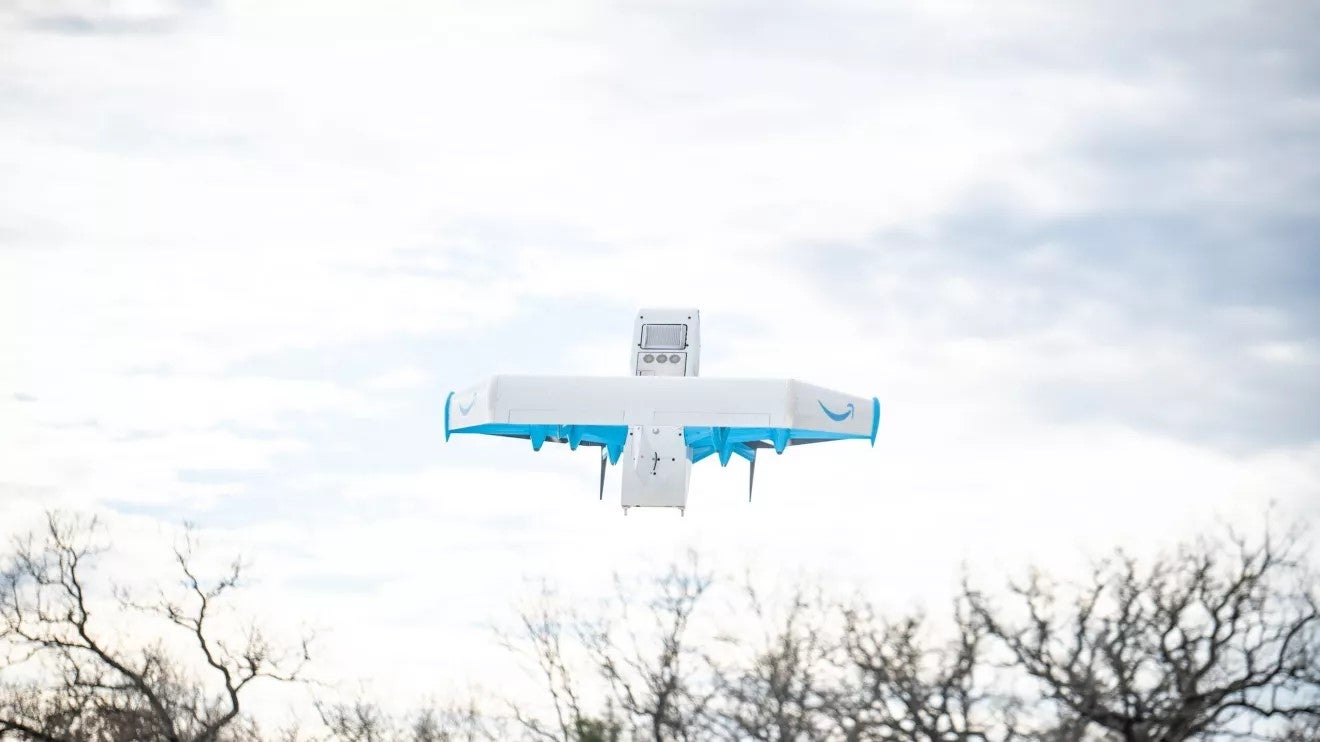
Amazon Prime Air delivery drone in flight
Amazon Prime Air will no longer pursue a commercial drone delivery service in Italy, reversing course on a 2023 announcement. [Credit: Amazon]
Gemini Sparkle

Key Takeaways:

  • Amazon is scaling back its international drone delivery plans, halting a previously announced service in Italy due to regulatory hurdles and facing significant delays and local opposition in the U.K.
  • Domestically, Amazon ceased drone delivery operations in College Station, Texas, following resident complaints about noise, but has expanded to new U.S. cities and targets further growth.
  • The Prime Air program has encountered several operational and safety incidents, including drones striking objects, an internet cable, and a voluntary hiatus due to technical issues affecting altitude readings.
  • Despite these setbacks, Amazon remains committed to its drone delivery service, introducing a new, quieter MK30 drone model and continuing to pursue expansion in the U.S. and U.K.
See a mistake? Contact us.

Amazon is scaling back its international drone delivery ambitions.

The company’s Prime Air unit will no longer pursue a commercial drone delivery service in Italy, where it previously announced plans to launch by late 2024. Reuters reported that the move came as a surprise to Italy’s civil aviation regulator, ENAC.

A Prime Air spokesperson told FLYING that the company remains committed to the U.K.—the other international market it had aimed to enter last year. In 2025, its drones began serving customers in Waco and San Antonio, Texas; Pontiac, Michigan; and other U.S. locations. The company plans to announce new U.S. and international services soon, it said.

“Despite positive engagement and progress with Italian aerospace regulators, the broader business regulatory framework in the country does not, at this time, support our longer-term objectives for this program,” the spokesperson said. “Our drone delivery projects in the U.S. and U.K. continue positively, with test flights and commercial deliveries proving successful and well-received by customers.”

Those operations have not been universally embraced.

In College Station, Texas, residents complained about noise from the company’s MK27-2 drone—which they compared to chain saws, leaf blowers, and hives of bees—and pushed back on a proposed expansion. Prime Air agreed to limit operations in the city to four per hour and told residents it would not renew the lease on its local drone delivery hub. It officially ceased operations in College Station, one of its two initial U.S. launch markets, in August.

“We were happy to have Amazon and its drone service in our community,” said College Station Mayor John Nichols. “While we worked with them to find other business locations in College Station, they have chosen to move on to the next phase of developing their drone delivery service, and we wish them well.”

Since then, Prime Air has launched in Waco, San Antonio, and Pontiac and is preparing for operations near Kansas City, Kansas. Per an amendment to its operational specifications published in August, the company is also targeting Houston, Austin, and El Paso in Texas.

Prime Air is one of a handful of drone operators with Part 135 permissions from the FAA. Its MK30 drone carries up to 5 pounds, cruising at about 73 mph. The tailsitter lifts off using six vertical propellers before transitioning to wing-borne forward light. Packages are stored within its fuselage and dropped from a height of about 13 feet.

Per Amazon, the MK30 is smaller, lighter, and more durable than the MK27-2, with a 7.5-mile service radius and the ability to fly in light rain.

Bumpy Drone Expansion

Prime Air said in October 2023 that it was already working with regulators in the UK and Italy to establish a commercial service by late 2024. It had planned for those markets to be the first to integrate drone delivery with its network of fulfillment centers. Instead, that integration happened in Tolleson, Arizona, in November 2024.

“The future has arrived in Italy,” said Pierluigi Di Palma, president of ENAC, in 2023. “Being chosen by a global player such as Amazon is further confirmation of the strategy pursued by ENAC to push for innovation of advanced air mobility in the aviation industry, creating a national ecosystem favorable to the safe development of new services.”

Prime Air’s international expansion has not been as smooth as Amazon and Di Palma may have anticipated.

In December 2024, the company acknowledged it was about one year behind schedule. It said it successfully completed initial trials with its MK30 drone in Italy, where it “continues to work with Italian authorities to meet all the requirements needed to launch the service next year,” in 2025.

Earlier in 2024, Amazon was one of six operators selected by the U.K. Civil Aviation Authority (CAA) to participate in a series of beyond visual line of sight (BVLOS) drone delivery trials. In January, it picked a fulfillment center in Darlington, U.K., as the initial site for those trials. However, The Telegraph reported in November that the CAA had not yet authorized them.

The planned operations have reportedly sparked a dispute between Amazon and a local flying club, which per The Telegraph told the CAA it will “inconvenience Amazon within the boundaries of U.K. law” if the testing impedes model aircraft pilots. Prime Air responded by creating a no-fly zone around the club.

Due to a lack of evidence on the drones’ noise impacts, a local council gave Amazon only temporary permission to build drone facilities. The Telegraph reported that Prime Air subsequently reduced its planned operations from 21 to 10 per hour and will build one launch pad rather than two.

Amazon estimates the MK30 to be about 40 percent quieter than the MK27-2, which could assuage noise concerns. But the company has also faced pushback from the UK Ministry of Defense, which per The Telegraph called the drones a “significant risk to flight safety” and lamented potential airspace restrictions on military aircraft.

In October, two Prime Air drones struck the same crane boom in Arizona. The Aircraft Owners and Pilots Association (AOPA) has cited the crashes—which occurred minutes apart—as evidence that Amazon’s detect and avoid (DAA) systems are not yet mature enough for expanded operations.

In November, another Prime Air drone clipped an internet cable in Waco as it was lifting off from a customer’s backyard. Amazon said it covered repair costs for the internet service provider and reported no damage or injuries. The National Transportation Safety Board told FLYING it will not investigate the event.

Those incidents followed a voluntary hiatus of Prime Air’s U.S. service between late January and early April. The company said it was to fix an issue with dust causing improper altitude readings, a problem it uncovered after flying in Arizona’s desert environment.

Jack Daleo

Jack is a staff writer covering advanced air mobility, including everything from drones to unmanned aircraft systems to space travel—and a whole lot more. He spent close to two years reporting on drone delivery for FreightWaves, covering the biggest news and developments in the space and connecting with industry executives and experts. Jack is also a basketball aficionado, a frequent traveler and a lover of all things logistics.


Ready to Sell Your Aircraft?

List your airplane on AircraftForSale.com and reach qualified buyers.

List Your Aircraft
AircraftForSale Logo | FLYING Logo
Pilot in aircraft
Sign-up for newsletters & special offers!

Get the latest stories & special offers delivered directly to your inbox.

SUBSCRIBE