














The FAA wants aviation to clean up its act—specifically, greenhouse gas (GHG) emissions.
Last year the agency announced $291 million from the Inflation Reduction Act would support projects aimed at reaching net-zero GHG emissions by 2050. One of the first stakeholders to accept the challenge was Embry-Riddle Aeronautical University (ERAU), which is embracing electrically powered aircraft as part of its training fleet.

Alan Stolzer, dean of ERAU’s Daytona Beach, Florida, campus’ college of aviation, describes achieving sustainable aviation as “both an awareness of and a set of actions that address aviation’s impact on the environment,” adding that “sustainability is considered a strategic priority for the college of aviation moving forward.”
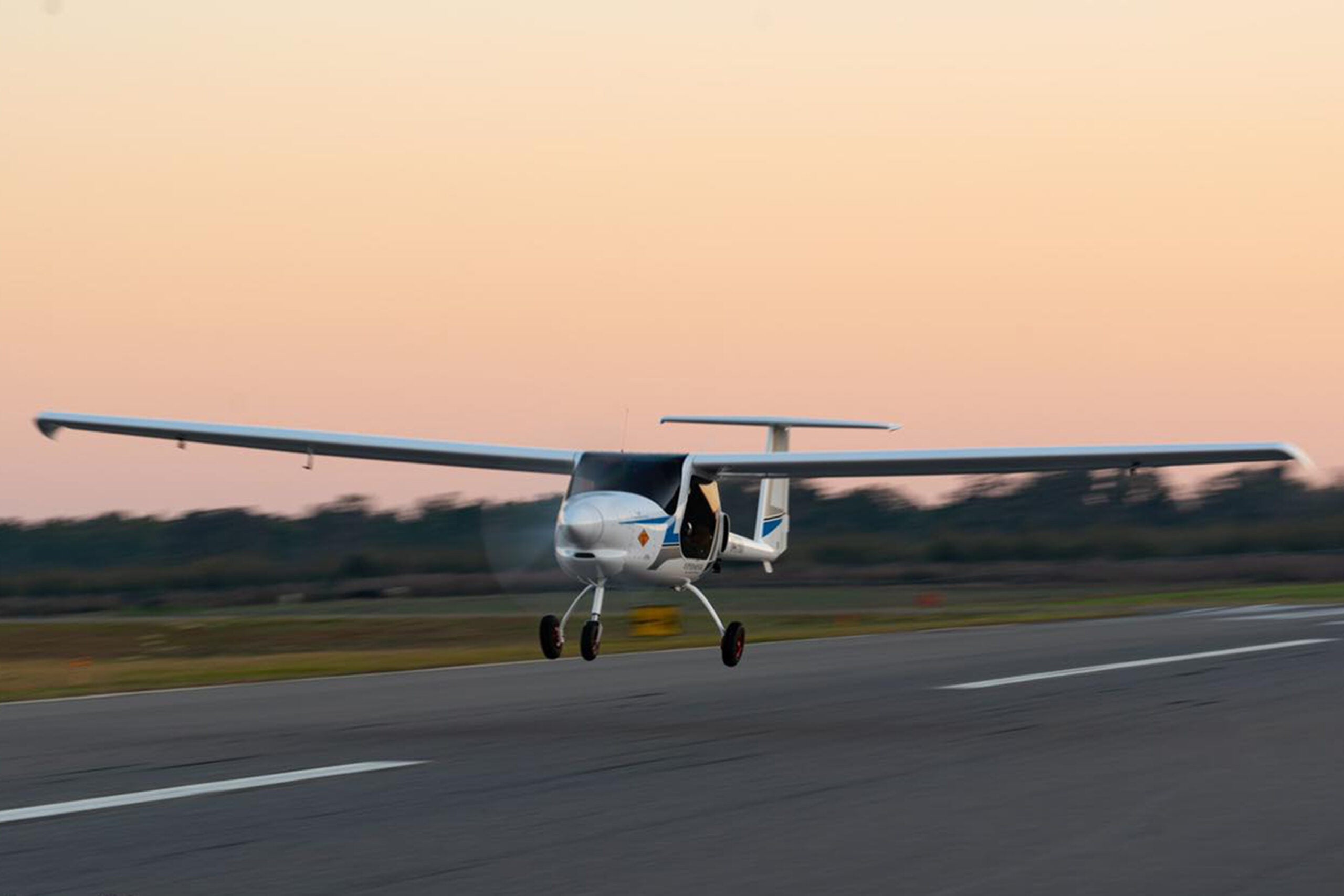
In July 2024, ERAU took delivery of a Pipistrel Velis Electro, the first type-certified, electric-powered aircraft approved for daytime VFR. The aircraft has been certified in more than 30 countries.
- READ MORE: Embry-Riddle Aeronautical University Sees Record Enrollment
- READ MORE: Embry-Riddle Aeronautical University Launches Centennial Celebration
In the United States the Velis Electro is a light sport aircraft (LSA) with an endurance of approximately 50 minutes. According to information provided by ERAU, this makes it ideal for training flights in the pattern and technical maneuvers in the practice area.
The aircraft is smaller and quieter than its avgas-powered contemporaries and will likely find a niche at airports where access to unleaded fuel or noise challenges are issues.
Transitioning to the Velis
Anytime a pilot transitions from flying one model of aircraft to another, there is a learning curve, not unlike driving a rental car that is a different model from the one you normally drive.
According to ERAU, pilots who have transitioned from the Cessna 172, which is ostensibly the backbone of the piston training fleet, report that the Velis Electro “delivers a noticeably different yet highly responsive experience. The aircraft’s lower, slightly inboard seating position changes a pilot’s sightline during approaches and landings, but its direct mechanical linkage to the control surfaces retains the familiar tactile feedback of traditional trainers.”
Pilots also report the Velis Electro has an “instantaneous throttle response” because of the electric motor, eliminating the stumble lag often experienced with combustion engines. In addition, the aircraft has significantly less vibration and perceived cockpit noise, which makes it a more comfortable training environment and reduces fatigue during repetitive training flights.
Adapting Procedures for Electric Flight
Flying an electric aircraft gives the students the opportunity to learn new procedures, as there is a shift in cockpit routines from avgas-powered designs. Instead of noting fuel pressure and tachometer readings during the cockpit instrument scan, pilots of Velis Electro monitor energy-consumption metrics and battery-health indicators.
Preflight and postflight procedures are also different, as there are battery-specific considerations, such as temperature and weather, that can have an impact on battery charging and storage, along with strategies to preserve battery health.
Embry-Riddle’s quest for sustainable aviation also extends to the classroom, specifically the university’s MicaPlex research center. According to ERAUschool officials, researchers are exploring multiple ways of creating a greener future for aviation beyond batteries.
One promising path forward is hybrid-electric power. Because of weight-and-balance constraints, hybrid systems can reduce fuel consumption and cut emissions without depending entirely on large, heavy battery packs. This approach will likely be applied for regional and commuter aircraft, which by their nature require more range than existing all-electric designs.
“Each of these propulsion technologies pushes us to rethink how we train pilots, maintain aircraft, and design the infrastructure that supports them, inspiring new approaches to operational safety and the development of sustainable aviation systems,” said Kyle Collins, assistant professor and director of ERAU’sEagle Flight Research Center.
School officials also note that each student flight of the Pipistrel Velis Electro provides data that becomes part of the research into the development and practical application of greener flight.

