
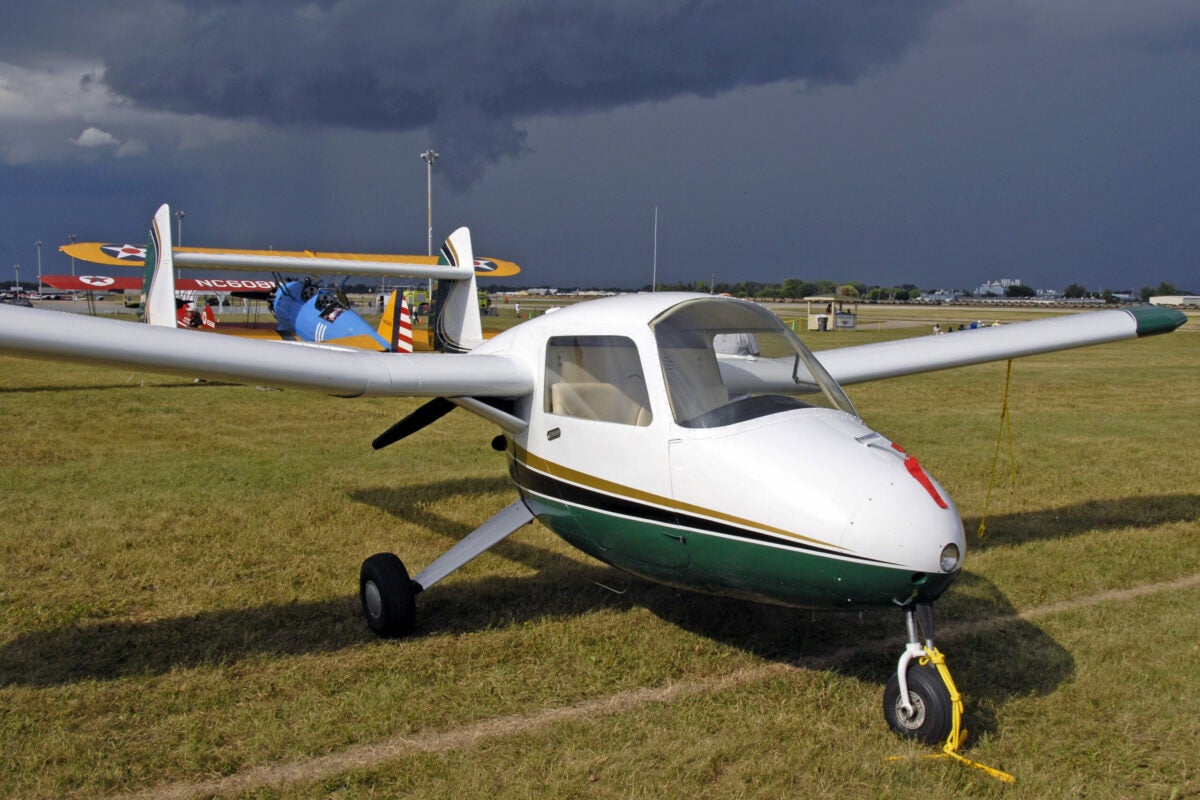


Generally, the more unique and unconventional an aircraft’s design, the more extreme its strengths and weaknesses become. A canard configuration, a wing optimized for high lift, and an amphibious airframe each provide specialized capability, and each also introduces a corresponding penalty with regard to other factors. This give and take in aircraft design and engineering applies to all aircraft, from the largest transports to the smallest homebuilts.
Among the most interesting case studies are those that start with a common mission and reimagine the ordinary, eschewing the tried and true in favor of exploring new concepts. The Anderson Greenwood AG-14 is one such example. Aiming to gain a foothold in the personal aircraft market during the postwar years, it incorporated a decidedly unconventional layout that featured a single pusher engine and a twin-boom tail.