
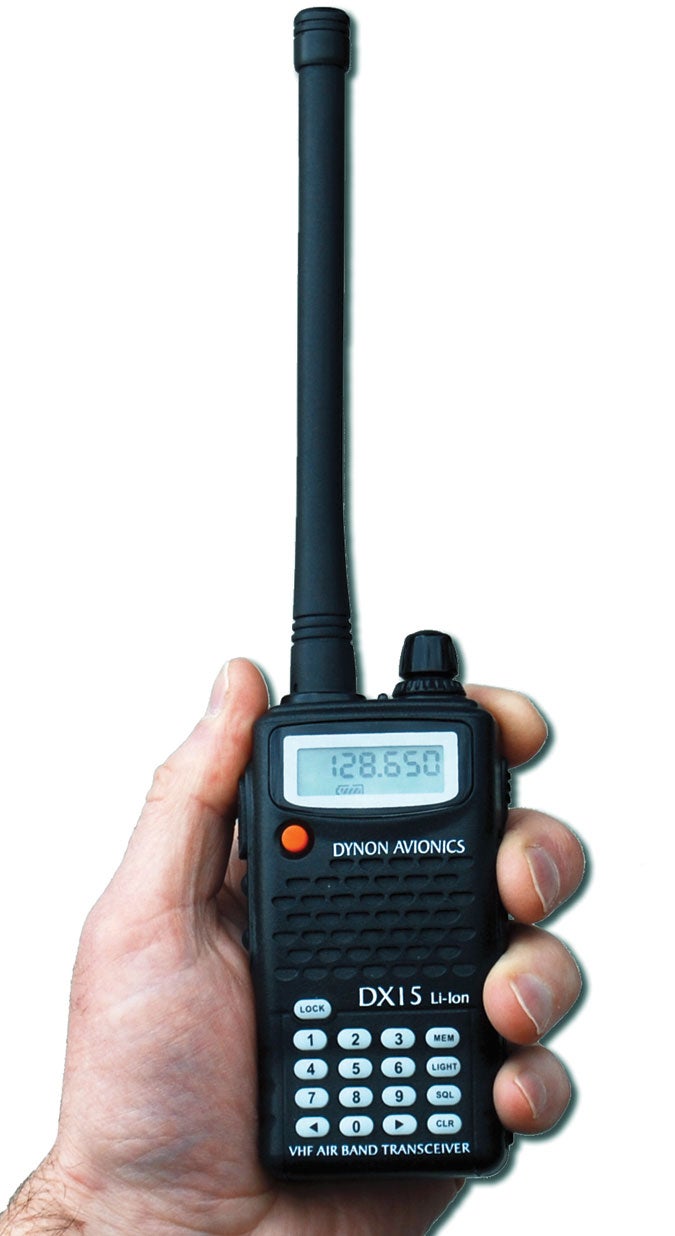


Question: I am a student pilot learning to fly at a towered airport. I see lots of other pilots taking handheld radios with them in the airplane. My instructor carries one in his flight bag, for example. I thought the airplane already had a radio installed—why do so many pilots carry a handheld? Are they required?
Answer: Remember the phrase “aviate, navigate, communicate”? It reminds us that communicating—that is, using the radio—is the last priority in the aircraft. That being said, if an airplane has a working VHF comm radio installed, a handheld radio is a backup device—not a requirement. Pilots, especially those who fly in airspace where radio communication is required (Class A, B, C, and D), often carry handheld radios in their flight bag just in case they have a problem with the aircraft’s electrical system, and/or the radio fails.
Pilots who fly aircraft without electrical systems, such as Piper J-3 Cubs, often use handheld radios because the ability to hear as well as see traffic can increase safety. Instructors often have a handheld radio so that when they solo their learners, they can keep an ear on them in the traffic pattern. Student pilots may also find a handheld radio helpful when they are learning radio communications, as they can use it to listen to the unicom or tower frequency while studying or hanging out at the airport.