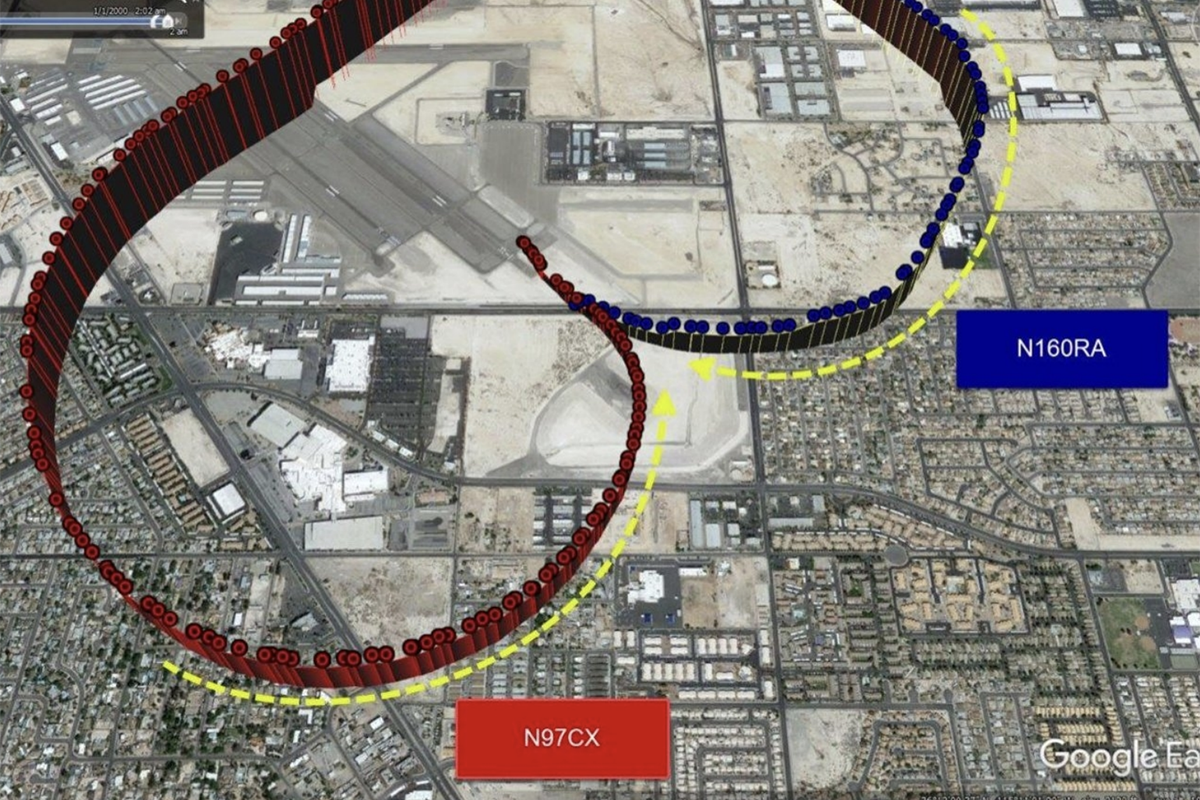
The ADS-B track from the NTSB’s preliminary report shows chilling flight paths for the accident aircraft at KVGT. [Image: NTSB]
Key Takeaways:
Mid-air collisions frequently occur in airport traffic patterns, often due to a combination of factors like pilot error, differing aircraft speeds, and visual blind spots, even on VFR days or at towered airports.
The "Swiss Cheese Model" illustrates how accidents happen when multiple layers of safety failures or individual errors align, emphasizing that even vigilant pilots can be at risk from others' mistakes.
Effective prevention relies on pilots' constant vigilance ("see and avoid"), strict adherence to traffic pattern procedures and radio calls, proper use of technology like ADS-B, and maintaining a sterile cockpit during critical flight phases.
I was four days away from my private pilot check ride. My CFI, an Air Force Academy graduate, was with me as I practiced specialty takeoffs and landings at the towered airport. I had just completed the pre-landing GUMPS check on downwind, when he cried out the magic phrase—”I have the controls”—and I replied, “Your airplane!” and let go.
CREATE A FREE ACCOUNT
Sign up to keep reading
Create a free account to continue. Already a member? Sign in below.
Meg Godlewski has been an aviation journalist for more than 24 years and a CFI for more than 20 years. If she is not flying or teaching aviation, she is writing about it. Meg is a founding member of the Pilot Proficiency Center at EAA AirVenture and excels at the application of simulation technology to flatten the learning curve. Follow Meg on Twitter @2Lewski.