











Anyone whos spent much time flying personal aircraft has been asked this question: Is it safe? As a rule, the answer is, “It depends.” Because safety is relative, sitting at home can be the safest course of action. But its usually not very rewarding, and sitting at home makes it much more difficult to travel in a personal aircraft. 288
Is It Safe?
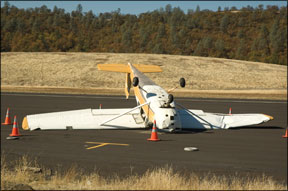
Anyone whos spent much time flying personal aircraft has been asked this question: Is it safe? As a rule, the answer is, "It depends." Because safety is relative, sitting at home can be the safest course of action. But its usually not very rewarding, and sitting at home makes it much more difficult to travel in a personal aircraft. Beginning on page 24 of this issue, we look at a recent accident the NTSB attributed to low-level maneuvering. In critiquing that accident, we referred to the AOPA Air Safety Foundation (AOPA/ASF) and its most recent Nall Report, an annual in-depth look at GA accident trends. The data in those annual reports is very intriguing; so much so, we thought wed examine some of it more closely. We wanted to pose the question, "Is it safe to do X?" when X is some operation, maneuver or decision made by a GA pilot. While every operation and skill level is different, what we really wanted to do is highlight some of the areas in which GA pilots routinely bend metal, with the idea of using the 2007 Nall Report, the most recent available, and its findings to demonstrate why doing what youre about to do might not be a good idea.

Key Takeaways:
- The overwhelming majority of General Aviation (GA) accidents are attributed to pilot-related causes, highlighting areas where pilots have control over safety.
- The most frequent accident types occur during landing and takeoff phases, while maneuvering flight, descents/approaches, and weather-related incidents, though less common, result in significantly higher fatality rates.
- Many accidents are preventable through better pilot proficiency, diligent fuel management, avoiding risky low-level maneuvering, and making sound weather-related decisions.
- By adhering to basic safety recommendations, a substantial reduction (around 70%) in both total GA accidents and fatalities could be achieved.
Key takeaways sponsored by Aviator Pro | Start Your Training ->
See a mistake? Contact us.

