













Register

When the Wind Blows

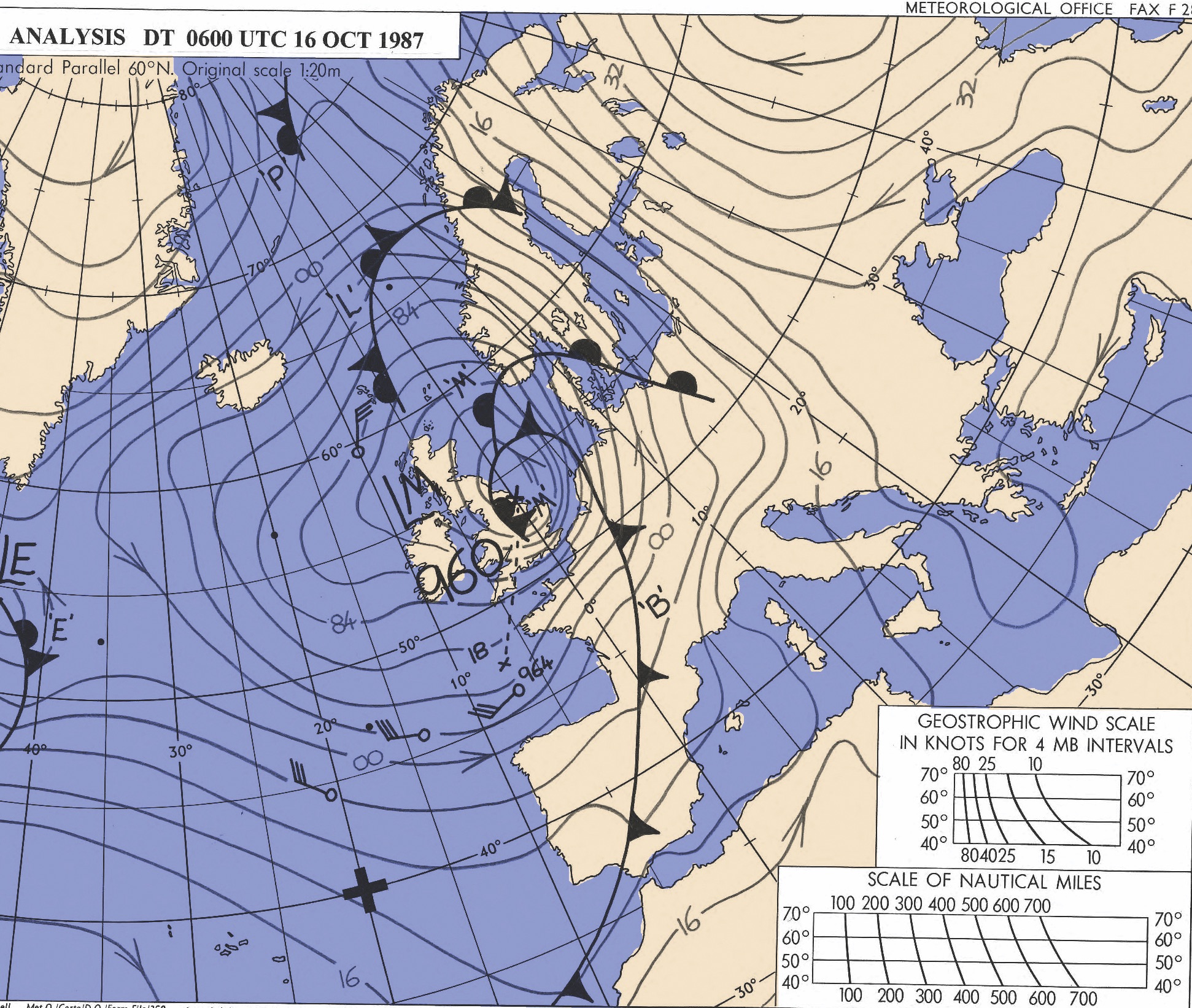
Tight packing of isobars illustrates a damaging 1987 windstorm in England. (UK Met Office)
Gemini Sparkle

Key Takeaways:

  • Wind is primarily caused by the unequal heating of the earth, leading to large-scale circulations like the Hadley Cell and jet stream, alongside localized mesoscale winds that are challenging to forecast and often cause TAF inaccuracies.
  • The fundamental force driving wind is the pressure gradient, with its direction and strength further influenced by the Coriolis effect for large-scale systems and frictional forces near the surface.
  • Pilots interpret wind information from METARs, noting sustained speeds, gusts (which indicate unstable air and turbulence), and directional changes described as backing (counterclockwise) or veering (clockwise), relevant to air advection.
  • Understanding wind dynamics, including upper-level wind shear, is crucial for aviation as it correlates with phenomena like clear air turbulence and provides insights into atmospheric conditions.
See a mistake? Contact us.

There’s no phenomena that shapes the flying experience quite like wind. It’s almost always present in some form. A crosswind makes for tricky landings, a gusty wind brings a bumpy flight, and a strong tailwind buys you an extra 15 minutes at your destination. It makes sense that this temperamental, fickle element should get an entire article of its own in hopes we can understand it a little better.

Where Wind Comes From

Ready to Sell Your Aircraft?

List your airplane on AircraftForSale.com and reach qualified buyers.

List Your Aircraft
AircraftForSale Logo | FLYING Logo
Pilot in aircraft
Sign-up for newsletters & special offers!

Get the latest stories & special offers delivered directly to your inbox.

SUBSCRIBE
