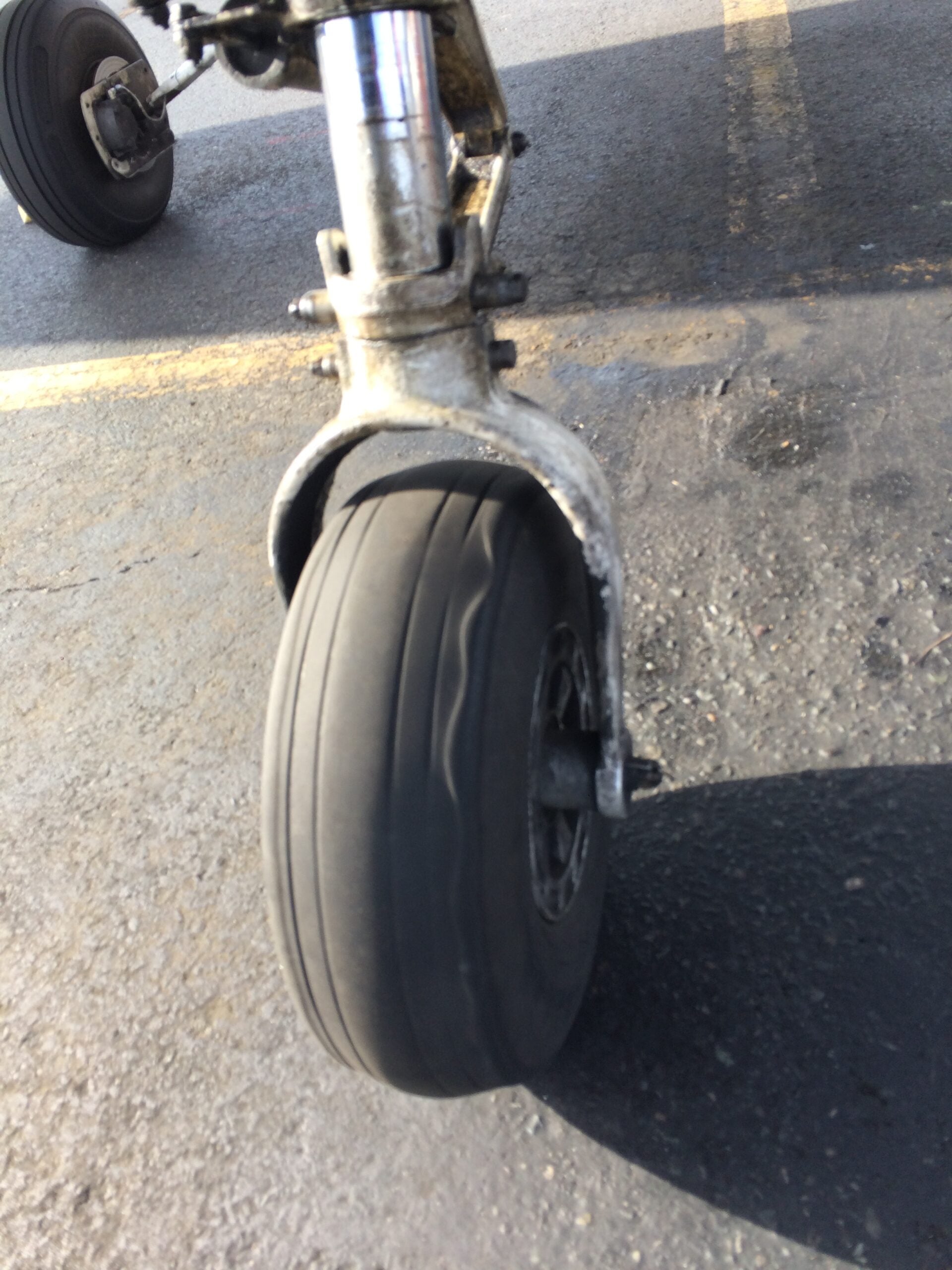
Thorough preflight inspections of aircraft tires are critical for safety, requiring pilots to recognize unusual wear and consult experienced personnel, as aircraft tires differ significantly from car tires.
Maintaining correct tire inflation, as specified in the aircraft's POH/AFM, is paramount and should be checked daily, as pressure loss is normal and improper inflation affects ground operations.
Aircraft tire maintenance, including changing and inflating, is a complex process requiring specialized tools and knowledge, highlighting the importance of addressing common issues like flat spots and verifying maintenance actions.
This is not what a CFI wants to hear when the learner is doing the preflight inspection. The learner was looking at the nosewheel of the Cessna 150, specifically, at a scalloped pattern on the side of the tire. She’d never seen this before—and frankly, in my more than 30 years of flying, neither had I. But I knew ugly when I saw it.
CREATE A FREE ACCOUNT
Sign up to keep reading
Create a free account to continue. Already a member? Sign in below.
Meg Godlewski has been an aviation journalist for more than 24 years and a CFI for more than 20 years. If she is not flying or teaching aviation, she is writing about it. Meg is a founding member of the Pilot Proficiency Center at EAA AirVenture and excels at the application of simulation technology to flatten the learning curve. Follow Meg on Twitter @2Lewski.