














U.S. Airlines Avoid Major Impact From Airbus ELAC Issue

Manufacturer says less than 100 out of about 6,000 potentially impacted aircraft still require modifications.

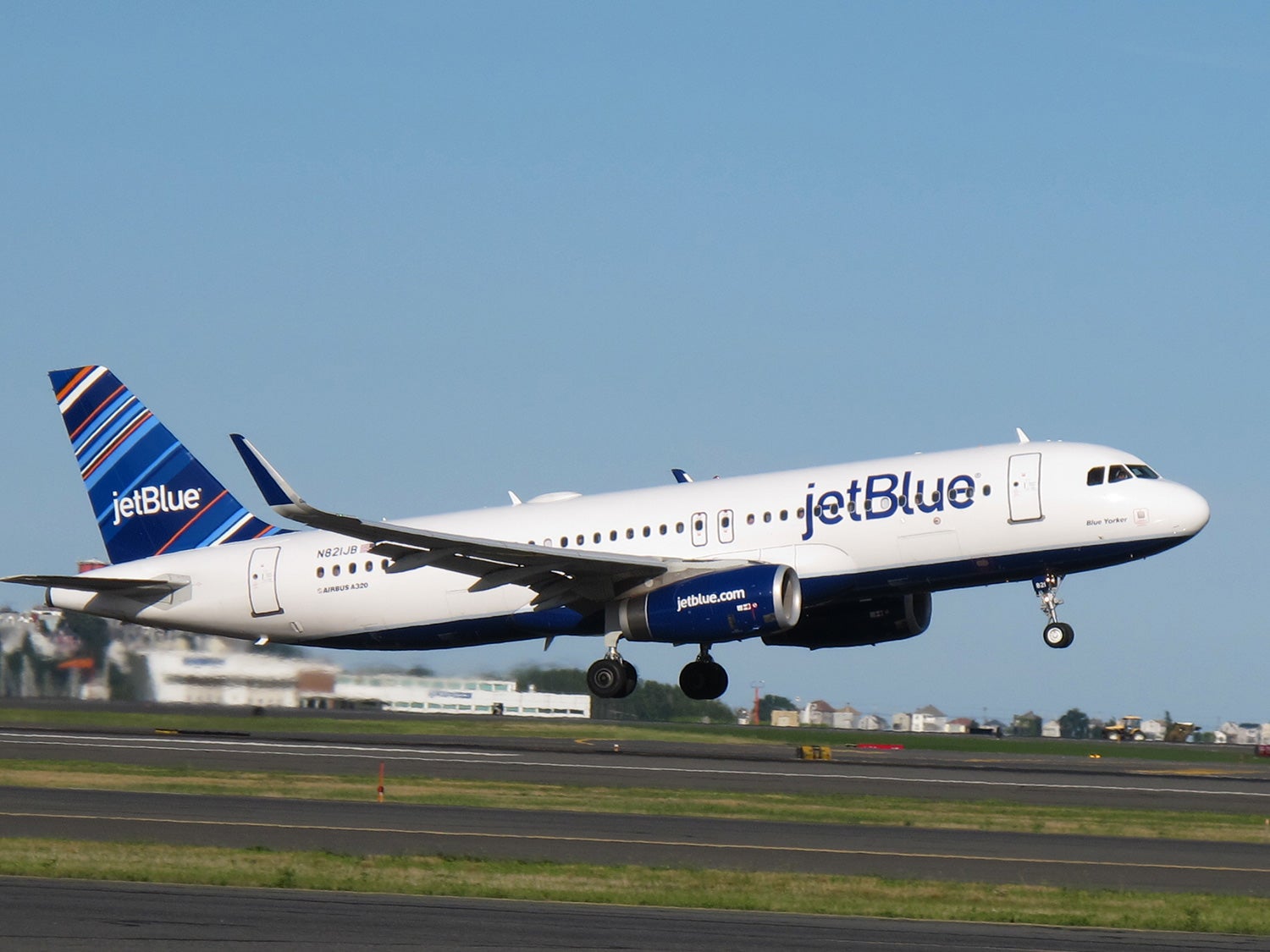
JetBlue Airways Airbus A320 aircraft taking off
Regulators required modifications to certain Airbus aircraft after an A320 operating JetBlue Flight 1230 suffered a possible software vulnerability. [Credit: JetBlue Airways]
Gemini Sparkle

Key Takeaways:

  • Emergency airworthiness directives (EADs) were issued by EASA and FAA for Airbus A319, A320, and A321 models after an A320 experienced sudden altitude loss, possibly due to intense solar radiation affecting its elevator aileron computer (ELAC).
  • U.S. airlines largely avoided major disruptions by quickly completing the required ELAC modifications, with most aircraft returned to service, although JetBlue initially faced more significant groundings.
  • Separately, Airbus confirmed a new quality issue affecting metal panels on some A320-family jets, attributing it to an unnamed partner, but stated the problem has been identified and contained for new production.
See a mistake? Contact us.

U.S. airlines appear to have avoided major disruptions after the FAA required emergency modifications to about 545 Airbus A319, A320, and A321 models.

Airbus on Friday said that after an A320 altitude-loss event in October, a preliminary analysis found that “intense solar radiation” may have caused a malfunction of the aircraft’s elevator aileron computer (ELAC) system, which uses pilot commands to control elevators and ailerons. That prompted the European Union Aviation Safety Agency (EASA) and FAA to issue emergency airworthiness directives (EADs) grounding certain A319, A320, and A321 models until carriers completed ELAC modifications.


On Monday, Airbus said that out of about 6,000 potentially affected aircraft, less than 100 are still awaiting modifications before returning to service. American Airlines and Delta Air Lines told FLYING they have met all requirements in the FAA’s EAD.

“Airbus apologizes for any challenges and delays caused to passengers and airlines by this event,” the manufacturer said Monday.

A few hours later, however, Reuters reported that Airbus identified a separate issue related to the quality of A320-family metal panels. The company blamed the problem on an unnamed partner. A320 components and parts are sourced from thousands of internal and external suppliers.

“Airbus confirms it has identified a quality issue affecting a limited number of A320 metal panels,” the manufacturer told Reuters. “The source of the issue has been identified, contained and all newly produced panels conform to all requirements.”

What Happened?

During the cruise portion of a trip from Cancún, Mexico, to Newark, New Jersey, the Airbus A320 operating JetBlue Flight 1230 on October 30 suddenly pitched downward without pilot input.

Though the investigation is ongoing, Airbus identified the ELAC as a possible factor. Regulators determined the issue could impact other aircraft.

In response to the company’s alert operators transmission (AOT), EASA on Friday issued an EAD covering the A319, A320, and A321 families, requiring operators to install “serviceable” ELACs and prohibiting future installations of the affected system on new aircraft.

According to EASA, continuing operations with the faulty ELAC “could lead in the worst-case scenario to an uncommanded elevator movement that may result in exceeding the aircraft’s structural capability.”

The FAA in response issued its own EAD requiring U.S. operators of the affected models to comply with EASA’s directive by Sunday at 12:01 a.m. before further flight.

The EAD follows an FAA directive for major airlines to reduce operations during the federal government shutdown—which ended earlier this month—due to air traffic control (ATC) staffing issues. Limitations were swiftly lifted, though the FAA will reportedly probe airlines that did not comply with the order.

Who Are the U.S. Airbus Operators?

A320 and A321 aircraft comprise the bulk of JetBlue’s narrowbody fleet. It appears to have been hit harder than its competitors. Per an internal memo from chief operating officer Warren Christie, the airline as of Sunday afternoon still required modifications for 50 out of 150 affected aircraft, keeping them grounded.

According to Christie, the goal is for 137 of those aircraft to be back in service Monday.

“Our teams are doing everything possible to minimize disruptions to crewmembers and customers,” a spokesperson said.

Other airlines faced minimal disruptions.

American is among the world’s largest Airbus operators, with about 480 A320 family aircraft in its fleet. The carrier initially said 340 aircraft were affected, later revising that number down to 209. On Monday, it said all updates were completed by Saturday morning, with no operational impacts since Friday.

Delta is another Airbus-heavy carrier. Per the airline’s latest SEC form 10-Q, it owns 59 A319s, 48 A320s, and 84 A321neos. It also operates 127 A321-200s, 50 of which are leased. The EAD affected about 50 A321neos.

On Monday, Delta said it implemented a new program for its maintenance technicians and completed all work required under the EAD.

“As safety comes before everything else, Delta has fully complied with the directive,” the carrier said in a statement. “Teams completed the required work with no effect on operations.”

United Airlines, which had six impacted aircraft, said Saturday that only “minor disruption to a few flights” is anticipated. Allegiant Airlines, which operates a majority-Airbus fleet of A319s and A320s, similarly said only a handful of aircraft were affected and that there would be “minimal to no impact on our operations or customers’ travel plans.”

Frontier Airlines, one of America’s largest A320 operators, on Monday told FLYING that it successfully modified 144 impacted aircraft over the weekend, with no cancellations due to the ELAC update.

Jack Daleo

Jack is a staff writer covering advanced air mobility, including everything from drones to unmanned aircraft systems to space travel—and a whole lot more. He spent close to two years reporting on drone delivery for FreightWaves, covering the biggest news and developments in the space and connecting with industry executives and experts. Jack is also a basketball aficionado, a frequent traveler and a lover of all things logistics.

Ready to Sell Your Aircraft?

List your airplane on AircraftForSale.com and reach qualified buyers.

List Your Aircraft
AircraftForSale Logo | FLYING Logo
Pilot in aircraft
Sign-up for newsletters & special offers!

Get the latest stories & special offers delivered directly to your inbox.

SUBSCRIBE
