













Register

Tropical Weather

Gemini Sparkle

Key Takeaways:

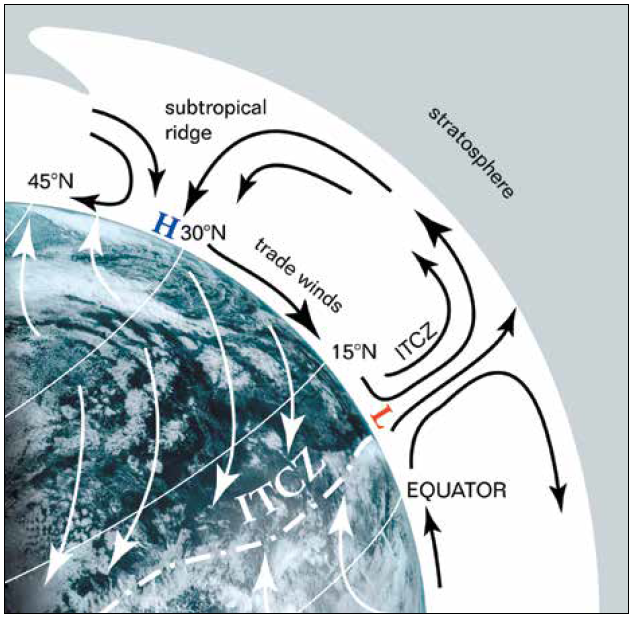
  • Tropical weather is influenced by solar radiation, the Intertropical Convergence Zone (ITCZ), and subtropical ridges, creating patterns like trade winds, easterly waves, and monsoons that bring moisture, clouds, and storms.
  • Local phenomena such as diurnal heating and sea breezes lead to predictable afternoon thunderstorms and shifts in wind patterns, significantly impacting daily flight conditions.
  • Key aviation hazards in tropical regions include severe thunderstorms (with wind shear, extreme turbulence, and icing), extensive tropical cyclone activity, and reduced visibility due to radiational fog, haze, and Saharan dust plumes.
See a mistake? Contact us.

Entering the dog days of summer, our attention shifts to the south. Rich moisture, weaker winds, and an increase in thunderstorms are classic signs that tropical moisture has entered the forecast equations. The media also becomes filled with headlines about hurricanes and tropical storms. And perhaps your cross-country trips even take you south to the tropical regions.

With these new weather elements, how can you stay safe while flying, and what hazards should you look for? We’ll cover that in this issue’s article by breaking things down, starting with the elements of tropical weather. By the time you reach the end, you’ll have a thorough understanding of how it works. A strange TAF in an unfamiliar location will no longer be such a challenge.


Ready to Sell Your Aircraft?

List your airplane on AircraftForSale.com and reach qualified buyers.

List Your Aircraft
AircraftForSale Logo | FLYING Logo
Pilot in aircraft
Sign-up for newsletters & special offers!

Get the latest stories & special offers delivered directly to your inbox.

SUBSCRIBE