













Register

Thunderstorm Safety

Gemini Sparkle

Key Takeaways:

  • Thunderstorms pose numerous severe aviation hazards, including turbulence, icing, hail, and microbursts, making them especially dangerous during warm seasons.
  • Effective thunderstorm avoidance is paramount, requiring pilots to use pre-flight planning with convective SIGMETs and maintain significant separation (10-20 miles) from storms while airborne.
  • Pilots must understand the critical limitations of ground-based weather radar displays (e.g., latency, showing precipitation not turbulence, altitude/coverage issues) and use them cautiously, always prioritizing avoidance.
  • In the rare event that thunderstorm penetration is unavoidable, strict adherence to specific Aeronautical Information Manual (AIM) procedures for preparation and flight through the storm is essential.
See a mistake? Contact us.

As summer arrives and the days get longer, pilots may let their guard down when it comes to weather. Icing and large hail may certainly be less of a factor during the balmy dog days, but the June, 1999 American MD-80 runway excursion and the Delta L-1011 crash in August, 1985 are some of the incidents that underscore the hazards of flying during the warm season.

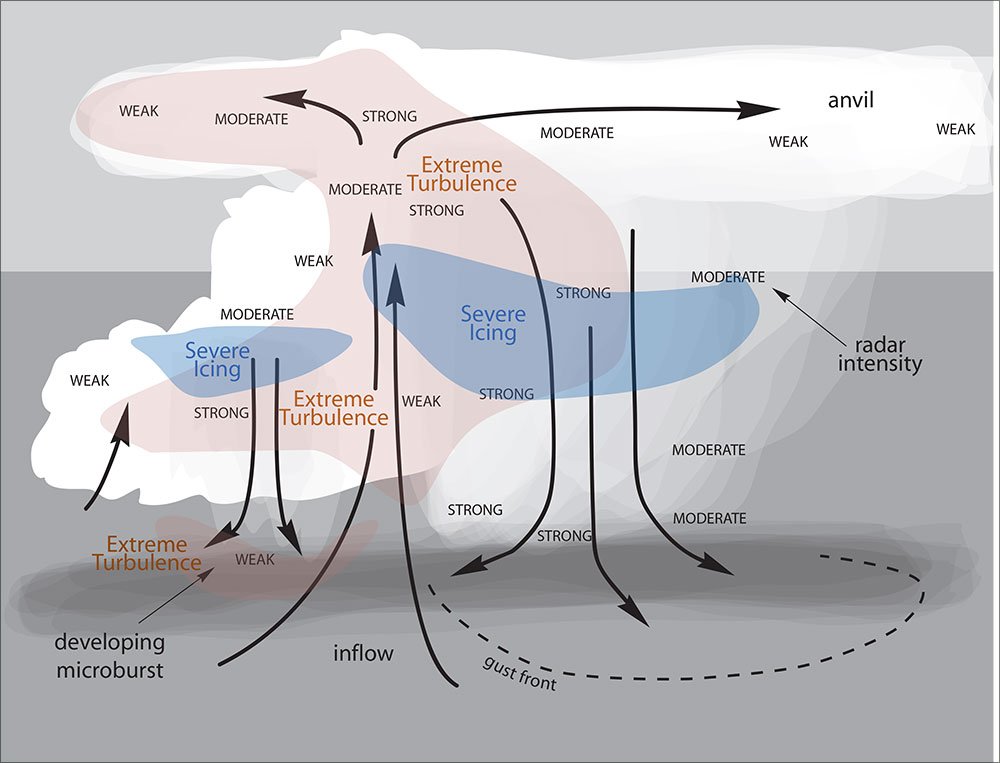
Thunderstorms can be awesomely beautiful phenomena when viewed from the ground. They also contain almost every known aviation hazard—turbulence, icing, hail, lightning, microbursts, reduced visibility, and strong winds. So, when viewed from the air, thunderstorms can be terrifying. Understanding the how and why of the weather and your weather avoidance tools can increase your margin of safety when slipping the surly bonds this summer.


Ready to Sell Your Aircraft?

List your airplane on AircraftForSale.com and reach qualified buyers.

List Your Aircraft
AircraftForSale Logo | FLYING Logo
Pilot in aircraft
Sign-up for newsletters & special offers!

Get the latest stories & special offers delivered directly to your inbox.

SUBSCRIBE