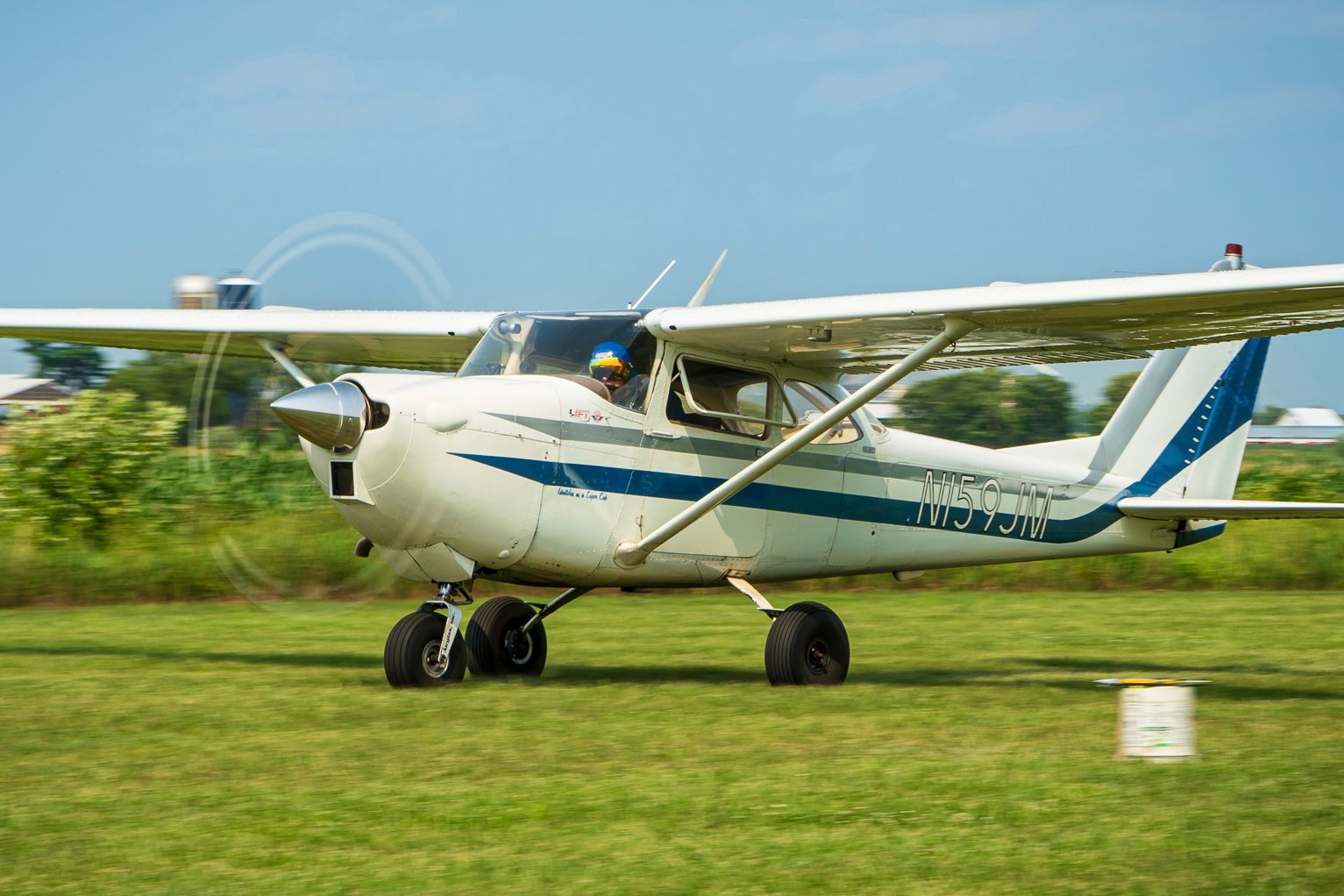
The oval bumps on the sides of the cowling are a dead giveaway. This Cessna 172 is packing a lot more horsepower than a standard 172. [Credit: Jim Stevenson]
Key Takeaways:
Engine upgrades significantly improve aircraft performance and flying experience, but the cost of performing these upgrades post-purchase is often prohibitively high, potentially exceeding the aircraft's value.
For prospective buyers, it is far more cost-effective to purchase an airplane that has already had major engine upgrades installed, as the premium is typically less than the upgrade cost.
Alternatively, buyers can seek out lesser-known, more powerful aircraft models or consider an upgrade when replacing an already damaged or timed-out stock engine to make the investment more financially palatable.
Back when I belonged to a flying club in Ann Arbor, Michigan, it had one plane that stood out from the rest. It was N1412V, a red-and-white 1974 Cessna 172M Skyhawk. It sported an orange-and-white vinyl interior, complete with sweet chrome trim.
Majestic as the interior was, however, it was the 180 hp engine upgrade that made it everyone’s favorite.
CREATE A FREE ACCOUNT
Sign up to keep reading
Create a free account to continue. Already a member? Sign in below.
Jason McDowell is a private pilot and Cessna 170 owner based in Madison, Wisconsin. He enjoys researching obscure aviation history and serves as a judge for the National Intercollegiate Flying Association. He can be found on Instagram as @cessnateur.