Register

Search Results for: wright

Pilot Proficiency

Unusual Attitudes: A Wings Thing

(May 2011) DID WE ACTUALLY MAKE a better pilot out of anybody, save any lives or keep any bent airplanes from littering the landscape? Who knows, but we sure had a good time putting on Wings Weekend at Hogan Field or, more properly, Butler County Regional Airport in Hamilton, Ohio. It started with me (and […]

Read More »
Training and Proficiency

Learning the Science of Flight-Testing

I climbed a few thousand feet and completed my tests. When it was time to land, I reduced the throttle to idle. “That’s when we experienced a huge explosion. I was jolted in my seat. I saw both of the bomb-bay doors blow away. We were completely engulfed in flames. I could see the flames […]

Read More »
Features

Have FAA/Industry Safety Efforts Worked?

We in the general aviation (GA) community are fond of poking fun occasionally at the FAA. Most of the time, its to highlight a perceived and sometimes real tension between the community and the agency. Frequently, this takes the form of tired clichs such as, “Im from the FAA and Im here to help you,” or another mythical phrase such as, “Were not happy until youre not happy.” When I was FAAs lead GA executive in the early 2000s, my favorite became, “Weve just upped our standards, now up yours.”

Read More »
Aircraft

Sikorsky X2 Team Wins Collier Trophy

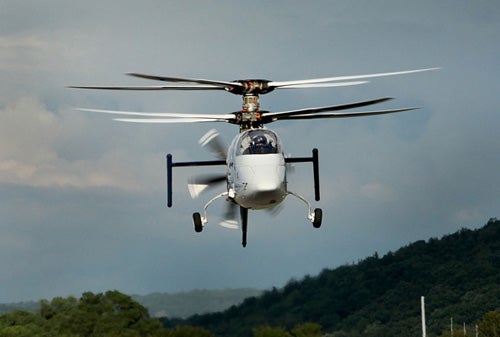
The team behind Sikorsky’s X2 technology demonstrator has won the 2010 Robert J. Collier Trophy, six months after the unique twin-coaxial rotorcraft set an unofficial speed record for a helicopter of 250 knots. “Sikorsky has a long and storied history of innovation, starting with the invention of the world’s first practical helicopter and continuing today […]

Read More »
Pilot Proficiency

The Missing Instrument

When you think about the array of flight technologies available in today’s light general aviation airplanes, it’s sometimes hard to believe we’ve come so far so fast. From infrared enhanced-vision systems and computer-generated synthetic-vision technology to satellite downlinked weather graphics and GPS precision-approach capability, all presented on bright, colorful flat-panel cockpit displays, the instrument panel […]

Read More »
Features

Trainings Future

The FAA rightly has taken its lumps on many things, leading to a healthy dose of skepticism among many in the industry whenever the agency tries something new. This is especially true whenever theres a rulemaking activity affecting general aviation training. I knew this, of course, when I began work as manager of the FAAs General Aviation and Commercial Division. After a few months in my new job, I began surveying the landscape, which included the Garmin 430 phenomenon (I installed one in my Bonanza, as well as a multifunction display and weather data link) and a visit to Cirrus highlighted the coming “glass cockpit” revolution.

Read More »
General

Martha King, Contributing Editor

Martha is the daughter of a U.S. Air Force pilot. She grew up in various places around the world with the most time spent in Dayton, Ohio where her father was stationed at Wright-Patterson Air Force Base. Although her father was a pilot, neither Martha nor her father could ever have imagined that she would […]

Read More »
Pilot Proficiency

Airwork: Punching a Time Clock

There are jobs in which you’re required to punch a time clock, and there are jobs in which your value is not measured in how long you do something but rather in what it is you do. So what does this have to do with aviation? Congress, in its questionable wisdom, has passed a law […]

Read More »
Features

Training For Risk Management

Todays typical flight training curricula are largely maneuver-based, with little emphasis on higher order pilot skills, especially risk management. At its heart, the typical curriculum is designed to train a pilot to pass the practical test for the certificate or rating he or she seeks. A rare curriculum includes training to identify, assess and mitigate risk. In previous articles, Ive asserted the root cause of many accidents-and perhaps most fatal accidents-is poor risk management (Aviation Safety, July 2010, “TAA Training”). I also postulated better risk management training, especially in risk mitigation, could be an effective way to reduce these accidents (Aviation Safety, September 2010, “Train to Mitigate Risk”).


Read More »
Pilot in aircraft
Sign-up for newsletters & special offers!

Get the latest stories & special offers delivered directly to your inbox.

SUBSCRIBE