Register

Search Results for: maintaining your airplane

General

Left Seat: What Really Kills Airplanes

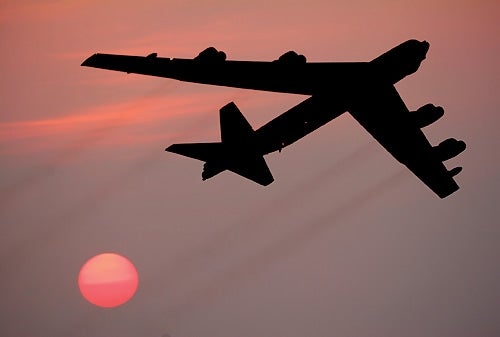
Airplanes can live such extraordinary lives; it seems that many will never die. Martha Lunken reminds us frequently that 70-year-old DC-3s are still flying and working for a living. The B-52 bombers are often twice the age of their pilots but the old Boeing flies on. And 50-year-old Bonanzas are not exactly rare. The remarkable […]

Read More »
Aircraft Analysis

Preflighting Your Prop

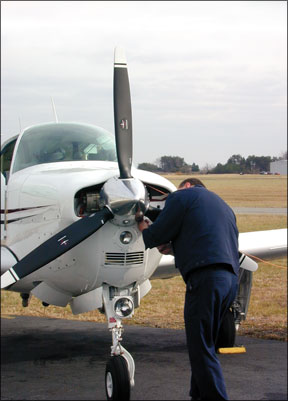
Unless youre among the small number of personal aircraft owners lucky enough to own a jet, your airplane has at least one propeller. It might be a fixed-pitch, metal or wooden affair, a multi-composite blade reversible spun by a turbine engine or one of the more ubiquitous constant-speed offerings from Hartzell or McCauley. And you might have more than one of them. No matter: Even a basic fixed-pitch model is a fairly expensive component, spinning away for hours on end, its tips approaching-in some cases exceeding-the speed of sound. If you have a constant-speed or full-feathering version, you also have a small collection of very expensive and specialized parts regularly subjected to massive forces. Contrast all that with what many pilots seem to think: A prop is a poorly designed handle with which to help move the airplane back in its hangar. In fact, according to the pros, treating your propeller like the critical component it is and lending it a little TLC every now and then can go a long way toward preventing costly maintenance. Or worse. The average propellers main enemy? Its not the wet-behind-the-ears private pilot who insists on using it to muscle the airplane in and out of the hangar. Its not even the guy who taxis over runway lights and into potholes while talking on a cell phone-more about him in a moment. Instead, prop shop managers and manufacturers reps tell us its aviations oldest bugaboo: corrosion. Look at just about any metal prop out on the tiedown line. Youll probably find its leading edge is rough, with small pits and-if it hasnt been painted recently-some whitish discoloration. Thats corrosion, and its slowly eating away at the prop.

Read More »
Aircraft Analysis

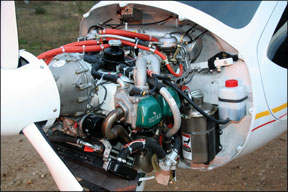
Maintaining Light Sport Aircraft

The light sport aircraft (LSA) community holds strong promise to attract a new population of pilots for a variety of reasons, many of them overlapping. For some, the lower prices for a new airplane-some starting at around $40,000, compared to a base price of $175,000 for an FAA-certified Diamond DA20 Katana, as one example-holds appeal. For others, the draw is the reduced cost of learning to fly: A sport pilot certificate will set back a student between one-third to one-half the cost to obtain a private ticket. And, for some newcomers and a growing number of long-time pilots, the absence of a formal medical examination holds sway. Combined, these forces propelled the delivery of about 2500 factory-new LSAs in the three-plus years since the rules went into effect. Meanwhile, about 2200 have earned their sport pilot certificates and an as-yet unknown-and perhaps unknowable-number of existing pilots received formal transition training required to legally fly LSA-category aircraft.

Read More »
General

What Is Your Next Airplane?

The most common questions I am asked by pilot friends is which airplane I plan to buy next, and which airplane do I think they should buy next. Clearly it is a topic every pilot thinks about a lot, and it remains a hot topic because there isn’t any clear-cut answer. For many years the […]

Read More »
Features

Deferring Airplane Maintenance

My grandmother loved an adage. “Never put off until tomorrow what you can do today.” “A stitch in time saves nine.” “If you dont find time to do it now, when will you find time to do it later?” All fine words to live by, but my grandmother never paid for an aircrafts annual inspection. With the base price of a straight-leg single-engine airplane annual at some shops hovering around $1500-thats the price if nothing is actually wrong with the airplane-some of the adages heard around the shop are “It flew in, itll fly out.” “You said it was fine that way last year: why is this year different?” and the most common, “I cant afford that-just sign it off now and well get it on the next annual.” To fix or not. What will it cost now versus the price later? Does it affect airworthiness? What does the FAA say about it? Whats the worst that can happen?

Read More »
Editor's Log

…none of your business…

It was a nice day for flying, even though a cold front was blowing in from the west and spawning a few showers along my route. I was level at 8000 feet, on an IFR flight plan, and about halfway into a planned 90-minute flight to my family home in Georgia.

Read More »
Features

Ace up Your Sleeve

In the tumultuous atmosphere of an aircraft carrier, some of the worlds best pilots routinely embark on some of the most dangerous flying there is. Military aviation, especially carrier operations, demands disciplined pilots, well-maintained machines and a hard-headed look at the risk involved in every flight.

Even though most civilian pilots will never experience the critical flying demands that a fighter pilot takes in stride, the stakes are just as high. A wrecked airplane is still a wrecked airplane, and a dead pilot is still a dead pilot.

Over the years the military has learned a lot of things about flying, airplanes and risk assessment by losing a lot of blood, people and airp…

Read More »
Pilot in aircraft
Sign-up for newsletters & special offers!

Get the latest stories & special offers delivered directly to your inbox.

SUBSCRIBE