Register

Search Results for: general aviation inc

Features

Glass Cockpit Partial Panel

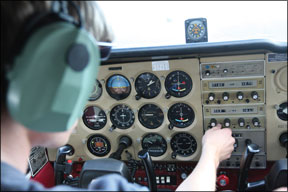
Most turbine airplanes have three-screen panels, with a PFD for both front seats. In the event the pilots-side PFD dies he/she is expected to continue using the PFD on the other side of the airplane, although the option of manually selecting PFD information on the center screen always exists as well. Pilots brought up flying traditional round-gauge IFR might not even consider the reversionary mode to be “partial panel” at all. This valuable feature makes partial panel flying easy…if the partial panel results from failure of the PFD hardware. Because it is an important advance in ease of flight in the case of primary flight instrument failure (i.e., those directly in front of the pilot), it gets top billing as a safety advantage of glass cockpit airplanes. Except for a little parallax (viewing the instrument from the side, not head-on) everything is exactly as it normally appears for the partial-panel flyer, and all functions (including the autopilot) remain fully operable. The biggest difference is that large-scale moving map, engine and fuel management, checklists, charts and other functions are relegated to a small window in the corner of the most recent-model MFDs when in reversionary mode, and are not available at all in some earlier installations. Pilots who grow too dependent on these functions, or who eschew paper checklists and navigational charts in favor of electronic versions on the “big screen” will find themselves outside their comfort zones in the event of a PFD hardware failure.
Read More »
Airmanship

Runway Considerations

According to Darwinian Theory, species that do more than survive and actually thrive tend to be the ones best able to adapt to their circumstances. Transferring that perspective from biology to aviation, we can see a direct parallel: The best pilots adapt to their situation-or conditions-depending on the circumstance. Got a forecast for Level 4 or 5 weather along the route? We adapt by making a decision, maybe go around the turmoil, maybe wait for a better day. Runways are a good example. If the runway we need is the one weve got, we cant automatically say, “Not going.” Delaying the trip may still be the only smart response. But often, the best response is to adapt. Wet runways, icy runways, snow, slush, slopes, peaks and lengths all complicate the published runway-performance numbers for a given airplane. And all are generally surmountable, as long as the pilot-in-command knows how and why to adapt to the variables. Lets take a look at considerations for a sloping runway, regardless of which direction. For example, we know that managing our approach speed is critical to a good outcome. But adapting to a downhill-sloping runway requires more of us than accurate speed control; it also requires us to be as slow as we can get away with, and that we touch down as close to the threshold as possible. Heres what happens if were too fast when flying a generic airplane, according to a presentation by Sam Harris of V1 Aviation Training LLC: If your approach speed is five percent high, your landing distance can increase by 10 percent. For every degree of downhill slope, count on an increase in landing distance of 200 feet.

Read More »
Features

Declaring The Emergency

The left engine was cutting out but youve kept it running with the aux pump. Weather at the big airport, 15 miles from your destination, has been dropping slowly; its down to 500 feet overcast and a mile visibility, which just happens to be the published minimums for both of the approaches into Homeplate Regional, where you base your light twin. The couple in the back seat had been fighting about him drinking vodka from the bottle for the first hour of the trip, but once he passed out, things quieted down. Just as ATC gives you the clearance for a lower altitude, the rains intensity goes from light to firehose and the left engine again demands attention. Full rich mixture smooths it out. A moment later the remaining conscious passenger in the back seat announces her water has broken and shes in labor. Your right seat passenger asks if youre going to declare an emergency and shoot the ILS into the big airport. “No way,” you reply, visions of John Wayne, Chuck Yeager and The Right Stuff in your mind as you turn to focus your steely, glinting baby blues on him. “Im not filling out all that paperwork; Ill just make sure were number one for the approach into Homeplate.” Over the next 10 minutes the mother-to-be in the rear seat makes increasingly vocal announcements regarding contractions at regular and diminishing intervals, and when you make a power reduction as you near the final approach fix the left engine resumes its misbehavior.

Read More »
General

Cold Weather Story

That year winter arrived on the heels of a cold front that marked the end of an interminably long and hot Ohio Valley summer, one that lasted nearly to Thanksgiving. Arriving at the ‘drome for a flight check I got a brutal reminder that airports are the coldest places on the planet. Back to the […]

Read More »
Pilot Proficiency

How Do You Hear Me?

I realized I was taking a risk when I put out the request for feedback from pilots on what they want controllers to know. This would be a good opportunity to “rant” about controllers, and I was afraid I might get quite a few pilots who only wanted to complain. I didn’t need to worry. […]

Read More »
General

What Is the Most Fuel-Efficient Airplane?

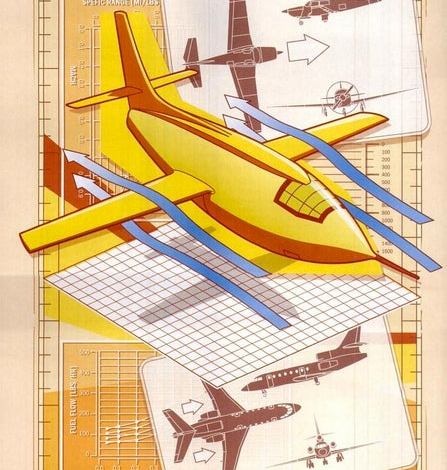
There is no greater concern among pilots and airplane owners today than the cost of fuel. Prices vary widely from airport to airport, but $5 is often on the low end and $7 a gallon is not the top. And in many instances jet fuel costs more than avgas, a reversal of traditional pricing. Fuel […]

Read More »
News

Eclipse Files Chapter 11, Agrees to Sell Assets to ETIRC

Eclipse Aviation filed for Chapter 11 bankruptcy protection on Tuesday morning, in order to continue operations “with lower costs and reduced debt liabilities.” As it filed for bankruptcy, Eclipse also announced an agreement to sell its assets for “a combination of cash, equity and debt” to an affiliate of ETIRC Aviation S.a.r.l. of Luxembourg. Roel […]

Read More »
News

Exxon/Mobil Says ‘No’ to Jet-A for Diesel Aircraft Engines

In a November 17 letter to aviation fuel distributors, ExxonMobil U.S. General Aviation Operations Manager Martin Tippl wrote: “ExxonMobil Aviation does not support or endorse the supply of jet fuel to aircraft powered by diesel engines.” The letter was circulated as a PDF by the Thielert Engine operators’ user group, which called the policy “a […]

Read More »
News

Airplane Manufacturers Soar in Early 2008

The General Aviation Manufacturers Association reported record dollar volume of new airplane deliveries from airplane manufacturers for the first three quarters of 2008 with a total value of $18.2 billion in deliveries, up from $15.1 billion in the same period of 2007. A total of 2,977 airplanes were delivered compared to 2,918 in 2007, indicating […]

Read More »
Features

Six Single-Pilot IFR Tips

There was a time not so long ago that a single pilot flying hard IFR was considered an accident waiting to happen. There was simply too much going on, conventional wisdom held, for one pilot to handle all alone. Instrument pilots contemplating a flight in actual weather actively sought out others-perhaps an instructor-who could help with the cockpit chores and make sure the dirty side stayed down. Except for the freshest instrument pilots, thats all changed. And good riddance. Ive long been convinced the second most dangerous thing in aviation is two pilots trying to fly the same airplane at the same time (the first is a private pilot with a #2 Phillips screwdriver, but thats a different article). But the idea of single-pilot IFR, or SPIFR, being something to avoid seems to have hung on in some quarters. Sure; theres a time and a place to take along some backup, depending on how comfortable a pilot is with the weather, the airplane and the airspace. But Id argue against making the flight in the first place if the only way youd consider it is with another pilot. Be that as it may, advances in automating the cockpit have paved the way for much more SPIFR than only a decade ago. Thats a good thing, in my opinion, but also means our lone pilot needs to prepare for the flight a bit more than might otherwise be the case.

Read More »
Pilot in aircraft
Sign-up for newsletters & special offers!

Get the latest stories & special offers delivered directly to your inbox.

SUBSCRIBE