Register

Search Results for: general aviation inc

Aircraft

Relaxation of Vigilance

It was one of those fine, late-fall, California desert nights: velvety-black, moonless and calm. The 182 took off from the North Las Vegas Airport bound for Rosamond, California, which is in the Mojave Desert about 70 miles north of Los Angeles. The pilots aboard, two ATPs who had logged between them 53,000 hours in military […]

Read More »
News

NBAA Meets Next Week in Recovery Mode

It has to hurt that Cessna and Hawker Beechcraft have chosen to forego their large floor displays, but the National Business Aviation Association remains optimistic about next week’s annual show. NBAA President and CEO Ed Bolen said he expects strong attendance numbers at the Orange County Convention Center in Orlando, but doesn’t aspire to set […]

Read More »
General

Flying Lessons: Turkeys From Turlock

I don’t know who came up with the idea of the advertising jingle. But whoever it was, they were clearly some kind of demonic genius. How else to explain the fact that even now, more than 30 years since those rainy fall mornings when I’d listen to the radio as I got ready for school, […]

Read More »
Aircraft

45 Years of Learjets

The original Learjet Model 23 was certified 45 years ago and the airplane was a visual sensation in the aviation press and even the general news media. Part of the notoriety came from the flamboyant Bill Lear who promoted the airplane — and himself — to any and all that would listen. But the Learjet […]

Read More »
Aircraft Analysis

EFIS Evaluated

Electronic flight displays-glass cockpits in the modern vernacular-were a novelty just six years ago. Then all at once, it seems, they were everywhere. Every new airplane is delivered equipped with some kind of glass and older airframes are seeing retrofits. Steam gauges are still in the majority, but theres enough glass out there to pose this question: Is it really better? More important, is glass actually more reliable and safer? Lacking a detailed blind study, a take-it-to-the-bank answer isnt possible and would, in any case, be subject to debate. So we did the next best thing. We joined with our sister publication, Aviation Consumer, and surveyed more than 300 owners and operators of various types of EFIS displays. Via an online survey published by our news service, www.avweb.com, we asked owners to evaluate the very idea of electronic displays compared to conventional iron gyros and analog pitot-static instruments. Is the glass easier to use? Do owners like the displays? Whats the maintenance like? And above all, do these sophisticated but relatively untried systems inspire the confidence necessary to charge off into the gray innards of hard IMC? Both of our magazines have received e-mails complaining about system failures, and more than one of these has claimed reliability is worse than the industry claims. If this were true, we reasoned, our survey would turn up a substantial number of complaints. It didnt. While owners did report glass failures and several pilots reported more than one failure, there was no widespread pattern related to poor reliability.

Read More »
Features

Did The FAA Get This One Right?

In last months Editors Log, under the heading, “Unwritten Rules,” we discussed the tragic August 8, 2009, mid-air collision between a Piper PA-32R-300 and Eurocopter AS350 operating as a for-hire tour over the Hudson River off New York City. The Piper had just departed nearby Teterboro Airport while the helicopter had launched a few moments before from the West 30th Street Heliport. The two collided over the Hudson Rivers west bank; all nine aboard both aircraft perished. The collision engendered just the kind of hysteria to which those who pay attention to the mass medias coverage of general aviation have grown accustomed. Elected officials and average citizens alike marched forth to complain there were no rules concerning such operations, and non-scheduled flights should be (choose one or all) banned, subject to specific training and approvals or under new operating rules, including positive ATC direction.

Read More »
Airmanship

Flight Following

For some flights, filing and flying in the IFR system is the way to go. For others, its appropriate to turn off the radios and revel in being one with the machine, without external distractions. Somewhere between these two extremes exists VFR flight following, a neither-fish-nor-fowl compromise of obtaining ATC services on a workload-permitting basis but without as many rules. For many cross-country flights, its the right solution to the question, “Shouldnt you be talking to somebody?” Like so many other things in aviation, theres a right way and a wrong way to go about it. For example, using the mouth to ask for flight following before engaging the brain to efficiently make the request can guarantee a terse “unable.” And once you get your magic squawk code and radar contact is advised, you can relax-a little-satisfied ATC will keep most of the big stuff away from you. But flight following isnt a final solution to your navigation or see-and-avoid procedures.

Read More »
Aircraft Analysis

Managing Stability

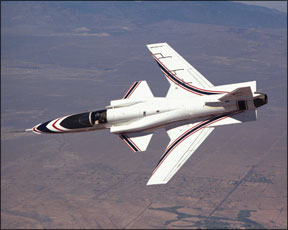
The balancing act aircraft designers must achieve amazes me. Examples include trading useful load for a strong airframe, cabin volume for reduced drag and high cruise speeds for low-speed handling. And whenever handling stands out as an issue, its generally balanced against whether the airplane also shines in its stability-how, for example, it stays in the attitude we establish and resists any temptation of responding to gusts. Or, when we purposely upset a trimmed attitude, how it naturally tries to return to that attitude. Sure, its likely to “hunt” its way back to trim, but hopefully for just a couple of cycles. The designers mastery always makes an airplanes nimbleness seem that much more impressive-especially if it goes where, how and when you ask, and seeks to stay put in between. Stability counts. But it counts differently for different machine types. Some, like the NASA X-29 research vehicle pictured above, are naturally unstable, and able to sustain controlled flight only through computer processing. In the now-retired X-29s case, computers continually adjusted the control surfaces up to 40 times each second. Others, like a jet transport, are optimized to resist any disturbance and can easily be flown with just two fingers. But any airplane can be made unstable, especially when we load it carelessly, or fly it beyond the regimes its designer intended. Where the average pilot should be concerned is in the many ways we can contribute to its loss of stability.


Read More »
Editor's Log

Why Cant We Make Cylinders?

Every so often, it becomes apparent the general aviation industry suffers from some kind of systemic problem affecting its underlying infrastructure. A few years ago, first Continental and then Lycoming discovered issues with new crankshafts. A few years before that, it was Cessnas failure to properly prepare its new airplanes for a different paint technology, which resulted in widespread corrosion until they were stripped and properly repainted. Now, its cylinders. And its nothing new, either. In 2004, some 2000 cylinders manufactured by Engine Components, Inc. (ECi), were the target of an airworthiness directive (AD). Another AD, effective September 9, 2009, targets an estimated 8000 Superior Air Parts, Inc. (SAP) cylinders installed on big-bore Continental engines. And in July, Continental was forced to revise a recent service bulletin adding more cylinders to a recall program it established in February. To its credit, Continental is replacing cylinders subject to the new service bulletin at its expense. (Full disclosure: My airplane is equipped with SAP cylinders subject to the new AD.)

Read More »
Features

Inadvertent IFR

There are times when every pilot wishes. Wishes the weather was better; wishes the airplane was newer; wishes it was better equipped and wishes that he hadnt promised passengers they would be home on time. And thats usually the way it begins. Wishful thinking for weather-involved flight, in marginal VFR conditions. Fog, rain and low ceilings are important causes of weather-related general aviation accidents. These accidents can be further broken down; inadequate preflight planning and preparation make up a large percentage. Trying to fly VFR in IFR weather is another. Major risks are those pilots who operate beyond their ability, beyond their IFR currency and beyond their experience levels in IFR.

Read More »
Pilot in aircraft
Sign-up for newsletters & special offers!

Get the latest stories & special offers delivered directly to your inbox.

SUBSCRIBE