









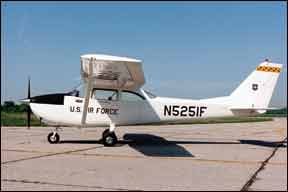
The Bold Print
Many emergency checklist items should be reflexive and committed to memory. On the ground, you can roll your own, but never forget flying the airplane is first.


Many emergency checklist items should be reflexive and committed to memory. On the ground, you can roll your own, but never forget flying the airplane is first.
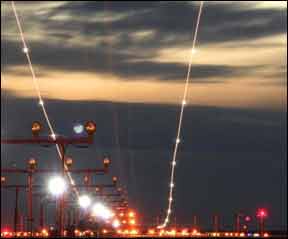
The inoperative table doesn’t cover every possible system failure. Plus, you also need to consider facility outages and equipment failures at your alternate.
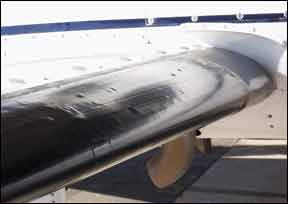
Each anti- or de-icing technology has benefits and drawbacks. If you’re flying with boots, use them early and often.
The inoperative table doesn’t cover every possible system failure. Plus, you also need to consider facility outages and equipment failures at your alternate.
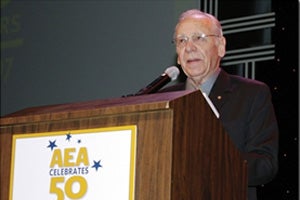
Monte Mitchell, the former longtime president of the Aircraft Electronics Association and a legendary figure in the avionics industry, died on Oct. 16 in Lee’s Summit, Missouri. He was 83. Mitchell served as AEA president from 1977 to 1996 during a 40-year career in the avionics industry. After serving in the Korean War, Mitchell joined […]
The U.S. Government Accounting Office (GAO) last month published a report recommending the FAA set specific goals for improving general aviation safety and employ a data-driven approach to minimize risks. Those are the same kinds of things we’ve been advocating pilots do to enhance their own safety for as long as I can remember and is something we certainly support.But how to go about it? Part of the problem, according to the GAO, anyway, is a lack of reliable data on pilot and aircraft activity against which to compare accidents and incidents, and compute their occurrence rate.
I thoroughly enjoyed Dave Higdon’s article “Pitch? Or Power?” in the October issue. For years I argued vehemently against separating pitch and power.
Just because the vast majority of the airplanes most of us fly have their little wheel mounted on the nose instead of the tail doesn’t mean the nosewheel is immune to abuse. Nor does it mean we can ignore the nosewheel’s peculiarities, even if an airplane with one is much easier to handle on the ground.
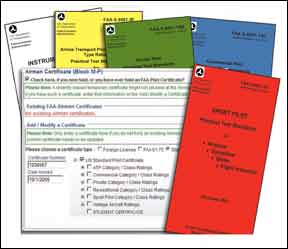
The FAA-prescribed practical test is the final hurdle every pilot must pass to earn a new certificate or rating, and the practical test standards (PTS) are where the requirements for success are spelled out. The PTS is what both aspiring pilots and examiners use to determine what’s to be done on a practical test and how. It’s supposed to be the final assessment of whether a pilot can conduct safe flight operations.
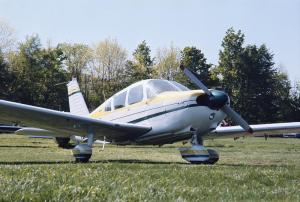
What should a student do if an instructor asks him to do something that appears unsafe, against the regulations or otherwise ill-advised?_** **_ Jeff Edwards has been a flight instructor since 1982 and is a former FAA-designated pilot examiner. He has been a six-time designated Master Certificated Flight Instructor. In 2003, Jeff was selected as […]

Get the latest stories & special offers delivered directly to your inbox.
SUBSCRIBE