Register

Search Results for: general aviation inc

Pilot Proficiency

The Human Factor: No Greater Burden

It is one of the great challenges facing those of us dedicated to reducing the accident rate in aviation: How do we help pilots maintain an awareness of the potential negative consequences of taking chances in aviation? One approach is to publish articles about accidents, exhorting pilots not to make the same mistakes. However, there […]

Read More »
News

FAA’s Plea to Pilots: Fly Safely this Summer

As the busy summer flying season kicks off, the FAA is taking a slightly different approach to safety by asking pilots, well, to fly safely. In an open letter to the general aviation community sent just before the Memorial Day weekend, FAA Administrator Michael Huerta implored aviators to “make sure you’re ready – really ready […]

Read More »
Learning Experiences

Autopilot Business

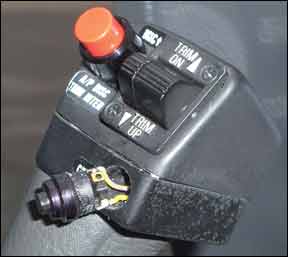
In 1984, after some 15 years flying mostly single-engine Cessnas and a Mooney 231, I bought a three-year-old Cessna 340 to handle my increasing number of business trips. I had noticed the 340’s autopilot did not always engage properly; the button was a little sticky and sometimes I had to push it pretty hard to get it to work. One business trip had me in Princeton, N.J., on a day with a low overcast. During the meeting, I kept looking out the window at the sky as the ceiling lowered below my comfort minimums.

Read More »
Features

IFR Weather Planning

It’s been said—and confirmed, in a conference I attended at the FAA’s Oklahoma City complex a couple of years ago—that you can miss every weather-related question on every FAA Knowledge Test (“written”), from Sport Pilot all the way through and including the ATP, and still pass each test…and ultimately, pass every checkride. Our instructors and aviation periodicals implore us to become students of aviation weather, but only on rare occasions are we actually given the tools we need to make weather-related go/no-go decisions. Certainly one of the most common requests I get from my recurrent flight students is for help in understanding weather well enough to make informed choices that protect their families when they fly. So how can we quickly and methodically sift through page after Internet page of aviation weather data to make informed decisions?

Read More »
Features

NTSB To GA: You Can Do Better

The predominate causes of general aviation accidents aren’t a mystery. Each month in these pages, each year in the AOPA Aviation Safety Institute’s Nall Report and every day at the NTSB, mishaps are reviewed, dissected, catalogued and judged. The depressing thing about this process is the mind-numbing predictability of it all: Over time, some specific proportion of general aviation accidents will be caused by one thing while other causes will have their own percentage. The numbers don’t change that much from month to month, or year to year. It’s frustrating.

Read More »
Airmanship

Is Owning Safer?

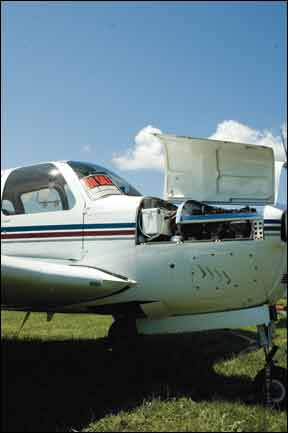
Pilots decide to buy their own airplane for a variety of reasons. It could be a business decision, helping ensure coverage of a relatively wide sales area, or perhaps an aerial photography business. Specialized flight training—like acro, or a quicky instrument rating—also can be a reason. Recreation or personal transportation is yet another. One of my major motivations was safety.

Read More »
Editor's Log

Revitalizing GA

The average small airplane in the United States is now 40 years old and the regulatory barriers to bringing new designs to market are resulting in a lack of innovation and investment in small airplane design.” So states one of the findings in a new bill introduced May 7 in the U.S. House of Representatives by Rep. Mike Pompeo (R-KS) and four cosponsors. The bill, H.R. 1848, is named the “Small Airplane Revitalization Act of 2013,” and its main goal is for the FAA to finalize its ongoing effort to rewrite FAR Part 23, regulations on certification of small airplanes, by December 31, 2015.

Read More »
News

FAA Names Surprising ‘Top’ Lifesaving Technologies

The FAA this week sent out a general aviation safety “fact sheet” identifying several technologies the agency says can help significantly curb the fatal accident rate. While the list includes several of the typical technologies we think of as promoting safety such as Nexrad weather receivers, traffic and terrain awareness systems and ballistic parachutes, the […]

Read More »
Pilot Proficiency

Does the FAA Care about the Little Guy?

The FAA’s handling of a variety of prickly issues from the planned closures of scores of contract control towers to the hotly anticipated Part 23 rewrite to the up-in-the-air fate of leaded aviation gasoline will affect general aviation in important ways for years to come. Get the Part 23 rewrite right, and we could witness […]

Read More »
Pilot Proficiency

The Passion of Mixture

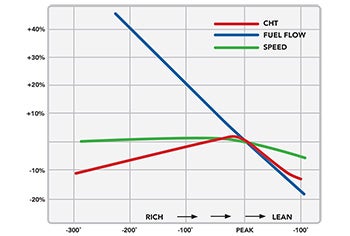
An incensed reader, reacting to my parenthetical remark “Making Range,” Technicalities, August 2012 that, contrary to widespread belief, a leaner-than-peak-EGT mixture reduces cylinder head temperatures, wrote: _Maybe I am missing something, but it is against the laws of physics that a leaner mixture can run cooler, as the more dense the mixture, the cooler the […]

Read More »
Pilot in aircraft
Sign-up for newsletters & special offers!

Get the latest stories & special offers delivered directly to your inbox.

SUBSCRIBE